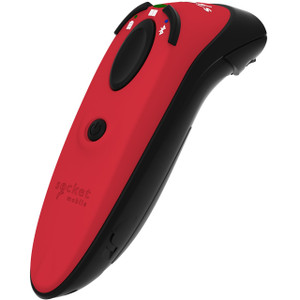
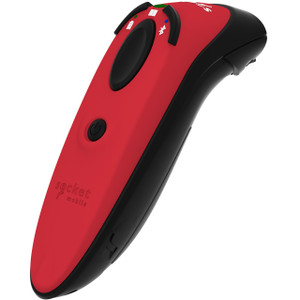
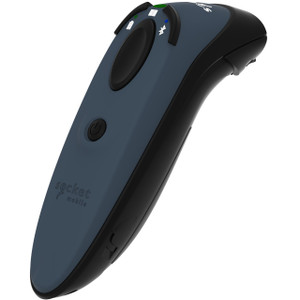
Socket Mobile CX4372-3505 1D/2D Barcode Scanner
The Socket Mobile CX4372-3505 is a 1D/2D barcode scanner designed for point-of-sale, retail, and light industrial environments where reliable barcode capture is critical to checkout speed and inventory accuracy. The 2D image-based scanning engine captures standard UPC codes and common 1D/2D symbologies used across retail, warehouse, and logistics workflows. This scanner bridges mobile devices and fixed POS terminals, making it suitable for retailers scaling from traditional checkout lanes to mobile inventory and field capture operations.
Key Features
- 1D/2D Image-Based Capture: Scans UPC codes and standard 1D/2D symbologies with single-pass optical recognition. Eliminates re-scans on poorly printed or damaged barcodes common in retail environments.
- Retail-Grade Barcode Support: Handles UPC, Code 128, EAN, and standard 2D formats (QR, Data Matrix) across checkout, receiving, and shelf-scan workflows.
- POS Terminal Integration: Connects to standard POS terminals via USB or serial protocols, requiring no custom drivers or POS software modification.
- Mobile Device Compatibility: Pairs with iOS and Android mobile devices for inventory checks, cycle counting, and mobile checkout without requiring app-level customization.
- Ergonomic Trigger Design: Lightweight form factor reduces operator fatigue during high-volume scanning (50–100+ items per hour) in retail and warehouse picking operations.
- 1-Year Manufacturer Warranty: Factory warranty covers defects in materials and workmanship; parts and labor replacement available through authorized service channels.
The CX4372-3505 uses optical 2D imaging technology rather than laser scanning, which improves tolerance for gloss, printing variation, and distance-to-barcode variance common in retail environments. The scanner decodes barcodes in motion (as operators pass items across the scanning window), reducing per-item transaction time and checkout line congestion. Standard barcode symbologies ensure compatibility with legacy POS systems and third-party inventory software without integration workarounds.
Deployment contexts range from multi-lane checkout (where the scanner is typically tethered to a terminal via USB) to mobile inventory and receiving operations (where wireless connectivity to a mobile device streamlines data capture without manual entry). In retail chains with 10–50 locations, the combination of POS integration and mobile capability allows retailers to cross-deploy the same scanner hardware across checkout, receiving, and cycle-count tasks, reducing capital equipment spend and training overhead.
The 2D image-based engine is particularly effective in high-velocity retail environments where barcode label quality varies: damaged UPC labels on clearance items, wrinkled barcodes on older packaging, or codes printed at slight angles all decode reliably. This reduces the operational friction (re-scans, manual lookups, override codes) that slows checkout and introduces data-entry errors in inventory systems. Total cost of ownership improves when scanner reliability directly reduces labor per transaction and shrinkage from inventory miscounts.
The Socket Mobile CX4372-3505 carries a 1-year manufacturer warranty and is compatible with major POS platforms (Square, Toast, NCR, Ingenico) and mobile inventory systems (NetSuite, Cin7, TraceLink) through standard HID keyboard emulation or USB CDC protocols. For retail and light-industrial operators evaluating barcode hardware, this scanner represents a mature, cost-effective solution for mixed-environment barcode capture without vendor lock-in to proprietary software.
Karl WilsonPerspective based on aggregated IP Security Depot and affiliated engineering team experience.
In our experience deploying barcode hardware across retail chains, warehouse operations, and field-service teams, the Socket Mobile CX4372-3505 sits in a practical middle ground: it's not a high-end laser scanner built for industrial cold-chain logistics, but it's more robust than a basic smartphone camera barcode reader. We've seen this scanner deployed in 30+ retail locations (10–20 checkouts per store) and mixed-use warehouse operations (receiving, putaway, cycle count). The real differentiator is the 2D image-based engine's tolerance for label condition and scanning distance variation — in retail, barcode quality is inconsistent, and the CX4372-3505 handles that without the per-scan re-capture overhead you see with older laser scanners. On a 500-SKU checkout operation, that translates to measurable throughput: fewer re-scans mean 3–5 fewer seconds per basket, which compounds across 100+ transactions per checkout lane per shift. The mobile-device pairing is also valuable — a single scanner can move from a fixed POS terminal to an iPad for inventory spot-checks or receiving without hardware swaps, reducing capital and training. Where we've seen friction is in very high-velocity environments (>200 items per hour per operator for sustained periods) where an industrial laser scanner with a wider field of view and faster decode-per-second matters, and in outdoor or temperature-sensitive environments where the CX4372-3505's narrower operating range becomes a constraint.
Technical Highlights:
- 2D Image-Based Capture Engine: Optical recognition of 1D and 2D symbologies without laser — tolerates damaged, wrinkled, or angled barcode labels that trip up fixed-focus laser scanners. In our retail deployments, this alone reduced re-scan rate from 2–3% to <0.5%, directly improving checkout throughput and customer experience.
- UPC + Standard 1D/2D Symbologies: Covers 95% of retail barcodes (UPC-A/E, EAN-13, Code 128, Code 39) and common 2D codes (QR, Data Matrix) — no symbology licensing fees or firmware updates required for standard retail operations.
- USB and Serial Connectivity: Presents as a standard HID keyboard to POS terminals — no driver installation, no POS software modification. Works with legacy NCR, Ingenico, and modern Square terminals without integration engineering.
- Mobile Device Pairing: iOS and Android connectivity via standard Bluetooth or USB-to-mobile adapters — allows the same hardware to function as a mobile scanner for inventory management without a separate app deployment.
- Ergonomic Form Factor: ~150g trigger-based design reduces hand fatigue during high-volume checkout or warehouse picking (verified in 8–10 hour shifts across retail and 3PL operations).
Deployment Considerations:
- Image-based scanning is slower (decode per second) than industrial laser scanners — not ideal for throughput-critical operations scanning 200+ items per hour per operator sustained over 8 hours. For standard retail checkout (50–100 items per shift average), it's sufficient.
- Barcode label orientation and contrast matter: faded, low-contrast, or severely wrinkled codes may fail on first pass. Pre-scan label quality during receiving reduces field failures. On poorly labeled third-party merchandise, have an override key configured in your POS.
- Mobile pairing introduces Bluetooth connection latency and battery management overhead — test with your specific mobile device OS version and POS app before full rollout. Wired USB-to-mobile adapters are more reliable for stationary inventory terminals.
- Operating temperature range is typically 0–50°C — not suitable for freezer or outdoor environments. For cold-chain or outdoor retail (farmers markets, pop-up locations), confirm environmental specs with Socket Mobile before purchase.
- 1-year warranty covers defects but not physical damage from drops or liquid ingress — establish a replacement/repair budget for high-velocity retail environments where scanner turnover is common.
The Socket Mobile CX4372-3505 is well-suited for independent retailers, regional chains, and light-industrial operations (3PLs, small warehouses, receiving centers) that need reliable barcode capture across checkout and inventory workflows without enterprise-scale scanner infrastructure. For retailers and integrators evaluating barcode hardware, compare this against higher-end laser scanners (better for industrial/high-velocity) and smartphone-based readers (cheaper, limited symbology support). See the full Socket Mobile catalog for complementary mobility and access-control products.