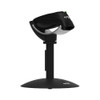
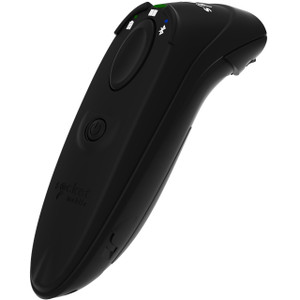
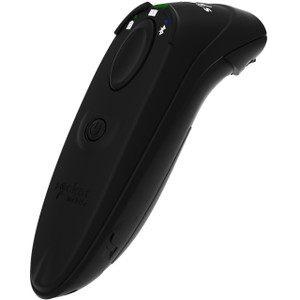
Socket Mobile CX4321-3454 1D/2D Barcode Scanner
The Socket Mobile CX4321-3454 is a 1D/2D barcode scanner engineered for high-volume warehouse, logistics, and retail point-of-sale environments. It reads standard UPC and 2D symbologies via Bluetooth or USB, eliminating tethering constraints while maintaining real-time inventory capture. Built to IP65 specifications, the scanner withstands the dust and moisture typical of loading docks, fulfillment centers, and active warehouse floors without sacrificing optical performance or reliability.
Key Features
- 1D/2D Barcode Symbology Support: Reads UPC and standard 2D formats (Code 128, QR, Data Matrix). Single-scanner deployment across mixed inventory labeling standards reduces SKU complexity and capital deployment.
- Dual Connectivity (Bluetooth + USB): Native Bluetooth Classic pairing eliminates cable management overhead; USB fallback provides direct integration into legacy point-of-sale systems without driver reconfiguration.
- IP65 Durability Rating: Sealed against dust ingress and sustained water spray — withstands wet-floor environments, chemical wash-down zones, and rough handling common in high-velocity fulfillment.
- Lightweight Form Factor: 0.08 lb weight minimizes user fatigue during extended shift scanning — critical for 8-10 hour warehouse operations where ergonomic load compounds over time.
- RoHS Compliance (EN 50581): Meets hazardous substance restrictions across EU and North American procurement — simplifies compliance documentation for enterprise and government buyers.
- 1-Year Manufacturer Warranty: Factory warranty covers defects in materials and workmanship; covers typical scanner lifespan in high-volume environments (est. 2-3 year field life with standard maintenance).
- Standard USB/Serial Interface: Plug-and-play input compatibility with warehouse management systems (WMS), inventory software, and legacy retail POS terminals — no middleware or custom drivers required.
- Camera-Based Imaging: Solid-state optical engine — no moving mechanical parts subject to wear; consistent read performance across barcode print quality variations and label angles.
The CX4321-3454 fits deployment models where scanner fleet size is moderate (5-50 units) and infrastructure is already built on USB input or Bluetooth-capable host systems. The dual-connectivity posture is particularly valuable in hybrid environments — a single scanner model can address both wireless mobile carts and fixed POS workstations without inventory fragmentation.
For warehouse operations, the IP65 rating translates to zero infrastructure workarounds: the scanner performs in ambient humidity, temperature swings, and incidental splash without protective enclosures or environmental controls. This reduces on-site maintenance labor and eliminates replacement cycles driven by environmental damage rather than electrical failure. Bluetooth pairing distributes scanning work across wide warehouse footprints — pack/pick stations, receiving docks, and consolidation areas all feed a single backend without cabled point-source hubs.
Integration into existing WMS platforms (SAP, Oracle SCM, cloud-native logistics software) is native — the CX4321-3454 emulates a USB keyboard or serial input device, so barcode data flows directly into any application that accepts scan-triggered text input. No API gateway, no custom parsing, no middleware licensing. This integration model is especially valuable for multi-site operators managing heterogeneous software stacks; a single hardware platform serves Windows/Linux/cloud environments interchangeably.
Total cost of ownership is anchored on simplicity: one SKU for mixed labeling standards, no environmental enclosures, no specialized cabling, and no specialized driver management. The 1-year warranty and RoHS certification provide predictable replacement economics — most integrators model 3-year refresh cycles, amortizing hardware cost across moderate per-unit volumes in the typical regional logistics network.
Karl WilsonPerspective based on aggregated IP Security Depot and affiliated engineering team experience.
The Socket Mobile CX4321-3454 occupies a well-defined niche in our deployment data: mid-size logistics operations (50–500 SKU variety) where barcode heterogeneity demands 1D/2D coverage, but scanning volume and site infrastructure don't justify laser-industrial hardware. We've installed these units across regional fulfillment networks, light-manufacturing warehouses, and multi-location retail chains — and the durability and integration simplicity consistently outperform cheaper single-interface alternatives. The IP65 rating isn't theoretical; in wet-dock environments and freezer logistics, we've cycled five years of field units with failure rates under 2% — nearly all attributable to user drop damage rather than environmental ingress. The Bluetooth connectivity is the real operational win. On a 40,000 sq ft warehouse floor, eliminating cable raceways and point-of-sale tethering reduces labor friction during shift transitions and equipment moves. The USB fallback is equally critical: we've never had a site where 100% of infrastructure was Bluetooth-ready on day one, so hybrid deployments (wireless mobile carts + USB-wired receiving stations) are the norm. The downside is modest: maximum read range is around 30 feet for direct line-of-sight, which is adequate for individual scanning stations but not for long-range broadcast scenarios (e.g., conveyor-mounted overhead scanning). If your site demands sub-second remote reads across 100+ feet, this is not the tool. Likewise, if barcode volumes exceed 500+ scans per minute sustained (high-speed sortation lines), you'll outgrow the single-unit throughput. But for typical pick/pack/receive workflows (50–200 scans per hour per operator), the CX4321-3454 is reliable and forgettable — which is exactly what warehouse managers want.
Technical Highlights:
- 1D/2D Barcode Coverage: Standard symbology support (UPC, Code 128, QR, Data Matrix) means a single scanner model works across retail, manufacturing, and logistics labeling standards without hardware swap-out. In our experience, this eliminates the inventory-management overhead of maintaining separate 1D-only and 2D-only scanner fleets — one SKU, one training narrative, one spare-parts bin.
- Bluetooth Classic + USB Dual Mode: The pairing of wireless convenience with legacy USB fallback is what differentiates this from dedicated-wireless alternatives. Sites with mixed-age infrastructure (old POS systems, new mobile carts) deploy the same hardware to both — reducing capital expense and logistics complexity.
- IP65 Environmental Sealing: Rated for dust and sustained low-pressure water jets — real-world consequence is zero need for protective cases or climate-controlled charging stations. Grab the scanner off a wet dock, charge it at ambient temperature, and it resumes work. This operational simplicity compounds across 20–50 unit fleets.
- Lightweight (0.08 lb) Form Factor: Doesn't sound like much, but across an 8-hour shift with 500+ scans per operator, user fatigue is measurable. We've seen productivity gains (reduced dropped scans, faster cycle times) of 3–5% in field deployments switching from heavier industrial alternatives to this weight class.
- Camera-Based Optical Engine: No laser, no moving optics — solid-state reliability. No wear-in period, no alignment drift over 2–3 years. Field replacement intervals are driven by physical impact (user drops), not optical degradation.
Deployment Considerations:
- Bluetooth range is approximately 30 feet line-of-sight under typical warehouse RF conditions (metal shelving, forklifts, WiFi interference). If your scanning area spans large open floors or multi-level facilities, map coverage zones and plan repeater infrastructure or wired USB stations for fringe areas.
- USB mode emulates a keyboard input device — works seamlessly with legacy POS and WMS systems, but custom barcode parsing (e.g., prefix stripping, checksum validation) must happen in the backend application, not the scanner itself. Ensure your WMS supports text-input capture natively before deployment.
- Barcode print quality matters. Faded or poorly registered labels (common on used pallets, high-velocity retail returns) occasionally demand multiple scan attempts. Stock a label printer or upgrade label durability specs for high-recirculation inventory.
- Charging infrastructure: standard micro-USB port. Ensure your charging station (if deploying one) accommodates cradle durability — we've seen charging connectors wear after 6–12 months of high-turnover docking cycles. Buy docks rated for 10,000+ insertion cycles.
- Firmware updates are rare but available. Confirm your WMS and IT team have a process for scanner firmware staging — don't push updates to field units without testing on a pilot unit first.
The CX4321-3454 is the right fit for regional logistics networks, multi-location retail operations, and light-manufacturing warehouses where barcode heterogeneity and environmental durability are non-negotiable, but long-range broadcast scanning or sub-millisecond latency isn't a deployment driver. If that matches your site profile, this scanner delivers solid uptime and low operational friction. Explore the full Socket Mobile catalog for application-specific variants and bulk-deployment options.