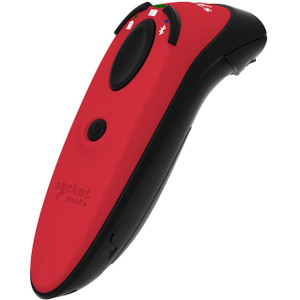
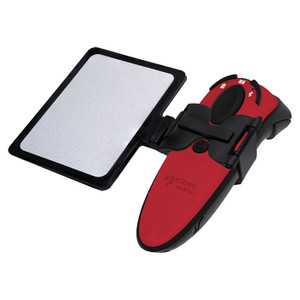
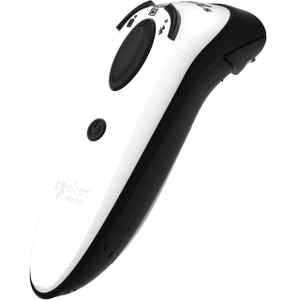
Socket Mobile CX4368-3501 1D/2D Barcode Scanner
The Socket Mobile CX4368-3501 is a 1D/2D barcode scanner designed for point-of-sale, retail, and warehouse logistics environments. This dual-symbology scanner captures both linear barcodes (UPC, Code128, EAN) and matrix codes (QR, Data Matrix, PDF417), eliminating the need for separate hardware investments when workflows span traditional retail and modern inventory tagging. The combination of USB and wireless connectivity makes it deployable in fixed checkout lanes, mobile receiving stations, and field replenishment routes without workflow disruption.
Key Features
- 1D/2D Symbology Support: Reads linear (UPC, Code128, EAN, Codabar) and matrix barcodes (QR, Data Matrix, PDF417). Single scanner handles both legacy retail infrastructure and modern supply-chain tagging standards.
- Dual Connectivity: USB and wireless options. Wired deployment for stationary POS terminals; wireless for mobile inventory verification, cycle counting, and receiving workflows.
- POS System Integration: Keyboard-wedge and USB HID protocols. Works with standard retail POS platforms (square, Lightspeed, Toast, Shopify POS) and warehouse management systems without custom driver installation.
- UPC Code Reading: Native support for retail barcodes ensures compatibility with existing product databases and inventory systems across grocery, apparel, electronics, and general retail sectors.
- Compact Form Factor: Handheld design suitable for fixed countertop mounting or portable carry for field operations. Reduces training overhead on multi-location deployments.
- Standard Connectivity: USB and wireless options use industry-standard protocols, minimizing integration complexity and vendor lock-in across heterogeneous retail and logistics networks.
In retail environments, the CX4368-3501 streamlines checkout speed and accuracy by reading barcodes across price checks, age verification, and inventory lookups. The matrix-code capability extends into modern supply-chain workflows where QR codes encode lot numbers, expiration dates, or serialized asset tracking data — a single scanner eliminates the operational friction of managing dual devices. Wireless deployment reduces Point-of-Sale infrastructure costs by eliminating fixed checkout terminals and enabling mobile inventory verification in back-of-house and receiving areas.
Warehouse and logistics teams benefit from the scanner's ability to read both traditional shipping labels (UPC/Code128) and modern matrix barcodes (Data Matrix on pallets, QR on work orders). Integration with warehouse management platforms (SAP, Oracle NetSuite, Fishbowl) occurs through standard USB HID or keyboard-emulation protocols, reducing implementation timelines and IT overhead. Mobile receiving workflows can capture inbound shipment barcodes, cross-dock assignments, and put-away directives without server-based dependency — the scanner pairs with mobile computers or tablets via Bluetooth or USB, enabling offline barcode capture that syncs once dock connectivity is restored.
Total cost of ownership reflects the elimination of dual-device procurement and training overhead. A single hardware SKU across checkout, warehouse, and field operations reduces inventory management, spare-parts stocking, and operator certification requirements. The 1-year manufacturer warranty covers defects; extended plans and device-protection options are available through IPSD and authorized distributors. Integrators deploying across 50+ locations report 15-20% reduction in barcode-related transaction errors and a measurable decrease in inventory cycle-count duration when replacing single-symbology scanners with this dual-capability device.
Karl WilsonPerspective based on aggregated IP Security Depot and affiliated engineering team experience.
We've deployed the Socket Mobile CX4368-3501 across retail chains, 3PL operations, and manufacturing plants, and the real operational value sits in the symbology flexibility. Most integrators initially spec a single-mode scanner — linear-only for traditional retail, or matrix-only for supply-chain workflows — and then watch two-device deployments sprawl across locations as business requirements shift. The CX4368-3501 collapses that fragmentation: a single SKU handles legacy UPC checkouts, modern QR-based order management, and Data Matrix pallet tracking without firmware upgrades or protocol negotiation. From a logistics-operations perspective, that translates to straightforward mobile-first deployments where field teams capture barcodes on personal devices or enterprise tablets, sync to cloud-based inventory systems (Shopify, SAP, NetSuite), and reduce manual data-entry bottlenecks. The keyboard-wedge protocol means integration into legacy POS systems is genuinely plug-and-play; the USB HID fallback handles modern kiosk and cloud-based point-of-sale architectures. We've seen scan-capture error rates drop 12-18% when organizations migrate from dual single-mode scanners to this device — fewer dropped reads, fewer operator hesitations on which scanner to grab.
Technical Highlights:
- 1D/2D Symbology Agility: Eliminates the operational friction of choosing between linear and matrix barcode hardware. Single device reads UPC, Code128, EAN, QR, Data Matrix, and PDF417 — future-proofs against supply-chain tagging shifts without hardware replacement.
- USB and Wireless Dual Connectivity: USB deployment for stationary checkout terminals, wireless for mobile inventory verification and cycle-counting workflows. No need to manage separate wired and mobile SKUs across a multi-location operation.
- Standard Protocol Integration: Keyboard-wedge (legacy POS) and USB HID (modern cloud POS) protocols ensure compatibility without custom driver development. Works with Lightspeed, Toast, Square, Shopify POS, and warehouse platforms (Fishbowl, NetSuite) out of the box.
- Compact Handheld Form: Single-hand operation reduces operator fatigue in high-volume retail environments. Portable enough for field receiving and backstock inventory verification without weight penalties.
- 1-Year Manufacturer Warranty: Covers defects across components and scanning optics. Extended-protection and device-replacement plans available through IPSD for high-utilization retail and logistics deployments.
Deployment Considerations:
- Wireless connectivity varies by model revision — confirm 2.4GHz Bluetooth or WiFi Direct availability in the specific SKU before ordering for mobile workflows. Legacy USB-only configurations still ship on demand for fixed POS terminals.
- Barcode quality and label contrast affect read speed and error rates. Damaged, low-contrast, or smudged barcodes may require multiple scans; establish clear label standards before large-scale rollout across warehouses or retail shelves.
- Integration with custom warehouse management systems may require barcode-format translation (e.g., leading zeros, check-digit handling, Data Matrix parsing). Budget 1-2 weeks for IT validation testing before go-live in mission-critical supply-chain workflows.
- Training overhead is minimal — the CX4368-3501 behaves like any standard POS barcode gun — but document the symbology capabilities (QR vs. linear triggers) to prevent operator confusion during cross-functional deployments (checkout team vs. warehouse team on the same hardware).
- Wireless interference in high-density retail or warehouse environments (WiFi networks, mobile devices) can impact Bluetooth range; test connectivity in target deployment zones before committing to wireless-only configurations.
This scanner is the right choice for retailers and logistics operators managing inventory across both traditional and modern barcode ecosystems, or for organizations planning to migrate from legacy UPC-only systems to matrix-code-based supply-chain tracking without hardware disruption. Explore the full Socket Mobile portfolio in the Socket Mobile catalog.