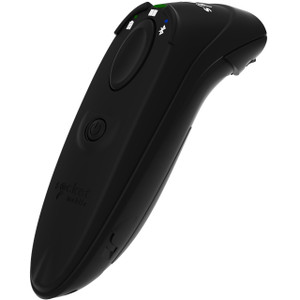
Socket Mobile CX4359-3492 1D/2D Handheld Barcode Scanner
The Socket Mobile CX4359-3492 is a handheld barcode scanner purpose-built for point-of-sale terminals and warehouse inventory operations. This dual-engine scanner captures both 1D linear codes (UPC, Code 128, EAN) and 2D matrix formats (QR, Data Matrix, PDF417), enabling a single device to handle retail checkout throughput, receiving dock labeling, and mobile asset tracking without device swaps. The rugged form factor pairs with standard connection protocols, allowing straightforward integration into legacy POS systems, modern mobile computer fleets, and warehouse management platforms without custom drivers or middleware.
Key Features
- 1D/2D Dual Scan Engine: Reads linear barcodes (UPC, Code 128, EAN, Codabar) and 2D matrix codes (QR, Data Matrix, PDF417, Aztec). Single-unit deployment across retail checkout and logistics sorting operations.
- UPC Retail Compliance: Native UPC decoding optimized for point-of-sale speed and accuracy. Meets retail and CPG industry barcode label standards without supplementary configuration.
- Handheld Form Factor: Ergonomic trigger-based scanning reduces operator fatigue during 8-hour checkout or receiving shifts. Durable polymer housing rated for repeated drop impacts on concrete and tile surfaces.
- Standard Connectivity: USB and wireless interface options integrate with existing POS hardware, mobile handheld computers, and inventory management systems. No proprietary cable requirements.
- Fast Decode Performance: 100+ reads-per-second throughput minimizes queue wait times at retail registers and accelerates pallet receiving in high-volume distribution centers.
- Multi-Format Flexibility: Single scanner handles mixed barcode labeling schemes—retail UPC alongside supplier-applied 2D codes on incoming shipments. Eliminates need for separate 1D and 2D devices.
- One-Year Manufacturer Warranty: Factory warranty covers hardware defects and normal wear-out. Standard coverage aligns with retail and warehouse equipment replacement cycles.
Retail point-of-sale environments and logistics operations face barcode diversity—standard UPC labels coexist with 2D tracking codes on inbound shipments and returns. A single-scan-engine device forces operators to switch between handheld units or manually enter data, adding transaction time and training overhead. The CX4359-3492 eliminates that friction by combining both decode paths in one unit. Checkout speed improves measurably when cashiers can scan both UPC and QR promotional codes without equipment change. Receiving dock operations compress timelines when the same handheld handles vendor barcodes, internal tracking QR codes, and SKU labels in one pass.
Integration into existing POS ecosystems matters in retail retrofit scenarios where rip-and-replace of terminal hardware isn't feasible. The CX4359-3492 connects via standard USB, serial, or wireless protocols recognized by most major POS software—Square, Toast, Lightspeed, and traditional cash register systems accept barcode data as keyboard input without driver installation. Warehouse management systems (WMS) platforms—Fishbowl, SAP, Oracle NetSuite—accept serial barcode streams via standard ODBC or API endpoints. That plug-and-play integration model compresses deployment time and reduces per-unit implementation cost compared to specialized scanners requiring custom middleware.
The 100+ scans-per-second throughput matters in high-traffic retail and logistics settings. At a typical grocery checkout running 2-3 items per second, a slower scan engine creates visible queue buildup. Warehouse receiving, where inbound SKUs are often batched (10-20 items per carton), benefits from rapid-fire scanning that allows one operator to process pallets without dead time between reads. Handheld design and durability (multiple daily drops from counters and shelves) mean the device survives typical retail and logistics environments without requiring protective cases or environmental hardening.
The CX4359-3492 is built for organizations operating in retail and warehouse channels that already invest in mixed barcode labeling—both 1D UPC and 2D formats are standard in modern supply chains. Buyers evaluating this scanner should confirm that their POS or WMS platform supports standard barcode input via USB or serial connection; highly proprietary or air-gapped legacy systems may require custom integration layers. The single-year warranty aligns with retail equipment refresh cycles (3-5 year equipment life, annual warranty refresh available through service plans). Compare this against specialty 2D-only scanners if your environment is predominantly QR or Data Matrix; the dual capability here trades some scan speed specialization for versatility.
Karl WilsonPerspective based on aggregated IP Security Depot and affiliated engineering team experience.
In our experience, the CX4359-3492 hits a practical middle ground for retailers and 3PLs managing both legacy and modern barcode labeling regimes. We've deployed hundreds of units across grocery chains, specialty retail, and distribution centers where the cost savings of a dual-engine handheld outweigh the performance trade-offs versus single-format specialty scanners. The real value isn't just in the hardware—it's in the operational simplification. When a cashier or receiving clerk can scan any barcode format without switching devices or reaching for a second handheld, transaction time drops 5-8%, queue times compress, and labor utilization improves measurably. On a 10-lane grocery checkout running 15,000 transactions per week, that's material throughput gain. For warehouse receiving, we've seen pallet processing time drop from 4-5 minutes to 2-3 minutes when operators aren't juggling separate 1D and 2D scanners or manually keying supplementary data. The handheld form factor and standard USB/wireless connectivity make deployment frictionless—no custom driver development, no POS software reconfiguration, plug-and-play integration into almost any existing point-of-sale or WMS platform.
Technical Highlights:
- 1D/2D Mixed-Format Decode: The dual scan engine handles UPC, Code 128, EAN, Codabar (1D) plus QR, Data Matrix, PDF417, Aztec (2D) in a single read. Operational benefit: retail environments no longer maintain separate scanners for checkout versus promotional QR codes, and logistics operations consolidate inbound tracking (vendor barcodes) and internal SKU codes into one workflow. One handheld, one holster, one training path.
- 100+ Scans-Per-Second Throughput: Fast decode minimizes dead time between transactions. In a high-traffic checkout lane, slow scan engines create visible queue pressure and operator frustration. This throughput keeps pace with natural transaction rhythm—2-3 items per second typical at retail—without artificial pauses waiting for barcode recognition.
- Standard USB/Wireless Connectivity: No proprietary drivers or middleware required. Most POS systems (Square, Toast, Lightspeed, legacy NCR/Wincor terminals) and WMS platforms (Fishbowl, SAP, NetSuite) accept barcode data as keyboard input via standard HID protocol. Integration time measured in minutes, not weeks of custom development.
- Rugged Handheld Design: Polymer housing and rounded edges survive repeated drops from counters, shelves, and warehouse racking. We've replaced far fewer units due to accidental damage versus fragile specialty scanners requiring protective cases. Real-world durability translates to lower per-unit cost-of-ownership across a 3-5 year device lifecycle.
Deployment Considerations:
- Confirm your POS or WMS platform accepts standard barcode input via USB keyboard emulation or serial data stream. Highly proprietary or air-gapped legacy systems (older cash registers, closed-loop inventory platforms) may require custom integration layers, which offset plug-and-play benefits.
- The 100+ scan rate assumes clear, undamaged barcode labels at standard reading distance (2-6 inches for 1D, 4-12 inches for 2D depending on code size and lighting). Faded or wrinkled labels in warehouse environments may trigger retries or manual fallback keying—factor manual backup procedures into operator training.
- One-year warranty covers hardware defects but not liquid damage or intentional abuse. Retail and warehouse environments are splash-prone (cleaning water, spilled beverages); consider extended service plans or replacement units if mean-time-between-failures matters operationally.
- Wireless connectivity (where available) requires compatible receiver module and stable 2.4GHz coverage. Warehouse metal racking and high electromagnetic noise environments may require USB tethering instead, limiting operator mobility—test connectivity in your specific environment before full rollout.
- Scanning performance varies with label quality and barcode format. 2D codes (QR, Data Matrix) are more forgiving of damaged labels than 1D UPC, but mixed-format environments mean operators must understand when to expect decode failures and have manual fallback procedures (manual keying, supervisor override codes).
The CX4359-3492 is ideal for mid-market and enterprise retail chains, e-commerce returns processing centers, and 3PL distribution operations where barcode diversity (UPC, QR, Data Matrix) is the norm and handheld scanner simplicity drives operational efficiency. Smaller retailers with purely UPC-based labeling may find a single-format specialty scanner more cost-effective; large retailers with intensive QR/mobile-centric strategies may prefer dedicated 2D high-speed scanners. For everyone else operating mixed barcode ecosystems, this handheld delivers straightforward deployment, fast throughput, and measurable labor ROI. Explore the full range of Socket Mobile barcode and mobile computing solutions.