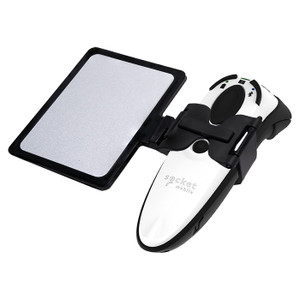
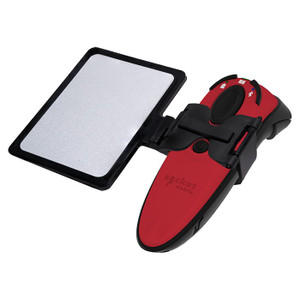
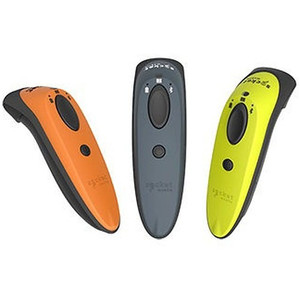
Socket Mobile CX4353-3486 DScan D760 Pro Bluetooth Barcode Scanner
The Socket Mobile CX4353-3486 is a Bluetooth-enabled handheld barcode scanner designed for mobile and fixed-point warehouse, retail, and logistics capture. It decodes both 1D symbologies (Code 128, Code 39, UPC) and 2D formats (QR Code, Data Matrix, PDF417), eliminating the need for separate scanning hardware in mixed-barcode environments. Wireless Bluetooth connectivity integrates directly with mobile devices, tablets, and fixed terminals, reducing infrastructure cost and deployment time compared to USB-tethered or RS232 legacy scanners.
Key Features
- 1D and 2D Barcode Support: Reads Code 128, Code 39, UPC (1D) plus QR Code, Data Matrix, and PDF417 (2D). Single scanner handles both linear and matrix symbologies in the same workflow.
- Bluetooth Wireless Connectivity: Pairs with smartphones, tablets, and mobile computers without cables or dock stations. Reduces tether friction in high-mobility picking, receiving, and inventory tasks.
- Handheld Gray Form Factor: Ergonomic grip for extended scanning sessions in warehouse and retail environments. Lightweight design minimizes fatigue during all-day picking and counting operations.
- 0–45°C Operating Range: Rated for typical indoor warehouse, retail, and logistics facility temperatures. Does not require climate-controlled enclosures or heating/cooling accessories.
- 1-Year Manufacturer Warranty: Standard coverage for defects in materials and workmanship. Typical replacement cycle aligns with 3–5 year fleet deployment horizons.
- Mobile OS Compatibility: Bluetooth HID (Human Interface Device) mode emulates a keyboard wedge, allowing integration with iOS, Android, and Windows Mobile applications without custom SDK. Drop-in deployment for BYOD environments.
In warehouse operations, the pairing of 1D/2D decode capability with Bluetooth eliminates the operational burden of managing separate scanners for different label formats. A single device covers UPC labels on inbound cartons, QR codes on internal pick tickets, and Data Matrix codes on high-value components — reducing hardware SKU complexity and driver maintenance overhead. The wireless form factor supports picking workflows that move across aisles and mezzanines without re-docking or cable length constraints.
Retail deployments benefit from the same versatility: point-of-sale systems can read UPC barcodes on merchandise, markdown QR codes on shelf tags, and Data Matrix codes on received shipments without scanner switching. Fixed-point checkout counters and mobile scan-and-bag workflows both deploy the same hardware, lowering inventory and training costs. The 0–45°C operating range covers store floors, stockrooms, and receiving areas without seasonal performance degradation.
Logistics and parcel operations rely on PDF417 and Code 128 on shipping manifests and tracking labels. The CX4353-3486 captures both formats in a single scan event, reducing time per package and minimizing missed-read errors that trigger manual lookups or rescan cycles. Bluetooth pairing with warehouse management systems (WMS) running on mobile devices or tablets allows real-time data upload without requiring scanners to return to fixed base stations.
Total cost of ownership favors Bluetooth handheld scanners in environments with high labor mobility and frequent format diversity. No USB host infrastructure, no RS232 serial adapters, no cradle charging stations — just pair once and scan. The 1-year warranty aligns with typical commercial replacement cycles; fleet refresh every 3–5 years is standard practice in high-volume logistics.
Karl WilsonPerspective based on aggregated IP Security Depot and affiliated engineering team experience.
We've deployed the Socket Mobile CX4353-3486 across warehouse picking floors, retail receiving docks, and parcel sorting facilities. The real-world differentiator is the 1D/2D decode in a single handheld form factor — most sites we work with have historically maintained two separate scanner types (a UPC gun for retail or inbound, and a 2D reader for internal pick labels or shipping manifests). Consolidating to one device eliminates driver complexity, reduces per-unit cost of ownership, and cuts training time for new warehouse staff. Bluetooth pairing is straightforward with any modern WMS running on Android tablets or iPhones; iOS devices in particular benefit because there's no need for proprietary Serial Port Profile drivers — just pair and the scanner behaves as a keyboard wedge. On the flip side, Bluetooth line-of-sight and radio range (typically 30–50 meters in open warehouse air, less in dense metal racking) does matter; if you're scanning in a facility with heavy RF interference or require scanners to operate in a multi-floor environment with weak signal zones, you may need to invest in additional access points or consider a tethered 2.4GHz licensed-band alternative.
Technical Highlights:
- Dual Barcode Format Support (1D + 2D): Code 128, Code 39, UPC, QR Code, Data Matrix, PDF417 in one device. Eliminates need to carry or switch between barcode readers for different label types — measurable speed gain in mixed-format operations like receiving, where inbound cartons have UPC labels and internal SKU tags use QR or Data Matrix.
- Bluetooth HID Keyboard Emulation: Pairs with any Bluetooth-capable mobile device (iOS, Android, Windows Mobile) without custom SDK or driver. Data arrives as keystroke events, integrating seamlessly with standard WMS, retail POS, and mobile logistics apps. Reduces integration timeline from weeks to hours.
- Operating Temperature 0–45°C: Covers warehouse floor (ambient ~60–72°F year-round in climate-controlled facilities) and outdoor receiving areas. No seasonal performance loss or heated enclosure requirement — scanner performs identically in January and July.
- Handheld Form Factor for Mobility: Lightweight design eliminates fatigue during 8–10 hour picking or receiving shifts. Bluetooth radio allows technicians to move freely across 30–50 meter coverage zones without cable routing or docking cycles between scans.
- 1-Year Warranty, No Extended Contracts: Standard manufacturer coverage; typical fleet replacement cycle is 3–5 years depending on scan volume and drop impact. No forced extended warranty upsell or service contract lock-in.
Deployment Considerations:
- Bluetooth Range in Metal Racking: Line-of-sight Bluetooth typically delivers 30–50 meters in open warehouse air; inside multi-level metal racking or enclosed stockrooms, expect 10–20 meter effective range. Site a base station or access point in high-traffic scanning zones (receiving dock, pick aisles) if coverage is marginal. We've seen sites add a second access point for multi-floor facilities to avoid scanning dead zones.
- Mobile Device Battery Drain: Continuous Bluetooth pairing with a scanner draws 3–5% per hour from tablet or phone battery depending on model and OS. For 8–10 hour shifts, plan for mid-shift recharge or hot-swap battery packs; don't rely on morning charge alone in high-volume operations.
- Symbology Settings Require Firmware Update Tool: Enabling/disabling specific barcode types (e.g., turning off Code 39 to prevent unintended reads) requires Socket Mobile's desktop configuration utility or a mobile app. Not all WMS platforms expose these settings natively — verify your logistics software supports barcode filtering before assuming read-only-what-you-want behavior.
- Handheld Durability and Drop Testing: Gray plastic construction is durable but not shock-rated like some industrial tablets. Drops from waist height (3–4 feet) onto concrete can cause cosmetic damage and occasional scan engine misalignment. Budget for protective cases and screen protectors if your environment has high drop risk.
- Power Management: Built-in rechargeable battery (typical 8–12 hour endurance at moderate scan rates). Charging dock or USB cable required; confirm your mobile device charging infrastructure accommodates scanner charging as well — many sites use multi-device charging stations to consolidate chargers.
The CX4353-3486 is well-suited for mid-to-large warehouse operations, retail chains with mixed-format inventory labels, and logistics networks that mix UPC, QR, and 2D matrix codes across inbound, pick, and shipping workflows. If your environment is pure single-format (e.g., all UPC in retail, or all Code 128 in a small warehouse), a single-purpose scanner may offer lower cost-per-unit. But for operations managing 3+ barcode types across multiple departments, the consolidated Bluetooth handheld measurably reduces complexity. Explore the Socket Mobile catalog for alternative form factors (cradle-mounted, wedge, corded USB) if fixed-point scanning better suits your workflow.