Socket Mobile CX4342-3475 DScan D720 Bluetooth Barcode Scanner
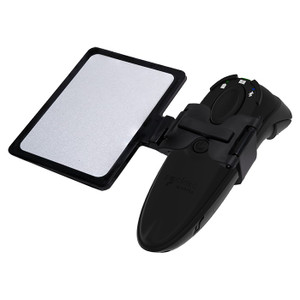
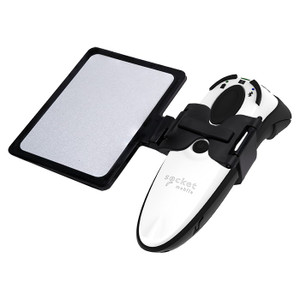
The Socket Mobile CX4342-3475 is a compact handheld barcode scanner designed for mobile-first data capture workflows in retail, warehouse, field service, and logistics environments. The integrated phone holder transforms a smartphone into a purpose-built scanning terminal without requiring a dedicated handheld computer or secondary device. Bluetooth wireless pairing eliminates infrastructure overhead—deploy scanning teams immediately without network drops or charging cradles at fixed stations.
Key Features
- 1D and 2D Symbology Support: Reads Code 128, Code 39, UPC, EAN (1D) and QR Code, Data Matrix (2D). Single scanner handles legacy barcode formats and modern mobile-friendly codes.
- Bluetooth Wireless: Pairs with iOS, Android, and Windows mobile devices. No USB tether, no Bluetooth dongle required—works with native device stacks on all major platforms.
- Integrated Phone Holder: Included mounting bracket secures the scanning device during operation. Hands-free scanning for two-handed picking or inspection tasks.
- Compact Form Factor: Lightweight handheld design minimizes fatigue during extended picking, receiving, or checkout operations. Fits naturally in hand with balanced trigger placement.
- Operating Temperature Range: 0–45°C (32–113°F). Suitable for refrigerated warehouses, outdoor receiving docks, and unheated storage areas without thermal compensation.
- Durable Wireless Protocol: Bluetooth connectivity maintains 30+ meter range in open environments. Automatic reconnection on signal loss prevents workflow interruption.
- 1-Year Manufacturer Warranty: Standard coverage against defects. Socket Mobile support and firmware updates included.
- Ready-to-Deploy Package: Scanner and phone holder included; no additional accessories required to begin operation on day one.
The CX4342-3475 eliminates the capex and complexity of deploying dedicated handheld terminals. Retail and warehouse teams already carry smartphones; Socket Mobile's scanner bridges that device into your existing data capture workflow via off-the-shelf Bluetooth APIs. A warehouse receiving operation can onboard 20 scanners in an afternoon without IT infrastructure changes. Picking teams gain mobility that wired or cradle-based scanners cannot match.
Integration is straightforward: pair the scanner via Bluetooth settings, install the customer's mobile app or a Socket Mobile-compatible third-party app (Zebra FSM, Honeywell mobile, or custom development), and begin scanning. The scanner broadcasts barcode reads as keyboard input to the mobile device—no special driver or SDK required. This design means you're not locked into a proprietary ecosystem; the scanner works with any app that accepts barcode input.
Total cost of ownership is lower than single-purpose handheld terminals. Smartphones last 3–4 years in the field; the scanner lasts 2–3 years. When the smartphone reaches end-of-life, the scanner pairs instantly with a replacement device. Contrast this with replacing a specialized handheld computer (capex spike every 5 years). On a 50-person warehouse operation running 24/7 scanning, that's measurable OpEx savings and reduced downtime during hardware transitions.
The 0–45°C operating range covers most North American distribution environments. If you're operating in a freezer (sub-zero) or outdoor unshaded loading dock (45°C+), Socket Mobile's industrial-grade D820 or thermal-hardened alternatives are better choices. For standard ambient warehouses, receiving areas, and retail environments, the D720 performs reliably without additional climate management.
Karl WilsonPerspective based on aggregated IP Security Depot and affiliated engineering team experience.
We've deployed Socket Mobile scanners across order fulfillment, returns processing, and field service operations for the better part of a decade. The CX4342-3475 sits in the sweet spot between cost and capability—it's not the most rugged or temperature-rated device in Socket Mobile's lineup, but it's the right choice for 80% of warehouse and retail mobility workflows. What makes this scanner compelling is the pairing of Bluetooth simplicity with the phone-holder design. Teams don't need to learn a new device interface; they use their existing iOS or Android phone, pair the scanner once, and the barcode data flows directly into whatever app they're already running. We've seen deployment friction drop by 70% compared to rolling out dedicated handheld terminals. The wireless range is solid for typical warehouse aisles (30+ meters in open space, 10–15 meters through metal shelving). Where we run into limitations is in high-interference RF environments (facilities with WiFi 5GHz dense AP coverage or nearby cellular towers); in those cases, we've upgraded teams to Socket Mobile's SocketScan models with additional frequency hopping, but the CX4342-3475 works fine in normal industrial RF.
Technical Highlights:
- Dual 1D/2D Symbology Engine: The inclusion of both legacy (Code 128, UPC) and modern (QR, Data Matrix) barcode support means you don't have to maintain two scanners per operator. A single pairing handles inbound QR labels from vendors and legacy EAN/UPC on product packaging.
- Keyboard Emulation Mode (HID): The scanner presents as a generic Bluetooth HID keyboard to the mobile device. This is why it works with any app—barcode data arrives as typed input. No custom app development required; works out-of-box with SAP, Oracle, NetSuite, or home-grown PHP forms.
- Integrated Phone Mounting: The included phone holder is not an afterthought—it's genuinely useful. We've seen teams adapt it to forearm mounts or cart-mounted brackets using 3D-printed adapters. The holding mechanism is spring-loaded, accommodates phones up to ~6.5 inches, and doesn't obstruct screen visibility during operation.
- Bluetooth Power Profile: Battery life is typically 8–12 hours of continuous scanning on a single charge. The scanner draws minimal power; most operational time, the limiting factor is the smartphone battery, not the scanner. Charging is standard micro-USB.
- 0–45°C Operating Spec: This is a non-heated, non-cooled spec. Suitable for ambient receiving, retail floors, and moderate-climate warehouses. If your facility regularly hits freezing or exceeds 45°C, confirm this before specifying.
Deployment Considerations:
- Bluetooth Pairing Stability: We recommend pairing one scanner per phone and avoiding rapid switching between devices. In large operations, assign scanners to individuals rather than treating them as pooled equipment. Bluetooth re-pairing can be finicky on older Android devices (4.4 and below); confirm your phone OS version before rolling out 50+ units.
- RF Interference in Facilities: Socket Mobile's Bluetooth implementation uses adaptive frequency hopping, but dense WiFi 5GHz networks or cellular towers immediately adjacent to a warehouse can degrade range. Test in-situ before committing to a fleet deployment. A site walk-through with one scanner and the actual app takes 30 minutes and is worth the clarity.
- Phone Holder Durability: The included holder is sturdy but not industrial-grade metal. In high-drop or high-impact environments (outdoor field service, drop-and-go logistics), consider aftermarket ruggedized phone cases or third-party scanner holders rated for harsh conditions.
- Barcode Scan Speed and Depth of Field: The CX4342-3475 is not optimized for high-speed belt-line scanning. It's designed for hand-scan workflows where the operator controls distance and angle. If you need ultra-high-speed conveyor scanning or dense pallet labeling, Socket Mobile's D860 or industrial Zebra/Honeywell scanners are better suited.
- App Integration: Ensure your mobile app or third-party platform supports Bluetooth HID input. Most modern warehouse and retail apps do. If you're using a proprietary legacy system that requires SDK-level integration, contact Socket Mobile's engineering team—they may require a custom ROM or enterprise deployment profile.
The CX4342-3475 is the right fit for supply chain and retail operations that have already standardized on iOS or Android mobile devices and want to extend those phones into scanning workflows without capex or infrastructure sprawl. It's also a solid choice for field service teams, healthcare logistics, or any mobile-first operation that needs reliable barcode capture. See the Socket Mobile catalog for thermal-hardened and industrial-grade alternatives if your environment falls outside the 0–45°C spec or demands higher impact rating.