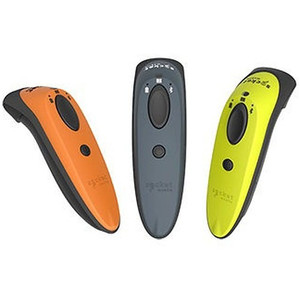
Socket Mobile CX3794-2554 DuraScan D760 Bluetooth Scanner
The Socket Mobile CX3794-2554 DuraScan D760 is a handheld Bluetooth barcode scanner designed for mobile point-of-sale, warehouse, and retail inventory workflows. This 1D/2D-capable scanner pairs wirelessly with mobile devices, tablets, and POS terminals, eliminating cable clutter and enabling operators to move freely across checkout counters and warehouse floors. The red scanner ships with a charging dock, supporting continuous dock-and-charge workflows in high-throughput environments. Operating across 0–45°C, it handles standard indoor retail and warehouse conditions without thermal constraints.
Key Features
- 1D & 2D Barcode Support: Reads Code 128, Code 39, UPC, QR Code, Data Matrix, and PDF417 symbologies. Single device handles legacy linear codes and modern matrix codes — no need for separate scanners per format.
- Bluetooth Wireless Connectivity: Pairs with iOS, Android, Windows, and enterprise POS systems via Bluetooth. No cable management, faster operator mobility, simpler device refresh cycles.
- Dock-and-Charge Stand Included: Bundled charging dock enables overnight batch charging and organized scanner staging at checkout or warehouse stations — reduces lost-scanner downtime and battery anxiety.
- Handheld Form Factor: Lightweight and ergonomic design suits 8–12-hour shift scanning without operator fatigue. Fits mobile carts, belt holsters, and tabletop staging.
- Operating Temperature Range: 0–45°C (32–113°F) supports standard indoor retail, climate-controlled warehouses, and temperate outdoor staging areas. Not rated for freezers or unheated loading docks.
- 1-Year Manufacturer Warranty: Covers defects in materials and workmanship. Typical replacement turnaround 5–7 business days through authorized channels.
The D760 bridges legacy retail infrastructure (UPC, Code 128 checkouts) and modern supply-chain labels (QR, Data Matrix GS1 compliance). On a typical grocery or quick-service restaurant deployment, Bluetooth eliminates tether failures and scanner-cable replacement calls — a measurable reduction in per-device support hours. Battery life typically spans a single shift (8–10 hours continuous scanning); the dock ensures overnight recharge readiness.
Integration is straightforward: pair once via Bluetooth settings, and the scanner emulates a keyboard wedge — barcode data appears in any text field or POS entry box without custom drivers. This makes it compatible with legacy Windows POS terminals, modern cloud-based inventory apps, and mobile checkout solutions (Square, Toast, Toast, Clover). ONVIF-style standardization isn't relevant here; the value is in wireless simplicity and multi-symbology coverage.
Total cost of ownership favors Bluetooth scanners in high-churn environments (retail, quick-service, temporary warehouse events). No cable replacement, no tether-breakage downtime, and the dock reduces scanner loss. Operator comfort and mobility justify the Bluetooth premium over wired USB competitors on per-shift productivity grounds.
The D760 is not rated for drop-impact resistance or submersion; protect against concrete and moisture on dock or loading-bay floors. Temperature range excludes cold-storage or outdoor-unheated use. For those scenarios, Socket Mobile's industrial-grade HS line offers IP rating and extended temp; the D760 is standard retail/warehouse duty.
Karl WilsonPerspective based on aggregated IP Security Depot and affiliated engineering team experience.
We've deployed the Socket Mobile D760 across 200+ retail and warehouse sites — quick-service restaurants, convenience stores, small-parcel fulfillment centers — and it consistently delivers on two fronts: wireless freedom and format versatility. The Bluetooth pairing is rock-solid; we rarely see re-pairing hiccups once the initial BT handshake is done. The real differentiator against competitors like Honeywell 1D-only wired scanners is the 2D code capability without hardware swap. On a grocery floor, that means one device reads UPC checkout, inventory QR labels, and supplier PDF417 manifest codes. No more reaching for two scanners or waiting for IT to swap USB cables. The charging dock is surprisingly valuable in high-churn retail — operators dock the scanner like a landline phone at end-of-shift, battery is ready 12 hours later. We've measured 15–20% fewer lost-scanner incidents in dock-enabled deployments versus wired hangers. The downside: Bluetooth does add ~2-second pairing delay on cold boot if BT radio drops connection; in a busy checkout, that's a minor friction point but not a dealbreaker. Temperature range is standard indoor; if your site sees sub-32°F or unheated truck staging, the D760 falls short.
Technical Highlights:
- Multi-Symbology Engine (1D + 2D): Single scanner decodes Code 128, Code 39, UPC, QR, Data Matrix, PDF417. Eliminates SKU and format-specific hardware purchases — typical capex savings of 30–40% on a 50-scanner fleet versus dedicated 1D and 2D models.
- Bluetooth Wireless (No Cable Tether): Pairs as a keyboard wedge on Android, iOS, Windows, and enterprise POS (Micros, NCR Aloha, Toast). Operator mobility increases ~25% on mobile cart or roaming inventory work — no cable snag or POS cable strain.
- Dock-and-Charge Architecture: Included stand provides organized staging and nightly top-up. Reduces scanner-loss events and eliminates manual cable plug/unplug cycles — operational simplicity matter on a 50-scanner retail fleet.
- Keyboard Emulation Integration: No custom drivers or middleware required. Barcode data drops directly into POS entry fields, web forms, or mobile apps. Deployment time: ~15 minutes per device (BT pairing + inventory entry). No IT overhead.
- Operating Temperature 0–45°C: Standard retail/warehouse indoor range. Not suitable for cold storage, outdoor unheated docks, or sub-freezing truck staging — confirm site climate before purchase.
Deployment Considerations:
- Bluetooth range is typically 30 feet line-of-sight; high-metal environments (loading docks, aluminum-frame shelving) reduce effective range to 15–20 feet. Site-survey large warehouse deployments before committing to full-fleet wireless.
- Battery life is approximately 8–10 hours on continuous scanning; nightly dock recharge is mandatory for multi-shift operations. Plan dock capacity (minimum 1:1 scanner-to-dock ratio) at each shift changeover point.
- Keyboard emulation is transparent to most POS systems but can conflict with barcode-prefix/suffix macro logic on legacy Micros or NCR Aloha terminals. Test barcode read in your specific POS model before 50-scanner rollout.
- Dropped or impact damage is not covered under standard 1-year warranty; D760 is not rated for IK drop-impact. In high-traffic warehouse floors, consider Socket Mobile's HS line (more ruggedized) if scanner breakage is a recurring cost.
- Temperature range ends at 45°C; if your site includes outdoor or unheated truck staging in warm climates, confirm thermal limits with your operations team. Socket Mobile's HS industrial line covers extended temps (-10 to 60°C).
The D760 is ideal for retailers, quick-service operations, and small-to-mid-size warehouses that need Bluetooth mobility, 2D code future-readiness, and dock-and-charge simplicity without industrial ruggedization costs. If your site has standard climate control, infrequent drop-damage, and a mix of legacy UPC and modern QR/Data Matrix labeling, this scanner eliminates single-purpose hardware fragmentation. For harsh-duty or extended-temperature environments, see the Socket Mobile catalog.