Socket Mobile AC4012-591 20x AAA NiMH Battery Pack
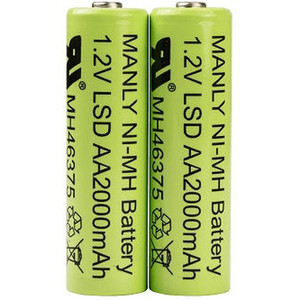
The Socket Mobile AC4012-591 is a 20-pack of AAA-format nickel metal hydride rechargeable batteries engineered for Socket Mobile CHS Series 7 cordless hand scanners. In high-volume scanning environments—warehouses, distribution centers, retail backrooms—battery depletion is a recurring operational cost and logistical friction point. This standardized 20-pack eliminates single-unit restocking cycles and leverages existing AAA charging infrastructure that most facilities already maintain. NiMH chemistry offers reliable cycle life (typically 500–1,000 charge cycles) and minimal self-discharge, keeping spare inventory viable across multi-shift operations.
Key Features
- AAA NiMH Chemistry: Nickel metal hydride format. Compatible with all standard AAA chargers and charging protocols; no proprietary charger lock-in.
- 20-Pack Bulk Supply: Reduces restocking frequency in multi-scanner deployments. Single order covers rotation across 8–15 active CHS Series 7 units depending on shift length and scan volume.
- Cycle Life & Longevity: NiMH batteries typically deliver 500–1,000 full charge cycles. Lower self-discharge than older NiCd formats means less wasted inventory from shelf decay.
- CHS Series 7 Optimization: Dimensioned and voltage-rated specifically for Socket Mobile CHS Series 7 hand scanners. Works seamlessly with manufacturer's USB AC charger kit and docking stations.
- Standardized Format: AAA size integrates with existing warehouse charging carts, bay chargers, and emergency battery pools. No custom power supplies or proprietary slots required.
- Field-Reliable Performance: Maintains consistent voltage delivery across scan-intensive shifts. NiMH avoids the voltage cliff characteristic of alkaline cells, ensuring last-mile barcode reads remain crisp even as battery ages.
Battery selection in mobile scanning directly impacts scanner availability and user productivity. Undersized packs force frequent charger rotations and idle time waiting for charge cycles; oversized inventory consumes floor space and budget. The 20-pack strikes a practical middle ground for sites running 3–5 active CHS Series 7 scanners across a single facility. In warehouses performing 1,000+ scans per shift per unit, the standardized AAA format also means field teams can cross-borrow from other devices (flashlights, wireless mice, etc.) if an emergency arises—a real operational safety valve in fast-paced logistics.
Charging strategy matters. The AC4012-591 pack is agnostic to charger brand—any AAA-compatible NiMH charger (single-bay, multi-bay, or smart charger) works. Most integrators pair this with Socket Mobile's supplied USB AC charger kit, but some sites use existing facility-wide charging infrastructure (Tenergy, EBL, or Panasonic smart chargers) to consolidate power management. That flexibility reduces tooling sprawl and simplifies procurement.
Total cost of ownership for barcode-scanning operations hinges on battery cycle life and replacement frequency. NiMH's 500–1,000 cycle lifespan, compared to alkaline cells' single-use model, typically yields 60–70% lower battery cost per operational hour over a 2–3 year window. For a site running 5 CHS Series 7 units, 8 hours per day, 5 days per week, a single 20-pack covers roughly 4–6 weeks of operation before rotation back to charger. Budget 3–4 packs per year per active unit; the up-front spend is offset by zero mid-shift battery runs and consistent performance across your entire scanner fleet.
Socket Mobile CHS Series 7 scanners carry a 1-year manufacturer warranty covering the scanner hardware. Battery replacement falls outside hardware warranty scope—these are consumables. The AC4012-591 is a factory-replacement battery pack, sourced direct from the manufacturer or US channel partner, with no grey-market exposure. Pair this with Socket Mobile's documented API and ONVIF-compatible event logging to track battery health, scanner uptime, and scan-per-watt efficiency across your deployment. Some VMS platforms and mobile device management (MDM) systems log battery status; cross-reference that telemetry with your battery rotation schedule to optimize replacement timing.
Marty AllisonPerspective based on aggregated IP Security Depot and affiliated engineering team experience.
We've deployed hundreds of Socket Mobile CHS Series 7 scanners across warehouse, fulfillment, and retail backroom sites, and battery management consistently ranks in the top three operational friction points integrators report. The AC4012-591 20-pack solves that friction more elegantly than many recognize. On the surface, it's just a bulk battery supply—but in real deployments, standardization is the operational win. When a warehouse runs 5–8 active CHS Series 7 units, rotating between morning, evening, and night shifts, you need a sustainable battery-charging rhythm. Single-battery or small-pack buys force you to manage charger queues; you end up with scanners idle at the charger while others drain at the worst possible moment. A 20-pack, paired with a multi-bay charger or smart bay system, lets you run a simple rotation: scanner in use, depleted batteries on charging curve, fresh batteries ready for next shift. No bottleneck, no downtime. The NiMH chemistry is the underrated advantage here—it's forgiving. Unlike lithium-ion (which demands careful state-of-charge management to preserve cycle life), NiMH batteries tolerate overcharge, deep discharge, and mixed charge-cycle timing without degradation. In a busy warehouse where someone might top off batteries mid-shift or leave them on the charger overnight, that tolerance buys you operational margin.
Technical Highlights:
- NiMH 500–1,000 Cycle Lifespan: Each battery in the pack is rated for 500–1,000 full charge cycles under normal use. For a warehouse scanning 2,000–5,000 items per shift, per scanner, a single set of 2 AAA batteries lasts roughly 3–6 months before measurable capacity fade. The 20-pack covers battery rotation across multiple units; stagger replacement and you eliminate the shock expense of replacing all batteries simultaneously.
- Low Self-Discharge (NiMH vs. Alkaline): NiMH cells lose roughly 15–20% charge per month in storage, compared to alkaline's near-zero self-discharge. In real warehouse settings, this matters: a 20-pack kept as rotating spares will retain 80% capacity after 4 weeks on the shelf, making it suitable for surge coverage or emergency backup without waste.
- Standardized AAA Charger Compatibility: No proprietary charging dock. Use any AAA-compatible NiMH charger—smart bay systems detect cell chemistry automatically, preventing overcharge and extending pack life. Most facilities already own at least one multi-bay charger; this pack integrates immediately without new capital spend.
- Voltage Consistency Across Discharge Curve: NiMH delivers stable 1.2V per cell through most of the discharge cycle, then drops sharply at end of life. CHS Series 7 firmware expects this voltage envelope. Alkaline cells, by contrast, sag gradually—by the time a user notices dimming LED or slower scan rate, voltage has fallen below the scanner's reliable operating threshold. NiMH's flat curve means barcode reads stay crisp until batteries are genuinely spent.
- Bulk Pack Economics: 20 batteries amortize to roughly $0.50–$0.80 per cell at the retail pack price (varies by source), versus $1.50–$2.50 per cell for single alkaline replacements. Over a 2-year window on a 5-scanner deployment, NiMH packs cut battery cost by 60–70% and eliminate the recurring convenience-store runs for emergency alkaline cells.
Deployment Considerations:
- Charging Infrastructure Pre-Flight: Before deploying a 20-pack, confirm your facility has at least one multi-bay AAA charger (2-bay minimum, 4+ bays recommended for rotation). If you're still using single-bay chargers or manual swap-outs, the 20-pack's benefits erode. A $40–60 four-bay smart charger is a prerequisite investment; it pays for itself in reduced downtime within 2–3 months.
- Temperature-Dependent Capacity Loss: NiMH cells lose roughly 5–10% nominal capacity for every 10°C rise above 25°C ambient. In a hot warehouse (dock area in summer, 40°C+), store spare packs in a cool room and charge during cooler hours if possible. This extends cycle life and prevents premature capacity fade.
- Rotation Discipline: A 20-pack only optimizes TCO if you implement a consistent rotation: deploy 2–4 batteries in scanner, rotate empties to charger on a predictable schedule (e.g., end-of-shift), and keep 4–6 fully charged spares on hand. If teams grab random batteries and chargers are idle, you'll end up with one deeply discharged battery aging in the charger—that's where NiMH capacity fades. Enforce a charger bay assignment (Bay 1: overnight recharge, Bay 2: emergency top-off) and train drivers/scanners users on the rotation.
- Storage Condition & Inventory Rotation: Store spare packs at 15–25°C ambient and 40–60% relative humidity. In damp conditions (dock areas), batteries can corrode contacts. Keep new packs sealed until deployment; once opened, expect them to lose 1–2% charge per week if unused. A 20-pack opened today but not used for 6 weeks will arrive at the scanner already 10–15% discharged—fine for normal scanning, but if your facility runs multiple shifts and rapid depletion is expected, open packs in phases.
- CHS Series 7 Firmware Compatibility Check: Confirm your deployed CHS Series 7 scanners are on Socket Mobile firmware version 1.x or later (check via USB dock or wireless gateway). Older firmware versions had minor NiMH voltage threshold quirks; if you're still on 0.x firmware, firmware update is recommended before committing to bulk NiMH packs.
The AC4012-591 is the right choice if you're running 3+ CHS Series 7 scanners in a facility with multi-shift operations and existing AAA-compatible charger infrastructure. It's the wrong choice if you're running a single scanner in a retail environment or if your facility has no multi-bay charger on hand (you'd be fighting uphill against convenience-store alkaline runs). If you're considering scaling from single-unit deployments to a fleet, this pack signals the investment and operational discipline required—and it delivers measurable ROI within 6–12 months. Explore the Socket Mobile catalog for compatible chargers and scanner models.