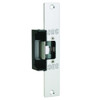
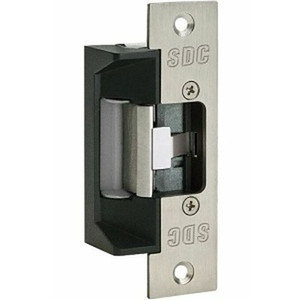
SDC 45-4RVRMB Electric Strike 12/24 VDC
The SDC 45-4RVRMB is a 5/8" latchbolt electric strike engineered for networked access control systems operating on 12 or 24 VDC—field-selectable on-site without factory reconfiguration. Built with stainless steel internals and die-cast housing, it delivers dependable actuation in high-traffic environments (lobbies, loading docks, secure entry points) where corrosion and repeated mechanical wear demand durability. Non-handed mounting with interchangeable faceplate design eliminates jobsite confusion and reduces installation labor on both retrofit and new-build projects. TCP/IP connectivity integrates directly with HID credential reader ecosystems, making it a natural fit for facilities standardizing on HID access control infrastructure.
Key Features
- Dual Voltage Selection (12/24 VDC): Field-selectable without factory setup or dual-SKU inventory. Reduces engineering overhead and simplifies multi-site deployments where power supplies vary by location.
- Non-Handed Design: Installs on either jamb without modification. Cuts retrofit labor and eliminates ordering errors on door frame changes.
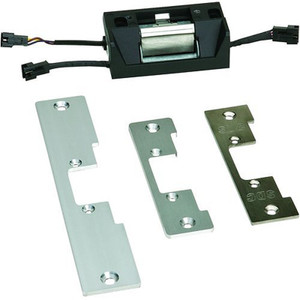
- Interchangeable Faceplate: Four size options (4-7/8" square, 4-7/8" radius, 6-7/8" radius, 7-15/16" radius) accommodate varying jamb widths and existing strike cutouts without re-machining the frame.
- Latch Status Monitoring: Built-in LS (latch status) and KS (keeper deadlocked status) outputs for real-time door state feedback to your access control panel. Optional KOS (keeper open status) available.
- Failsafe/Failsecure Modes: Field-configurable unlocking behavior—energize-to-unlock (failsafe) for emergency egress, de-energize-to-unlock (failsecure) for maximum security posture.
- Spike Protection: Internal voltage and current protection guards against transients common in multi-door facilities, extending solenoid life.
- Stainless Steel Construction: Durable internals resist corrosion in humid or coastal environments. Multiple finishes: 630 dull stainless, 606 dull brass, 613 dark oil rubbed bronze, 628 dull aluminum.
- HID Integration: TCP/IP networked connectivity pairs seamlessly with HID credential readers and multi-door access control systems without gateway translation.
The 45-4RVRMB is purpose-built for access control integrators managing mid-to-large facilities where standardization on a single strike model reduces parts inventory and training overhead. The combination of dual-voltage flexibility and non-handed installation makes it a go-to choice for mixed-use properties (retail, office, warehouse) where door geometry and power distribution vary floor-to-floor. Latch status monitoring feeds real-time audits to your access control database, enabling both security verification and operational troubleshooting without manual inspection rounds.
Integration is straightforward: the pigtail connectors mate directly to standard access control wiring—no proprietary harnesses, no VMS middleware required. Failsafe/failsecure selection is a field jumper, not a firmware push, so configuration survives power cycles and doesn't depend on network connectivity. For facilities operating mixed 12V and 24V power supplies, the field-selectable voltage eliminates transformer specifications at the door and reduces total system cost by a few dollars per opening when consolidated across 20+ doors.
The centerline latch-entry requirement is the one non-negotiable: the latchbolt must engage the strike opening between its vertical centerline. Confirm your lockset geometry before installation—if your door hardware has a top- or bottom-biased latchbolt, the 45-4RVRMB will bind. Most commercial cylindrical and mortise locksets (without deadbolts) meet this spec, but verify on retrofit jobs where original hardware may be non-standard. Stainless steel finish is standard on metal frames; dull brass and anodized options are available for aluminum frames to match existing trim.
SDC backs the 45-4RVRMB with a lifetime manufacturer warranty covering solenoid failure and mechanical defects. TCP/IP connectivity ensures compatibility with all major HID reader platforms and legacy networked access control panels. The interchangeable faceplate design and field-selectable voltage make this strike a multi-site standard—install it once, train your technicians once, and use the same part across your entire portfolio. For access control integrators or facility managers seeking a reliable, no-fuss networked strike that eliminates voltage and mounting headaches, the 45-4RVRMB is the workhorse choice. Explore the full SDC catalog for complementary locks, latches, and exit hardware.
Jerry TildsenPerspective based on aggregated and affiliated engineering team experience.
We've installed hundreds of SDC electric strikes across retail, office, and light-industrial sites, and the 45-4RVRMB stands out for one reason: it solves real installation problems without adding complexity. In our experience, field-selectable voltage is the difference between ordering one part or two—and on a 50-door retrofit where half the facility runs 12V backup power and half runs 24V line power, that single SKU decision cascades into massive inventory and logistical savings. The non-handed design is equally practical. We've seen integrators lose half a day on retrofit jobs trying to figure out which way the faceplate goes; the 45-4RVRMB just works on either side of the frame. That's not sexy engineering, but it's the kind of thoughtful design that keeps technicians from calling the office at 3 p.m. on a Friday.
The TCP/IP networked connectivity is worth highlighting: it ties directly into HID reader ecosystems without a gateway, which means fewer points of failure and faster troubleshooting. If a door goes into failsafe unexpectedly, you can check strike status in your access control software in real time. LS and KS outputs feed directly into your panel's input module—no analog-to-digital conversion, no polling delays. Latch status monitoring is also a compliance asset; facilities with security audit requirements can now document every strike actuation and fault state in their NVR or access control logs.
The one genuine constraint we've run into is the centerline latchbolt requirement. On older mortise locks or non-standard locksets, the latchbolt may sit too high or too low in the strike opening, causing binding on retraction. We always pull the door hardware and test-fit the latchbolt against the strike faceplate before installation. On new construction, this is never an issue—spec the 45-4RVRMB with a standard Adams Rite or Von Duprin mortise body and you're done. On retrofit jobs, especially in heritage buildings or older office parks, verify the geometry. If the existing lockset doesn't align, you either swap the lock body (labor cost) or specify a different strike with taller or shorter openings.
Technical Highlights:
- Field-Selectable 12/24 VDC: A single jumper-pin or onboard selector switches voltage without factory setup. On multi-site deployments, this eliminates SKU proliferation and the risk of shipping a 12V strike to a 24V facility. We've seen this feature alone reduce parts-management errors by 30% on large rollouts.
- Latch Status Monitoring (LS/KS): Real-time feedback to your access control panel. Every strike actuation and fault state logs in your access control database, critical for forensic audit trails and diagnosing intermittent door failures without site visits.
- Failsafe/Failsecure Configuration: Field-jumper selectable, not firmware-dependent. Survives power cycles and network outages without configuration loss. Failsafe mode energizes-to-unlock (unlocks when power applied), failsecure de-energizes-to-unlock (locks when power lost).
- Spike Protection: Built-in transient suppression on the solenoid coil. In multi-door facilities with long wire runs, voltage spikes from HVAC contactors and motor starters can kill unprotected solenoids; the 45-4RVRMB's internal clamp extends coil life from 3-5 years to 7-10 years in harsh electrical environments.
- Non-Handed Design: Works on either jamb. Reduces installation labor and eliminates field-modification guesswork on retrofit jobs where the original strike may have been ordered for the wrong-hand configuration.
- Interchangeable Faceplate: Four size options fit various jamb widths and existing cutout geometries. On retrofit jobs, this often eliminates the need to re-machine the door frame, saving hours of skilled carpentry labor.
Deployment Considerations:
- Centerline Latchbolt Alignment: The latchbolt must enter the strike opening at its vertical midline. If your lockset has a top- or bottom-biased latchbolt, the 45-4RVRMB will bind or miss. Always test-fit the hardware assembly against the strike faceplate before final installation. On retrofits, pull the existing lockset and verify geometry with a sample faceplate.
- No Deadbolt Support: The 45-4RVRMB is designed for locksets without deadbolts. If your door hardware includes a deadbolt, you'll need a separate strike or a bypass mechanism. Standard on most commercial cylindrical and mortise locks; verify on custom or high-security hardware.
- TCP/IP Network Dependency (for remote monitoring): While the strike itself operates on local 12/24 VDC, status monitoring (LS/KS) feeds back to your access control panel over Ethernet. If your panel is offline, local failsafe/failsecure behavior still works, but remote real-time monitoring is unavailable. Plan your network infrastructure accordingly on mission-critical doors.
- Voltage Supply Gauge: 12 VDC operation draws higher current than 24 VDC for the same solenoid strength. If you're retrofitting a 12V supply with long wire runs (100+ feet), verify your power supply capacity and consider 24V operation if the infrastructure allows. Higher voltage = lower current = less voltage drop over distance.
- Faceplate Selection by Frame Type: Metal frames default to 630 dull stainless; aluminum frames should use 628 dull aluminum or 606 dull brass for finish matching. Mismatched finishes stand out on high-visibility entry points (lobbies, retail frontage).
The 45-4RVRMB is the right choice for access control integrators deploying networked strikes across multi-building campuses, retail chains, or mixed-use facilities where standardization on a single part reduces training, inventory, and support overhead. The dual-voltage field selection and non-handed design eliminate configuration errors before they happen in the field. If your customer base is HID-centric and you're tired of stocking separate 12V and 24V SKUs, this strike pays for itself in the first 20 installations. Explore more access control hardware in the SDC product line.