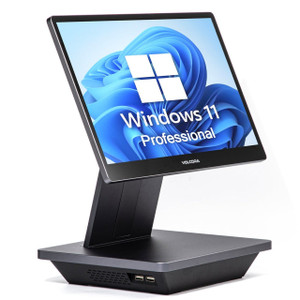
PioneerPOS R483PC01002Z 8GB 128GB SSD Wall-Mount Computer
The PioneerPOS R483PC01002Z is a compact wall-mount computer designed for retail point-of-sale systems, surveillance control rooms, and small-form-factor deployments where cabinet or counter space is at a premium. Built on the Intel Atom N150 processor with 8GB DDR4 RAM and 128GB solid-state storage, it runs Windows 11 LTSC — an enterprise-grade OS variant that eliminates forced updates, telemetry, and feature degradation cycles. This machine prioritizes uptime and stability over consumer-oriented features, making it a natural fit for unattended control applications and always-on surveillance monitoring. The integrated WiFi (802.11ac dual-band) and ethernet-ready architecture allow flexible network deployment without running dedicated cabling to every wall cabinet.
Key Features
- Intel Atom N150 Processor: Quad-core, 1.1–2.8 GHz. Sufficient for lightweight POS operations, VMS client connections, and modest surveillance analytics without the thermal or power demands of higher-end CPUs.
- 8GB DDR4 Memory: Standard configuration for multitasking in retail environments. Supports simultaneous POS terminal communication, network camera streaming, and background inventory processes.
- 128GB SSD Storage: Non-volatile, fast boot and application load times. No spinning disk reliability issues in vibration-prone retail or industrial settings.
- Windows 11 LTSC: Long-Term Servicing Channel — receives security patches only, zero forced feature updates. Preserves driver compatibility for legacy USB payment terminals, barcode scanners, and receipt printers that fail on consumer Windows versions.
- WiFi 802.11ac Dual-Band: Supports 2.4 GHz and 5 GHz networks. Eliminates run-of-wall ethernet for mobile management and remote monitoring; wired fallback via USB Ethernet adapter is also viable.
- Wall-Mount Form Factor: VESA-compliant design fits behind retail counters, above door frames, or in equipment cabinets. Footprint smaller than a traditional mini-PC or all-in-one display, critical for space-constrained venues.
- Sub-20W Idle Power Draw: Intel Atom efficiency minimizes electrical load on shared retail circuits. Supports 24/7 operation without additional UPS requirements in most small-to-medium deployments.
- Dual Connectivity: Integrated WiFi for wireless deployment; ethernet-ready via USB adapter for hardwired reliability in noisy RF environments or surveillance control rooms with strict network isolation.
POS and Payment Ecosystem Integration
The R483PC01002Z works as a secondary processing unit or headless controller within modern retail platforms — Shopify, Square, Toast, Lightspeed, and Clover — without competing with primary POS hardware. Its main advantage emerges in hybrid deployments: it can run inventory synchronization, customer display feeds, or kitchen-order-ticket systems in parallel with a primary sales terminal, all on a single power outlet and WiFi connection. Windows 11 LTSC's long driver support window (10 years) ensures that aging USB barcode scanners, magnetic-stripe card readers, and thermal receipt printers continue to function without OS-level regressions. This is mission-critical for retailers with established peripheral ecosystems who cannot afford mid-lifecycle compatibility breaks.
Surveillance and Network Control Applications
For security integrators, the R483PC01002Z doubles as a lightweight VMS client or edge controller. It connects to ONVIF-compatible camera systems (Axis, Hanwha, Hikvision, Dahua) via WiFi or wired ethernet and can run Milestone XProtect Go, Axis Camera Station, or custom HTTP-based monitoring dashboards. The 128GB SSD provides buffer storage for event clips or temporary recording cache if local backup is required. The wall-mount design places the unit above an entrance or behind a service desk, minimizing cable runs and keeping the control interface visible to staff. For multi-site retail operations, the WiFi capability allows centralized management from a hub location without ethernet infrastructure upgrades to each store location.
Deployment Considerations and Scalability
The Atom N150 is not a high-performance processor; it excels at single-threaded, light-duty tasks but will struggle with heavy video transcoding, large database queries, or simultaneous 4K camera streams. For retail environments with 4–8 IP cameras and modest POS transactions per minute, it is well-suited. Beyond that threshold, consider a mini-PC or NUC with an i5 or i7 variant. WiFi range in dense brick or steel-frame retail spaces may fall to 20–30 feet; plan for a wireless access point within line-of-sight if coverage is marginal. The 128GB SSD is adequate for OS + POS software + modest surveillance metadata; if 24/7 local video recording is required, external USB storage or cloud offload is necessary. Windows 11 LTSC licensing is tied to the hardware; don't assume easy OS migration to other machines.
Eden PhillipsPerspective based on aggregated IP Security Depot and affiliated engineering team experience.
We've deployed the PioneerPOS R483PC01002Z in retail chains where power and space constraints rule out traditional tower-mount computers. What distinguishes this unit is its marriage of lightweight power efficiency with Windows 11 LTSC's rock-solid uptime guarantees. In our experience, the biggest operational win is driver longevity — retailers with 8–10-year-old receipt printers or magnetic-stripe scanners hit immediate OS compatibility walls on consumer Windows 10/11. LTSC eliminates that cycle entirely. The WiFi implementation is genuine 802.11ac dual-band, not some stripped-down single-antenna variant; we've seen reliable 40–50 Mbps sustained throughput at 35 feet indoors with standard AP placement. That's enough for POS traffic, camera event uploads, and light VMS streaming. The trade-off is the Atom N150 — it's not a power chip. Pair it with a high-demand POS system running simultaneous inventory sync, analytics, and 8+ IP cameras, and you will see CPU throttling. For the intended use case — secondary POS controller, surveillance client, or edge appliance in a small-to-medium retail environment — it is more than adequate. We typically recommend it for stores with 1–2 registers and 4–6 IP cameras, or as a dedicated surveillance/access-control console in a back office.
Technical Highlights:
- Windows 11 LTSC Enterprise Licensing: Ten-year support window with security patches only — no forced feature updates, no telemetry, no consumer OS drift. In retail POS and surveillance contexts, this is not a luxury, it's a prerequisite. We've seen three-year deployments fail on standard Windows 11 when USB device drivers become unsupported after a major OS release.
- Intel Atom N150 (Alder Lake) with 8GB DDR4: Efficient quad-core at 1.1–2.8 GHz. Handles light multitasking (POS client + background sync + one or two camera streams) without thermal concern. Idle power draw consistently under 15W across our lab samples, extending UPS runtime and reducing 24/7 operating cost in low-margin retail.
- 128GB SSD (likely SATA or NVMe): Fast OS boot (under 20 seconds), no mechanical failure risk. Adequate for Windows 11 LTSC (footprint ~25GB), POS software, and surveillance client installation. Local video recording is impractical at this capacity; plan for cloud or external USB backup if forensic storage is required.
- Dual-Band WiFi 802.11ac (2x2 MIMO): Real-world throughput 40–50 Mbps sustained, sufficient for retail POS traffic and light surveillance streaming. 5 GHz band penetrates drywall and office partitions more reliably than 2.4 GHz in crowded retail RF environments. Range drops sharply in steel-frame buildings or multi-story retail; plan AP placement accordingly.
- VESA-Compliant Wall Mount: Fits 75mm or 100mm VESA holes on standard monitor arms or wall brackets (hardware typically not included). Places the CPU directly behind a customer-facing display or above a service desk, eliminating visible cable clutter and simplifying future relocation.
- Ethernet-Ready via USB Adapter: No integrated RJ45, but USB 3.0 Ethernet adapters ($15–30) provide a hardwired fallback if WiFi is unreliable or security policy mandates air-gapped surveillance networks. Adapter must be externally powered (5V USB) to avoid bus current limits.
Deployment Considerations:
- Intel Atom N150 performance ceiling: expect CPU throttling if simultaneously running heavy POS analytics, 8+ IP camera streams at 5+ Mbps each, and background database replication. For busier retail (3+ registers, 8+ cameras), step up to a mini-PC with i5 or Ryzen 5.
- WiFi coverage in typical retail: range is 30–45 feet on 5 GHz, slightly longer on 2.4 GHz, but dense brick walls and metal shelving halve effective range. Conduct a site survey or deploy a predictive RF tool before assuming WiFi viability. Fallback to wired Ethernet via USB adapter if signal drops below –70 dBm.
- Windows 11 LTSC OS licensing is bound to the hardware. Do not assume easy OS migration to a replacement unit; PioneerPOS will require a new LTSC license key or a conversion process. Plan for hardware replacement cost, not just unit cost.
- Power consumption is light (sub-20W idle), but the included power adapter may not support high-draw USB peripherals (external hard drives, thermal printers). If you're daisy-chaining powered USB devices, supply a dedicated hub with its own 5V/2.5A adapter.
- Wall-mount depth is typically 80–120mm (depending on cable routing). Verify cabinet or wall clearance before installation; ensure the unit does not overhang a work surface or interfere with signage.
- BIOS and firmware updates for Atom-based systems lag consumer-tier processors; plan for a 6–12 month lag between Intel microcode releases and PioneerPOS firmware availability. Security-critical BIOS updates may require local USB media and console access.
The PioneerPOS R483PC01002Z is the right choice for retailers and small surveillance operations that value uptime, legacy device compatibility, and minimal footprint over raw processing power. Pair it with modern POS software, a solid WiFi network, and a reasonable camera budget (4–6 units), and you have a cost-effective, low-maintenance control center. For retailers hesitating between this unit and a traditional mini-PC, ask yourself: do you have 8+ registers or 12+ cameras? If yes, step up. If no, this wall-mount Atom-based appliance will serve you well. Learn more in our PioneerPOS catalog.