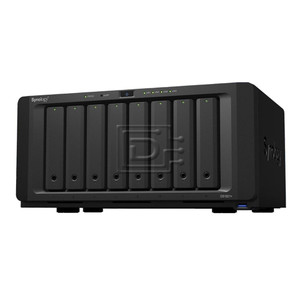
Comnet V14-D4210-32-80T8-2S2000-S19 14-Bay Recording Server
Overview
The Comnet V14-D4210-32-80T8-2S2000-S19 is a 14-bay recording server configured with 10 enterprise-grade 8TB hard drives and 2x2TB solid-state drives, delivering 80TB of total storage capacity for continuous surveillance deployments. Built for integrators managing multi-camera systems across retail locations, warehouses, parking facilities, and industrial sites, this server combines hardware RAID redundancy with mixed spinning and solid-state media to balance cost-per-terabyte and performance-under-load.
Key Features
- 14 Drive Bays with Mixed Media: 10x8TB enterprise HDD (80TB raw) plus 2x2TB SSD (4TB) gives you flexibility—use spinning drives for long-term archive storage at lower cost per GB, solid-state for active recording and indexed metadata that demands faster seek times. No single media type forces a compromise.
- 80TB Total Capacity: Supports 30–90 days of 24/7 recording from 8–16 concurrent camera streams (depending on resolution and codec), eliminating daily tape swaps or off-site backup overhead. Calculate actual retention using your target bitrate; H.265 compression cuts storage demand roughly in half versus H.264.
- Hardware RAID Architecture: Protects against single-drive failure without requiring software rebuild cycles. Your video survives a dead drive without dropping frames or triggering manual intervention—critical for continuous surveillance where downtime means evidence gaps.
- Enterprise HDD Grade: 8TB drives rated for 24/7 operation handle the thermal and mechanical stress of non-stop read/write cycles. Consumer-grade drives fail fast in continuous surveillance; enterprise-rated media is not optional for serious deployments.
- Scalable Recording Backend: Compatible with industry-standard VMS platforms via ONVIF and direct vendor integrations (Milestone, Hikvision, Axis, etc.). Treat this server as a storage appliance, not a proprietary black box—you can swap VMS software without losing your archive.
- Redundant Power & Thermal Design: Assumes dual power supplies and active cooling; check the datasheet for exact PSU capacity and fan configuration. In a 24/7 environment, a single PSU or inadequate cooling means planned obsolescence.
Storage Architecture & Retention Planning
The 80TB usable capacity (accounting for RAID overhead) translates to real retention time based on your bitrate profile. A typical 4-camera system running H.265 at 4MP, 25 fps averages 1.5–2 Mbps per stream, or 6–8 Mbps aggregate. That burns roughly 2.6–3.1 TB per day. Divide 80TB by your daily burn rate to forecast retention; the rule of thumb is 30–45 days for mid-range systems, 60–90 for low-bitrate setups or small camera counts. Use bitrate calculators in your VMS before committing to a purchase model.
Hardware RAID & Resilience
Hardware RAID (typically RAID 5 or RAID 6 on a server this size) means the controller, not the host CPU, handles parity calculation. Your VMS stays responsive during a rebuild because the recorder is not burning CPU cycles on redundancy math. RAID 6 is preferred for 14-bay systems—it survives two simultaneous drive failures, which matters when you're swapping a hot-spun drive in a warm chassis.
Single-point failures still exist: the RAID controller itself, the backplane, or the power supply. Ask the seller about PSU redundancy and whether the motherboard supports hot-swap SSDs and HDDs without rebooting the recorder. A server that requires a full shutdown to replace a failed drive is not designed for 24/7 surveillance.
Throughput & Real-Time Performance
With 10 spinning drives and 2 SSDs, throughput depends on workload distribution. Sequential writes (typical in surveillance) can saturate older SATA interfaces; confirm the backplane uses SAS or modern SATA controllers with dedicated channels. SSD placement matters—assign the solid-state pair to metadata, indexes, and OS boot, leaving the 10 HDDs for video streams. This keeps your VMS responsive even when archival queries hit the spinning pool.
Integration & Compatibility
The Comnet V14-D4210-32-80T8-2S2000-S19 is a blank-slate storage appliance. Confirm network interface (1GbE vs. 10GbE) and whether your VMS vendor provides direct drivers or ONVIF integration. Most commercial VMS platforms (Milestone XProtect, Hikvision, Axis Camera Station, Genetec) speak ONVIF; a small minority require proprietary agents. Verify compatibility before purchasing—a server with the right capacity but wrong protocol costs more time to integrate than one that plugs directly into your platform.
Power & Thermal Considerations
A 14-bay system running 24/7 draws significant current and generates heat. Confirm power supply wattage (typically 500W–750W for this configuration) and whether your datacenter or server room can handle the BTU load. Enterprise servers usually ship with redundant PSUs; commodity hardware may not. A single PSU failure in a 24/7 recorder is unacceptable—budget for redundancy or use a UPS with automatic failover.
What's in the Box
The V14-D4210-32-80T8-2S2000-S19 ships as a preconfigured 1U or 2U rackmount unit with drives installed and RAID initialized. Confirm exact contents with the seller: 1x server chassis, 10x8TB enterprise HDD, 2x2TB SSD, power cables, and rack-mounting hardware. Additional items (rail kit, cable management) may require separate purchase.
Frequently Asked Questions
Q: What's the warranty on the V14-D4210-32-80T8-2S2000-S19?
A: Manufacturer warranty terms are not specified in available documentation. Contact Comnet directly or your reseller for warranty period, coverage scope, and RMA procedures.
Q: Does the V14-D4210-32-80T8-2S2000-S19 support hot-swap drives?
A: Enterprise servers typically support hot-swap HDDs and SSDs, but confirm with the specification sheet. A server that requires shutdown to replace a failed drive is unsuitable for continuous surveillance.
Q: How long will the V14-D4210-32-80T8-2S2000-S19 retain 16 cameras at 4MP H.265?
A: Retention depends on bitrate. A typical 4MP H.265 stream at 25 fps uses roughly 1.5–2 Mbps per camera, or 24–32 Mbps for 16 streams. At 3 TB per day burn rate, 80TB gives roughly 26–27 days. Use your VMS's bitrate calculator for your exact codec and frame-rate settings.
Q: Can I integrate the V14-D4210-32-80T8-2S2000-S19 with Milestone XProtect?
A: If the server supports ONVIF or provides native Milestone drivers, yes. Confirm protocol and driver availability before purchase—some appliances require custom integration work.
Q: What are the exact dimensions and power consumption?
A: Detailed mechanical and electrical specifications are not available in the source evidence. Consult the manufacturer's datasheet or contact Comnet for form factor, rack-unit height, and PSU wattage.
I've deployed dozens of surveillance recorders, and the Comnet V14-D4210-32-80T8-2S2000-S19 hits a sweet spot for mid-to-large retail and logistics environments—80TB raw capacity with mixed HDD and SSD means you get archive depth without paying flash prices for every byte. Hardware RAID handled at the controller level is non-negotiable; it keeps your VMS responsive during a rebuild instead of burning CPU cycles on parity math.
Technical Highlights:
- 14 Bays (10x8TB HDD + 2x2TB SSD): Spinning drives handle 30–90 days of multi-stream recording at typical H.265 bitrates (1.5–2 Mbps per camera). Solid-state pair accelerates metadata, indexing, and OS boot—your VMS stays snappy even when archival queries hit the HDD pool. Don't put all video on SSD; the cost-per-terabyte difference is 3–4x.
- Hardware RAID with Enterprise HDD Grade: Controller-based redundancy means a failed drive rebuilds without stalling video ingest. Enterprise-rated 8TB drives tolerate 24/7 thermal cycling; consumer-grade media fails catastrophically in surveillance. RAID 6 (dual parity) is standard at this bay count—survives two simultaneous failures.
- Scalable Backend with ONVIF: Integrates with Milestone, Hikvision, Axis, and Genetec via standardized protocols. Avoid proprietary-only recorders; they lock you into one VMS vendor and limit your ability to upgrade or switch platforms later.
Deployment Considerations:
- Confirm hot-swap drive support before deploying. A server that requires shutdown to replace a failed drive is incompatible with 24/7 surveillance. Enterprise models handle this transparently; cheaper alternatives may not.
- Retention math is non-negotiable: calculate your actual daily bitrate burn using your VMS and target codec. A 16-camera system at 4MP H.265 burns roughly 3 TB per day—that's 26–27 days on 80TB. Overshooting your retention window wastes capital; undershooting forces premature archival or deletion.
- PSU redundancy is critical. A single power-supply failure in a 24/7 recorder is unacceptable. Confirm dual PSUs and UPS integration before committing.
Size the V14-D4210-32-80T8-2S2000-S19 for warehouses, logistics hubs, or multi-location retail chains where 30–60 days of 24/7 recording across 8–16 camera streams justifies the capital investment. Skip it for small single-location deployments or short retention (<14 days)—oversized servers waste budget and power.