Panduit PSL-DCPLRE Recessed Patch Cord Lock-In Device
Overview
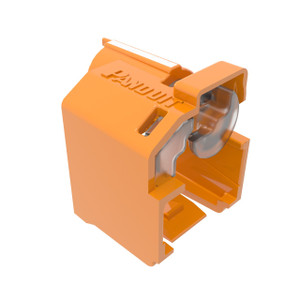
The Panduit PSL-DCPLRE is a recessed, red polycarbonate lock-in device engineered to physically secure patch cord connections in structured cabling environments where unauthorized removal or accidental disconnection cannot be tolerated. If you manage a data center, server room, or high-density patch field where a yanked cable causes an outage — or where compliance requires demonstrable physical access control — this is the type of component that closes that gap without adding complexity to your infrastructure.
The PSL-DCPLRE ships as a 10-pack with one removal tool included, making it a practical deployment unit for a single patch panel or a rack segment. Each device measures 0.55 in. wide × 0.74 in. tall (13.9 mm × 18.7 mm), sized to fit compactly in high-density patching environments without blocking adjacent ports.
Key Features
- Recessed mounting design: Unlike standard flush-mount lock-in devices, the PSL-DCPLRE is specifically built for jacks that sit slightly deeper from the panel surface. If your faceplate or patch panel has a recessed port profile and you've found standard lock-ins don't seat correctly, this is the variant you need — using the wrong depth device means the locking mechanism won't engage properly.
- Extended hood protects locking mechanism: The hood shields the internal latch from incidental contact, reducing the risk of accidental release during cable management work in congested racks. That protection matters in high-density environments where technicians are frequently reaching past adjacent cables.
- Prevents unauthorized access and accidental removal: Once installed, the patch cord cannot be disconnected without the dedicated removal tool. In regulated environments — healthcare, finance, government — this provides a physical audit trail: if a cable is out, a tool was used. That's a meaningful control layer on top of logical port security.
- Polycarbonate construction: Polycarbonate is dimensionally stable and resistant to the temperature cycling and humidity variation common in data center environments. It won't deform under the mechanical stress of repeated patch cord insertions and removals during maintenance cycles.
- Red color coding: Red is the conventional signal for restricted or critical connections in structured cabling practice. Deploying PSL-DCPLRE (often searched as PSL DCPLRE) on your most sensitive links — primary uplinks, out-of-band management ports, storage fabric connections — gives anyone working in the rack an immediate visual cue before they touch anything.
- 10 devices per package, 20-unit carton quantity: The 10-pack format maps cleanly to a half-panel deployment or a single switch's uplink ports. If you're protecting an entire 24-port panel, two packs cover it. The 20-unit carton (2 packs) is the standard stocking unit for larger installations.
- Removal tool included: Each 10-pack ships with one removal tool — the only way to release a locked connection. That's the practical control point: tool custody equals port access. For multi-technician environments, factor in whether you need additional removal tools separately.
Integration and Compatibility
The PSL-DCPLRE is designed for use with Panduit copper-system jacks where the port sits slightly recessed from the mounting surface. It is not interchangeable with the standard (non-recessed) lock-in variant — depth matching is critical to getting proper latch engagement. Verify your jack mounting depth before ordering. The device is compatible with standard RJ-45 patch cords; the lock-in secures the cord's locking tab in the engaged position. This product falls within Panduit's copper physical security device line, which spans multiple colors for zone coding and both standard and recessed profiles for different panel geometries.
For environments that use physical security accessories as part of a layered access control strategy, lock-in devices are typically deployed alongside port blockers on unused jacks — together they eliminate both unauthorized disconnection of active connections and unauthorized insertion into open ports. See the broader Panduit structured cabling line for compatible port blockers and other copper-system security accessories. If you're specifying physical port security for a network switch or patch panel deployment, pairing lock-ins on critical uplinks with port blockers on unused ports is standard practice.
For guidance on physical layer security planning, a network cabling and physical security guide can help map which port categories warrant lock-in protection versus standard patching. In larger structured cabling deployments, patch panel selection directly affects which lock-in profile (recessed vs. standard) you need — confirm panel recess depth before specifying at scale.
What's in the Box
- 10x PSL-DCPLRE red recessed lock-in devices
- 1x removal tool
Frequently Asked Questions
Q: What is the difference between the PSL-DCPLRE and a standard (non-recessed) Panduit lock-in device?
A: The PSL-DCPLRE is specifically designed for jacks that mount slightly deeper from the panel surface. Its extended hood accommodates the recessed port geometry so the locking mechanism engages correctly. A standard lock-in device will not seat properly in a recessed jack, leaving the connection unsecured.
Q: Does the PSL-DCPLRE work with any RJ-45 patch cord, or only Panduit cables?
A: The lock-in device secures the RJ-45 locking tab of a patch cord in the engaged position. It is designed for use with Panduit copper-system jacks. Compatibility with third-party patch cords depends on the cord's locking tab geometry — verify fit with your specific cable before deploying at scale.
Q: How many lock-in devices and removal tools are included per package?
A: Each package includes 10 red recessed lock-in devices and 1 removal tool. The carton quantity is 20 units (2 packages).
Q: Can the patch cord be removed without the removal tool once the PSL-DCPLRE is installed?
A: No. The lock-in device is engineered to prevent disconnection without the dedicated removal tool. This is the intended security control — tool custody governs who can remove a locked connection.
Q: Why is the PSL-DCPLRE red, and are other colors available in the Panduit lock-in line?
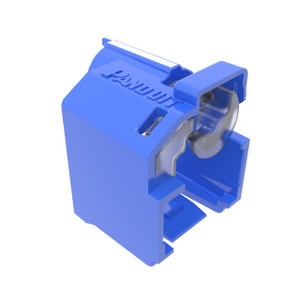
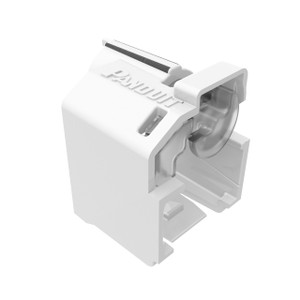
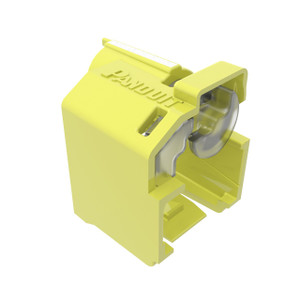
A: Red is used conventionally in structured cabling to designate restricted or critical connections, providing an immediate visual cue to anyone working in the rack. Panduit's lock-in device line is available in multiple colors to support zone coding strategies across different port categories.
Q: What are the physical dimensions of the PSL-DCPLRE?
A: The PSL-DCPLRE measures 0.55 in. (13.9 mm) wide by 0.74 in. (18.7 mm) tall — compact enough for high-density patch fields without blocking adjacent ports.
The PSL-DCPLRE is one of those components that looks trivial on a BOM until the day someone pulls the wrong cable in a live rack. The recessed profile is the critical spec here — at 0.55 in. × 0.74 in., it's purpose-built to engage the locking mechanism on jacks that sit back from the panel face, where a standard lock-in would float and provide zero retention.
Technical Highlights:
- Recessed geometry, 0.74 in. height: The extended hood bridges the gap between the panel surface and the recessed jack face, ensuring the latch seats fully. Without this, the locking mechanism can't engage — the cord stays physically unlocked regardless of what the device looks like from the front.
- Polycarbonate construction: Dimensionally stable under the mechanical cycling of a working patch field — repeated insertions, cable management pulls, and temperature variation in active data spaces won't degrade retention over time the way softer plastics do.
- 10-pack with dedicated removal tool: Tool-controlled removal is the actual security mechanism. In a compliant environment, the removal tool should be treated like a keyed asset — if you have 10 locked ports and one tool, access to that tool is the chokepoint.
Deployment Considerations:
- Confirm your jack mounting depth before ordering at scale. The recessed variant (PSL-DCPLRE) and standard variants are not interchangeable — deploying the wrong depth profile means the locking hood won't engage, and you'll have the visual appearance of security without the physical retention.
- Each 10-pack ships with one removal tool. In multi-technician environments or distributed data closets, plan your tool-to-location ratio deliberately — a single shared tool creates a workflow bottleneck during maintenance windows.
The PSL-DCPLRE is the right specification for healthcare and financial data closets where physical port integrity is an auditable control — particularly on primary uplinks and out-of-band management connections where a disconnection event has immediate operational consequence.