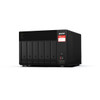
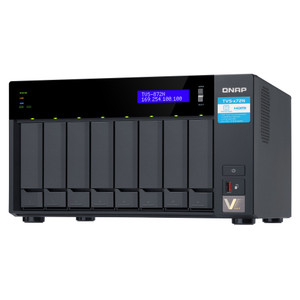
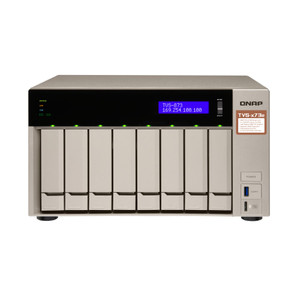
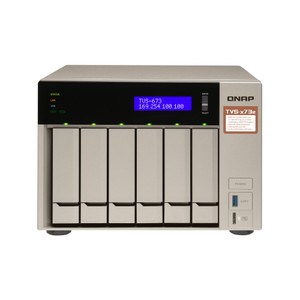
QNAP TVS-675-8G-US 8-Bay NAS iSCSI IP-SAN Tower NAS
The TVS-675-8G-US is an 8-bay tower NAS built around a Zhaoxin KaiXian KX-U6580 8-core, 8-thread 2.5GHz x86 processor — an x86-native platform designed for organizations that need genuine multi-core throughput for concurrent iSCSI targets, VM storage, and file services without the cost premium of Intel or AMD platforms. If your deployment mixes NAS shares with block-level iSCSI LUNs for VMware, Hyper-V, or bare-metal servers, this unit positions well for that workload. Explore the full QNAP NAS and storage line for the complete family context.
Overview
Eight drive bays give you meaningful raw capacity headroom — enough to run RAID 6 across all bays and still land north of 60TB usable on large-capacity drives. The platform ships with 8GB DDR4 and expands to 64GB via two DIMM slots (2x 32GB dual-channel), which matters if you plan to run QTS virtualization features, ZFS-backed volumes, or multiple simultaneous iSCSI sessions with heavy metadata caching. The tower form factor suits wiring-closet shelves and server-room floor stacks equally well. For buyers evaluating NAS storage appliances, the TVS-675 sits in the performance-value tier — more CPU headroom than entry SOHO units, less than the TVS-h series Xeon/Ryzen flagships.
Key Features
- Zhaoxin KX-U6580 8-Core 2.5GHz Processor: Eight cores and eight threads at 2.5GHz deliver real parallel throughput — simultaneous RAID rebuilds, active iSCSI sessions, and file protocol (SMB/NFS) traffic don't serialize the way they would on a 4-core entry NAS. The 64-bit x86 architecture means full QTS application compatibility: Plex transcoding, container station, and virtualization station all run natively without ARM emulation caveats.
- 8GB DDR4, Expandable to 64GB (2x 32GB Dual-Channel): The base 8GB handles routine NAS workloads, but if you're running multiple VMs via Virtualization Station or pushing large ZFS ARC caches, expanding to 32GB or 64GB is a straightforward two-DIMM swap. Dual-channel configuration at max capacity also improves memory bandwidth for read-intensive workloads. Check your NAS memory upgrade options before ordering if you plan to expand at deployment.
- Block-Based iSCSI LUN — Up to 250TB LUN Size, 128 Targets: A 250TB maximum LUN size means this unit can present a single logical volume large enough for most enterprise backup targets or large video surveillance storage pools — you're not forced into LUN-spanning hacks for big deployments. Supporting up to 128 LUN targets lets multiple initiators (ESXi hosts, Windows servers, backup appliances) connect simultaneously. Note: QNAP requires at least 4GB RAM for iSCSI operation — the 8GB base configuration clears that bar.
- ZhaoXin C-960 Graphics with HDMI 2.0 (up to 3840x2160 @ 60Hz): The onboard GPU outputs true 4K/60Hz over HDMI 2.0 — relevant if you're using the unit as a local display workstation for HD Station or running local 4K video playback directly from NAS-stored media without a separate client device. This isn't a gaming GPU, but for NAS-local desktop use it handles the job.
- 2x USB 3.2 Gen 2 (10Gbps) Type-A: USB 3.2 Gen 2 at 10Gbps means external backup drives or USB SSDs attached directly to the unit transfer at near-SATA speeds — a single large backup job to an external drive won't bottleneck at the interface. Useful for offline vault copies or direct-attach expansion without consuming a PCIe slot.
- Tower Form Factor: The upright tower design fits standard under-desk or closet-shelf deployments without requiring rack ears or a dedicated rack unit. If your environment eventually moves to rack, QNAP sells optional rack-mount kits for TVS-series tower units — rackmount accessories worth confirming compatibility for this specific chassis before purchasing.
Integration and Compatibility
The x86 64-bit architecture means the TVS-675-8G-US runs the full QTS software ecosystem: iSCSI/IP-SAN for VMware vSphere and Microsoft Hyper-V datastores, NFS v4 and SMB 3 for Linux and Windows file shares, and QNAP's Container Station for Docker and LXC workloads. The iSCSI stack supports LUN mapping and masking, CHAP authentication, and multiple portals — standard requirements for multi-host SAN environments. Organizations running video surveillance alongside file storage can pair this with IP cameras and QVR Pro (QNAP's surveillance application) for an integrated recording and storage stack, keeping camera footage on the same appliance that serves other business data.
The TVS-675-8G-US (often searched as TVS 675 8G US) is built for mixed-workload SMB and mid-market environments where a single box needs to handle file services, iSCSI block storage for virtualization, and optionally local media or surveillance recording simultaneously.
Frequently Asked Questions
Q: How much RAM does the TVS-675-8G-US ship with, and can it be upgraded?
A: The TVS-675-8G-US ships with 8GB DDR4. It has two DIMM slots and supports up to 64GB total (2x 32GB) in dual-channel configuration. Upgrading RAM is recommended before enabling Virtualization Station or heavy iSCSI multi-session workloads.
Q: What is the maximum iSCSI LUN size on the TVS-675-8G-US?
A: The maximum block-based iSCSI LUN size is 250TB, with support for up to 128 LUN targets. QNAP requires a minimum of 4GB RAM for iSCSI operation — the base 8GB configuration meets this requirement.
Q: Does the TVS-675-8G-US support 4K display output?
A: Yes. The unit includes one HDMI 2.0 port capable of outputting up to 3840x2160 at 60Hz, powered by the onboard ZhaoXin C-960 graphics processor. This supports QNAP's HD Station desktop environment and local 4K media playback.
Q: What processor does the TVS-675-8G-US use?
A: It uses the ZhaoXin KaiXian KX-U6580 — an 8-core, 8-thread 64-bit x86 processor running at 2.5GHz. This is a domestic Chinese x86 architecture chip, not Intel or AMD. Full x86 instruction compatibility means standard QTS applications run without modification.
Q: What USB standard does the TVS-675-8G-US support?
A: The unit has 2x USB 3.2 Gen 2 Type-A ports running at 10Gbps each — fast enough for direct-attach external SSDs or high-speed backup drives at near-SATA transfer rates.
Q: Is the TVS-675-8G-US suitable for video surveillance storage?
A: Yes. The 8-bay capacity, x86 CPU, and iSCSI/NFS support make it compatible with QNAP's QVR Pro surveillance recording application. It can serve simultaneously as a camera recording target and a file/block storage server for other workloads, subject to drive and RAM configuration.
The TVS-675-8G-US gets interesting when you look at the iSCSI stack: 250TB maximum LUN size and 128 simultaneous LUN targets on an 8-core x86 platform means you can realistically run several ESXi hosts pointing at this box as a shared datastore without the iSCSI target count becoming the constraint. That's a meaningful spec for a tower NAS at this price tier.
Technical Highlights:
- ZhaoXin KX-U6580 8-Core 2.5GHz (64-bit x86): Full x86 compatibility means every QTS package — Container Station, Virtualization Station, QVR Pro — runs natively. No ARM translation layer, no compatibility gaps with x86-only applications or libraries.
- RAM Expandability to 64GB (2x 32GB DDR4): The base 8GB is adequate for pure NAS use but tight if you're running VMs or a ZFS ARC cache alongside active iSCSI sessions. The two-slot expandability to 64GB means you have a real upgrade path at deployment time — plan for at least 16–32GB if virtualization is in scope.
- HDMI 2.0 → 3840x2160 @ 60Hz (ZhaoXin C-960): True 4K/60Hz output is a practical feature for deployments using the unit as a local-display HD Station workstation or for QVR Pro live-view monitoring without a separate display server.
Deployment Considerations:
- The Zhaoxin architecture is x86-compatible but not Intel/AMD — verify any third-party application compatibility (particularly legacy ISV NAS plugins) against QNAP's official compatibility list before committing to this platform in a locked-down software environment.
- iSCSI LUN operation requires a minimum of 4GB RAM per QNAP's documentation; the 8GB base config clears this, but running multiple simultaneous targets with heavy I/O will consume RAM quickly — budget a RAM upgrade if deploying more than 3–4 active iSCSI initiators.
The TVS-675-8G-US fits best in a mid-market SMB or branch-office environment where the storage server needs to handle VMware/Hyper-V iSCSI datastores, Windows file shares, and optionally QVR Pro surveillance recording from a single appliance — without the rack footprint or Xeon-platform cost of the TVS-h series.