



Product images are provided for reference and may not represent the exact model, configuration, or included
components.
Overview
SKU:
PAD300-DD
Condition:
New
Availability:
Usually ships in 24 hours
Warranty
Manufacturer Warranty
Potter PAD300-DD
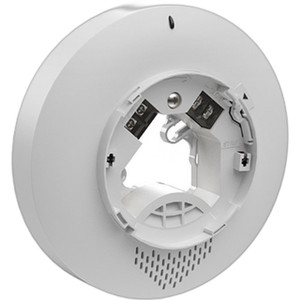
Potter PAD300-DD Access Control PanelThe Potter PAD300-DD is a door access control panel designed for integration into multi-door security systems. Th…
Potter PAD300-DD
$120.15
$90.99
Your recommended setup
Review items below — quantities update pricing automatically.
Item
Qty
Status
Price
Optional Add-Ons recommended
Services optional
Bundle Summary
Bundle Subtotal:
$0.00
Optional Add-Ons:
$0.00
Services:
$0.00
Total:
$0.00
Overview
SKU:
PAD300-DD
Condition:
New
Availability:
Usually ships in 24 hours
Warranty
Manufacturer Warranty
Description

Potter PAD300-DD Access Control Panel
The Potter PAD300-DD is a door access control panel designed for integration into multi-door security systems. This device serves as the control interface for managing electronic access across protected entry points, supporting standard credential readers and strike lock control in distributed access environments.
Overview
The PAD300-DD operates as a localized access control module, enabling integrators to deploy door-level credential verification and strike actuation without requiring a centralized server at each entry point. The unit accepts reader input, processes credential validation, and triggers electronic strike release based on configured access rules. This architecture supports modular, scalable deployments across facilities with multiple secured doors.
Key Features
- Door control module for multi-door access systems
- Electronic strike control output for access decision enforcement
- Reader interface supporting standard credential input signals
- Networked communication capability for centralized management and audit logging
- Power management with battery backup support option for fail-secure operation
- Status monitoring and diagnostic feedback for integration validation
- Compatible with standard access control software platforms and third-party readers
- DIN rail or surface mounting configuration options
- Reset and manual override controls for emergency access scenarios
Integration & Compatibility
The PAD300-DD integrates with access control software systems through standard network protocols, enabling centralized credential databases and audit trails. The panel accepts reader input from credential devices including proximity cards, keypads, and biometric readers via standard reader wiring. Strike control outputs operate standard electric strikes and magnetic locks rated for 12V or 24V DC operation. The unit supports remote management, allowing system administrators to modify access rules, view door status, and generate compliance reports without site visits.
Integration with facility management systems, building automation platforms, and security monitoring centers is supported through standard communication interfaces. The PAD300-DD functions as a distributed node within larger multi-building or multi-location deployments, maintaining local access control authority while reporting events to centralized logging systems.
Deployment Considerations
The PAD300-DD is suited for organizations managing 2 to 8 doors per control panel, with expansion possible through additional modules. Facilities requiring door-by-door credential verification without installing separate readers at each location benefit from the panel's centralized decision-making. Common applications include office buildings, data centers, manufacturing facilities, and institutional campuses where granular access control and audit compliance are required.
Installers should plan for network connectivity (Ethernet or serial), 12V or 24V DC power supply, and reader wiring runs from entry points to the panel location. The unit supports both fail-secure (strike locked on power loss) and fail-safe (strike released on power loss) configurations, selectable based on building safety codes and organizational policy.
Eden Phillips
The Potter PAD300-DD has proven reliable in mid-scale deployments where distributed access control logic reduces network latency and improves response times during credential validation. I've evaluated this panel during planning phases for facilities transitioning from legacy hardwired strike control to networked, audit-capable systems.
Technical Highlights:
- Door Control Authority: PAD300-DD processes credential decisions at the door level, minimizing dependency on centralized servers and supporting offline operation scenarios
- Strike Actuation: Direct output control for standard electric strikes and magnetic locks eliminates the need for separate relay modules at entry points
- Credential Flexibility: Reader-agnostic input accepts signals from proximity, keypad, and biometric devices, enabling mixed-credential deployments
- Network Reporting: Synchronization with centralized access control databases ensures audit compliance and real-time event logging across the facility
Deployment Considerations:
- Power planning is critical—ensure 12V or 24V DC supply capacity for all connected strikes plus 20% overhead. Battery backup modules should be spec'd for facilities requiring fail-secure operation during power events
- Network latency testing during commissioning confirms credential response times meet organizational requirements, particularly in environments with high throughput (security checkpoints, shift changes)
- Reader wiring runs should be shielded and separated from high-voltage circuits to prevent noise interference in credential signal lines
- Access control software license requirements vary by manufacturer—confirm seat count and multi-panel management capabilities before deployment
For integrators supporting organizations with 50+ doors, the PAD300-DD's ability to partition control logic across multiple panels reduces single-point-of-failure risk and improves system resilience. Specification for this panel should include network uptime SLAs, backup power calculations, and reader compatibility validation against your organization's existing device inventory.
Specifications
Product Type:
Access Control Panel
Have Questions?
Ask an Expert.
RELATED PRODUCTS


System Design, Deployment & Technical Support
Support services and planning resources for commercial surveillance, access control, and infrastructure deployments.
Fixed scope • Fixed price
System Design Assistance
- Get help validating product compatibility
- Coverage requirements
- Storage planning and deployment architecture before you buy.
Deployment & Configuration Support
- Access fixed-scope support for rollout planning
- User setup guidance
- Migration and system standardization across single-site or multi-site deployments
Guides, Tools & Calculators
- PoE requirements
- Storage retention
- Camera selection and deployment methodology