


Product images are provided for reference and may not represent the exact model, configuration, or included
components.
Overview
SKU:
FSBS
Condition:
New
Availability:
Usually ships in 24 hours
Warranty
Manufacturer Warranty
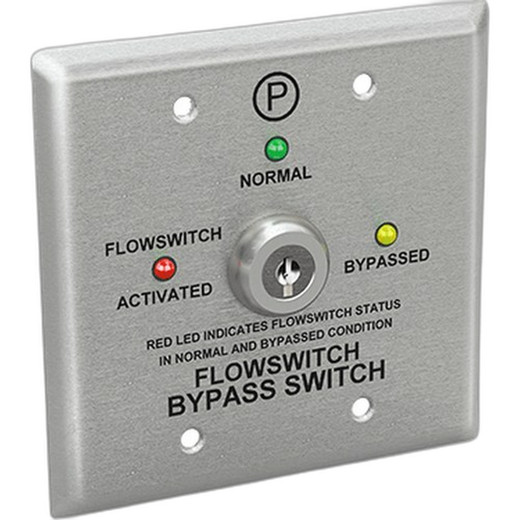
Potter FSBS Flowswitch Bypass Switch
Potter FSBS Flowswitch Bypass Switch The Potter FSBS is a flowswitch bypass switch designed for integration into fire suppression and detection system…
Potter FSBS Flowswitch Bypass Switch
$329.25
$195.99
Your recommended setup
Review items below — quantities update pricing automatically.
Item
Qty
Status
Price
Optional Add-Ons recommended
Services optional
Bundle Summary
Bundle Subtotal:
$0.00
Optional Add-Ons:
$0.00
Services:
$0.00
Total:
$0.00
Overview
SKU:
FSBS
Condition:
New
Availability:
Usually ships in 24 hours
Warranty
Manufacturer Warranty
Description

Potter FSBS Flowswitch Bypass Switch
The Potter FSBS is a flowswitch bypass switch designed for integration into fire suppression and detection system installations. This device provides bypass capability for flowswitch circuits, allowing technicians to isolate or bypass flow detection during maintenance, testing, or system commissioning without requiring full system shutdown. The FSBS supports reliable circuit control in environments where fire suppression monitoring must remain operational while allowing selective component isolation.
Overview
The Potter FSBS flowswitch bypass switch enables controlled circuit bypass functionality in fire suppression applications. This bypass switch is commonly deployed in wet-pipe, dry-pipe, and pre-action sprinkler systems where flowswitch monitoring circuits require periodic isolation. The device facilitates testing and maintenance workflows while preserving system integrity and compliance with fire code requirements.
Key Features
- Flowswitch bypass capability for selective circuit isolation
- Designed for integration into fire suppression control panels
- Supports maintenance and testing workflows without full system shutdown
- Reliable switching performance in mission-critical fire protection environments
- Compatible with standard fire alarm and sprinkler system architectures
- Compact form factor for panel-mount or remote installation configurations
Integration and Compatibility
The Potter FSBS integrates with fire suppression system control circuits and flowswitch detection loops. This device is commonly paired with Potter flow detection switches and fire alarm control panels to provide bypass isolation without requiring manual circuit disconnection. The bypass switch maintains electrical isolation standards required in fire protection applications and supports both automatic and manual activation modes depending on control panel configuration.
Installers deploying the FSBS should verify compatibility with the specific fire alarm panel, sprinkler system controller, and flowswitch model in use. Potter flowswitch bypass switches are engineered to operate within standard fire suppression system voltage and current parameters, and installation should follow Potter's technical documentation and applicable fire code guidelines.
Typical Applications
The Potter FSBS is deployed in commercial, industrial, and institutional fire suppression installations including high-rise buildings, manufacturing facilities, data centers, and healthcare environments. Common applications include wet-pipe sprinkler system monitoring, dry-pipe system testing, pre-action system commissioning, and maintenance of flowswitch detection circuits in multi-zone fire protection deployments. The bypass switch reduces downtime during routine inspections and testing by enabling localized circuit isolation.
James Everett
The Potter FSBS flowswitch bypass switch is a straightforward but essential component in fire suppression system maintenance. During system commissioning and routine testing, the FSBS allows technicians to isolate flowswitch circuits without requiring full system shutdown or manual cross-connect bypassing. This reduces labor time and minimizes the risk of accidental system disarm during routine work.
Technical Highlights:
- Bypass Isolation: Enables selective flowswitch circuit isolation for testing and maintenance operations
- Fire Suppression Integration: Designed specifically for wet-pipe, dry-pipe, and pre-action sprinkler system flowswitch loops
Deployment Considerations:
- Verify voltage and current compatibility with your fire alarm control panel and flowswitch circuit design before installation
- Ensure all bypass activations are logged and monitored according to local fire code requirements and system testing procedures
The Potter FSBS is a proven choice for integrators managing multi-zone fire suppression systems where flowswitch testing and maintenance are routine operational requirements. Confirm panel compatibility and circuit configuration with Potter technical documentation prior to installation.
Specifications
Product Type:
Flowswitch Bypass Switch
Have Questions?
Ask an Expert.
RELATED PRODUCTS


System Design, Deployment & Technical Support
Support services and planning resources for commercial surveillance, access control, and infrastructure deployments.
Fixed scope • Fixed price
System Design Assistance
- Get help validating product compatibility
- Coverage requirements
- Storage planning and deployment architecture before you buy.
Deployment & Configuration Support
- Access fixed-scope support for rollout planning
- User setup guidance
- Migration and system standardization across single-site or multi-site deployments
Guides, Tools & Calculators
- PoE requirements
- Storage retention
- Camera selection and deployment methodology