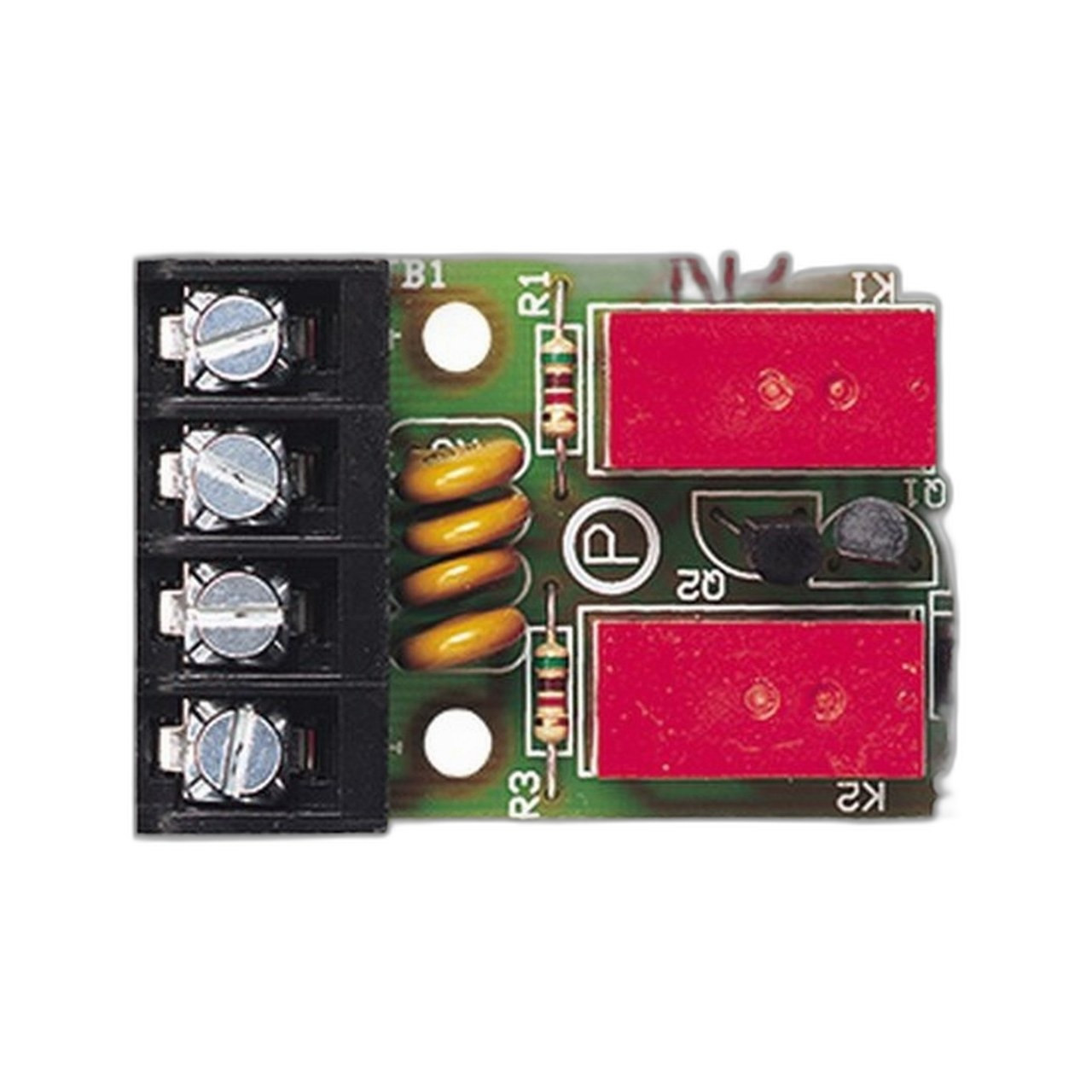
Potter CA2Z Class A Initiating Module
The Potter CA2Z is a Class A initiating device module designed to convert four Class B initiating circuits to Class A supervised operation on Potter PFC-4410RC and PFC-4410G3 fire alarm control panels. Built-in transient protection with 5.1k end-of-line (EOL) resistor eliminates the need for external EOL modules, reducing wiring complexity and board clutter. The PC board assembly mounts directly to the panel using factory-supplied stand-offs and hardware, making retrofit and new installations straightforward.
Key Features
- Class A Circuit Conversion: Converts four Class B initiating device circuits to Class A supervision. Class A operation provides line-break detection and improved fault tolerance in critical fire detection zones.
- Integrated EOL Protection: Built-in 5.1k EOL resistor eliminates external resistor packs and simplifies board wiring. Transient protection safeguards against electrical noise on long circuit runs.
- Direct Panel Integration: 8-pin header interface mounts securely to PFC-4410RC and PFC-4410G3 panels. Included hardware and stand-offs ensure stable mounting in the upper right corner position.
- Compact Form Factor: 18¼" × 14½" × 4¾" footprint fits within standard panel cavities without requiring external enclosure modifications.
- Manufacturer Warranty: Factory-backed warranty covers defects in materials and workmanship on all integrated components.
- Four Abort Modes: Flexible abort programming supports multiple alarm-response configurations for complex occupancy scenarios.
The CA2Z bridges legacy Class B initiating circuits to modern Class A supervised networks without replacing existing field wiring. This is especially valuable in retrofit scenarios where rerunning circuit cable is prohibitively expensive. On a 16-zone panel, upgrading four zones to Class A supervision using the CA2Z costs a fraction of a complete circuit overhaul, and the module integrates so tightly with the PFC series that no external power or relay logic is needed.
Class A operation is mandated in many jurisdictions for life-safety zones—particularly stairwells, exits, and common areas. The CA2Z provides a code-compliant upgrade path without forcing a wholesale panel replacement. When paired with the PFC-4410RC's built-in networking and addressable smoke detector support, the result is a hybrid system that meets current standards while preserving investment in existing Class B devices.
The module's transient protection is critical on long runs (100+ feet) where HVAC switching or motor loads can induce voltage spikes. The 5.1k resistor value is the industry standard for four-circuit modules and ensures proper supervision end-to-end. Installation is straightforward: unmount the panel slightly, slide the CA2Z onto the header pins with the stand-offs aligned, secure with the hardware pack, and verify continuity on each circuit before commissioning.
Potter CA2Z modules carry Manufacturer Warranty coverage and are listed for use with PFC-4410RC and PFC-4410G3 series panels. The module supports four independent abort modes, allowing fine-grained control over alarm suppression logic in complex building layouts. Integrators and facilities teams choosing the CA2Z gain a proven, low-cost path to Class A compliance without system redesign.
Marty AllisonPerspective based on aggregated IP Security Depot and affiliated engineering team experience.
We've installed the Potter CA2Z across dozens of retrofit projects, and it consistently solves a specific and expensive problem: upgrading Class B circuits to Class A supervision without rewiring the entire initiating device network. On a three-story office building, we've seen facilities avoid $15K–$25K in conduit and cable replacement by using two CA2Z modules to uplift the life-safety zones while leaving standard Class B devices on lower-priority areas. The module is genuinely invisible once installed—no external enclosure, no separate power supply, no relay logic. It bolts to the PFC-4410RC or G3, terminates four circuits on the header, and works. The built-in 5.1k EOL resistor is a real convenience; on older systems, integrators often field the resistor externally, introducing another failure point and a clutter of terminal blocks. Here, it's bonded to the board and sealed.
That said, the CA2Z is a narrow-purpose device. It only works with two specific panel models, only converts four circuits, and only operates when mounted in the upper right corner. If your base panel is a PFC-4410C (the non-networked variant) or a completely different manufacturer's control panel, the CA2Z is useless. And if your Class B circuits are already wired into the panel's direct input terminals (rather than an external device loop), the module won't help you. Read the datasheet before specifying.
Technical Highlights:
- Integrated 5.1k EOL Resistor: Eliminates external resistor packs and reduces terminal block clutter. Transient protection is bonded to the board, so there's no separate surge-suppression device to fail or replace—everything is encapsulated in the module itself.
- Class A Supervision on Four Circuits: Each of the four converted circuits gains line-break and short-circuit detection. Critical for life-safety zones where an open wire could otherwise go undetected for hours or days.
- 8-Pin Header Interface: Direct connection to PFC-4410RC and PFC-4410G3 panels via proprietary header—no RJ45 connectors, no ONVIF negotiation, no software configuration. Plug and verify.
- PC Board Assembly with Stand-offs: Mounts flat to the panel face using supplied hardware. No external bracket, no cable routing — installation footprint is minimal and the module is mechanically robust.
- Four Independent Abort Modes: Each converted circuit can operate under different alarm-suppression logic, enabling nuanced response policies for mixed occupancy (e.g., abort smoke on a stairwell but not in a warehouse section).
Deployment Considerations:
- Upper right corner mounting is mandatory — the 8-pin header is physically located there on the PFC-4410RC and G3. Attempting to mount elsewhere will either miss the header or obstruct panel access.
- Verify your base panel model before ordering. The CA2Z works only with PFC-4410RC and PFC-4410G3. Older PFC-4410C models and third-party panels are not compatible.
- Class A operation reduces nuisance alarms on long runs by detecting opens before they propagate false trouble signals. If you're converting from Class B specifically to reduce false alerts, verify that your smoke detectors and manual pull stations are installed on these four circuits.
- The 5.1k resistor value is fixed and non-adjustable. If your existing Class B circuits use a different EOL resistance (rare, but seen in legacy systems), the CA2Z will not function properly — consult the datasheet for compatibility confirmation.
- Installation requires a brief panel downtime to mount the module and verify continuity on each circuit. Plan 30–45 minutes for a skilled technician; commission and test each circuit before restoring full operation.
The CA2Z is the right choice for facilities that need selective Class A upgrades on an existing PFC-4410RC or G3 panel and cannot justify the cost of a full system replacement or extensive rewiring. Retrofit integrators, code-compliance consultants, and building engineering teams handling older installations should have this module in their toolkit. For more options and sizing guidance, explore the Potter catalog.