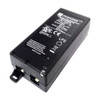
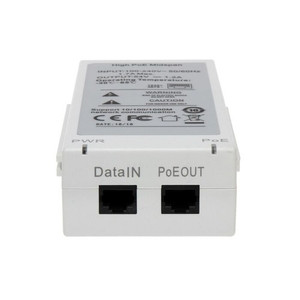
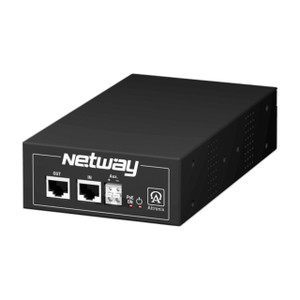
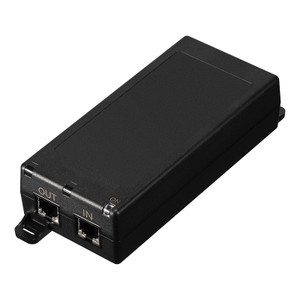
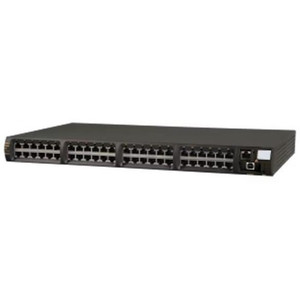
Pelco POE60U-1BTE 60W PoE++ Single Port Injector
The Pelco POE60U-1BTE is a single-port 802.3bt PoE++ injector engineered to deliver up to 60W of power to advanced IP cameras and network devices that exceed the constraints of standard PoE+ infrastructure. If your deployment includes PTZ domes, multi-sensor camera arrays, or other high-draw equipment, this injector bridges the gap between your existing network cabling and devices that demand more than the 30W ceiling of 802.3at PoE+.
Key Features
- 60W Power Budget: Supplies up to 60W per port, enabling deployment of power-hungry PTZ systems, motorized zoom lenses, and dual-sensor or multi-spectral camera modules without undersupply or thermal stress on the device.
- 802.3bt PoE++ Standard Compliance: Implements structured power negotiation, meaning the injector and powered device negotiate safe wattage delivery before power application — reducing overload faults and extending equipment lifespan compared to non-negotiating injectors.
- Backward Compatibility with 802.3af and 802.3at: Works with older PoE and PoE+ devices drawing 13W or less, so you can mix legacy and new equipment on the same infrastructure without compatibility risk.
- Gigabit Ethernet Connectivity: Full 1 Gbps data throughput ensures video streaming and control traffic aren't bottlenecked; critical for multi-megapixel or high-frame-rate camera applications.
- NDAA Section 889 Compliant: Meets U.S. federal procurement requirements for government, military, and regulated-sector deployments — a hard requirement for many public-sector integrators and enterprise buyers.
- 1-Year Manufacturer Warranty: OEM-backed support covers defects and failures, reducing procurement risk for enterprise installations.
Integration and Compatibility
The POE60U-1BTE (often searched as POE60U 1BTE) is purpose-built for Pelco Sarix Enhanced and Spectra Professional camera lines, but works with any standards-compliant 802.3bt device. Ideal for PoE power infrastructure upgrades where switch-based PoE++ isn't available or cost-prohibitive. Deploy inline between your existing network switch and the camera, or use multiple injectors to add high-power capacity to specific ports without replacing your entire switching stack. For cameras requiring 30W or less under normal operation, standard 802.3at PoE+ injectors or switch-based delivery will offer better cost efficiency and eliminate the extra hardware footprint.
Deployment Context
Commercial and industrial surveillance installations frequently hit the PoE+ ceiling — particularly when deploying heated dome PTZ systems, wide-angle multi-sensor modules, or IR illumination packs. Rather than overhaul your network switch (a major capex hit), add targeted 60W injectors at the device end. Government facilities, airports, and regulated warehouses benefit from NDAA compliance without added engineering overhead. Consult your video management system and NVR documentation to confirm power budget allocation — total injector wattage must not exceed your UPS capacity or facility branch circuit limits.
Frequently Asked Questions
Q: Does the POE60U-1BTE work with cameras already deployed on standard PoE+?
A: Yes. The injector supports backward compatibility with 802.3af and 802.3at devices. If you're upgrading a single camera to a 60W model, install the injector inline for that camera only; others remain on your existing PoE+ infrastructure.
Q: Is the POE60U-1BTE NDAA Section 889 compliant?
A: Yes, NDAA Section 889 compliance is confirmed in the specification. This is non-negotiable for U.S. government and DoD-adjacent deployments.
Q: Can I daisy-chain multiple POE60U-1BTE injectors on one switch port?
A: No. Each injector is single-port and requires its own Ethernet uplink to your switch. For multi-camera high-power deployments, either add injectors in parallel (one per camera) or consider a switch with native 802.3bt PoE++ support.
Q: What's the warranty on the POE60U-1BTE?
A: 1-year manufacturer warranty covering defects and equipment failure.
Q: Will the POE60U-1BTE damage devices that only need 25W?
A: No. The 802.3bt negotiation standard ensures power is delivered only up to what the device requests. A 25W camera will draw 25W; unused power capacity stays dormant.
Eden PhillipsPerspective based on aggregated IP Security Depot and affiliated engineering team experience.
The Pelco POE60U-1BTE solves a real integration problem: you have a solid Gigabit switch, good cabling, but a single camera or dome that draws 45–60W under full load (pan, zoom, and IR all active). Rather than rip out your infrastructure, add this injector. The 802.3bt negotiation protocol is the key difference from older passive injectors — it prevents you from force-feeding 60W to a 30W device, which saves repairs and downtime.
Technical Highlights:
- 60W Negotiated Delivery: The injector doesn't blindly dump 60W down the cable. Device and injector negotiate actual power need before current flows, preventing overvoltage faults on undersized equipment.
- Backward Compatibility Layer: Still works with 802.3af (13W) and 802.3at (30W) cameras. In mixed deployments, older cameras pull their rated power, new ones pull up to 60W — no conflicts.
- Gigabit Passthrough: Full 1 Gbps throughput means no bottleneck on video codec negotiation, multicast, or VMS heartbeat traffic.
Deployment Considerations:
- Single-Port Constraint: Each POE60U-1BTE handles one camera. For a 16-camera PTZ dome installation, you'd need 16 injectors — significant hardware footprint and UPS planning.
- Gotcha — Power Budget Stacking: If you deploy 8 injectors on separate switch ports, you're consuming 8 × 60W = 480W from your UPS or branch circuit. Verify your facility power budget before scaling; many small to mid-market sites underestimate this.
- NDAA Compliance is Tight: No Huawei, no ZTE silicon. Suitable for government contracts and export-controlled sectors without waiver risk.
Deploy this injector when you've identified a specific high-power camera or dome that your existing PoE+ switch can't supply, and you want to avoid a full switch replacement. It's cost-effective for targeted upgrades; less attractive for greenfield multi-dome projects where a native PoE++ switch is more elegant and future-proof.