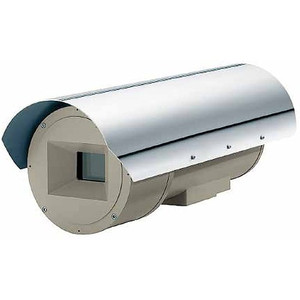
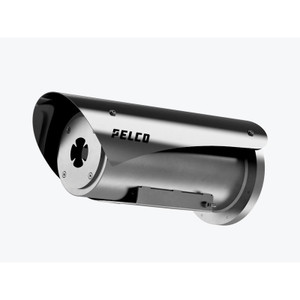
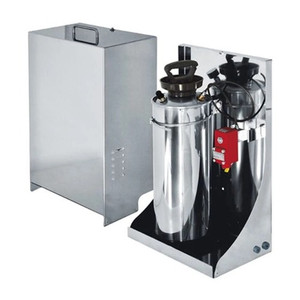
Pelco EXHC003R ExSite Thermal Housing 3-Heater
The Pelco EXHC003R is a purpose-built thermal camera enclosure engineered for continuous operation in extreme cold environments. Where standard single or dual-heater housings struggle to maintain sensor temperature, the triple heater configuration in the EXHC003R delivers significantly higher thermal output—critical when ambient temperatures drop below freezing and thermal camera performance directly impacts perimeter security, border control, or remote infrastructure monitoring.
Key Features & Deployment Benefits
- Triple Integrated Heater Configuration: Three heating elements work in parallel to maintain thermal camera function in arctic and sub-arctic conditions. Dual-heater alternatives often fall short in extreme cold; this design ensures consistent operation without intermittent sensor shutdowns or performance degradation that waste battery or generator resources on redundant reboots.
- 24Vac Power Input: Accepts standard 24Vac low-voltage power—the most common infrastructure in existing surveillance and control systems. Eliminates the need for additional 120Vac/240Vac circuits or DC conversion, reducing installation cost and complexity at remote sites. If your facility already supports 24Vac distribution for access control or lighting, the EXHC003R integrates directly without supplemental wiring.
- IP66 Weatherproof Enclosure: Rated for direct rain, dust, and high-pressure wash-down. Thermal cameras in cold climates often face snowmelt runoff and condensation risk; IP66 means your payload stays dry. Note: IP66 does not cover full submersion—if installation involves periodic flooding, consider a higher IP rating elsewhere in your design.
- ONVIF Compatibility: Works with ONVIF-compliant thermal cameras and IP cameras across major Pelco surveillance systems and third-party platforms. Eliminates proprietary lock-in and lets you select thermal payloads based on performance rather than housing brand.
- H.265 and H.264 Video Compression Support: If paired with a camera supporting H.265, you reduce recorded file size by 40–60% versus H.264—meaningful savings when bandwidth and storage are limited at remote or off-grid locations. In field deployments with satellite or cellular uplinks, this cuts monthly data costs substantially.
- NDAA Section 889 Compliance: Pre-certified for U.S. federal and regulated enterprise deployments. Eliminates post-purchase audit friction if your buyer is a government agency, critical infrastructure operator, or contractor subject to supply-chain security mandates.
- Seamless Thermal Payload Integration: Accommodates standard Pelco thermal camera modules; cavity dimensions are fixed. Verify your chosen thermal camera (resolution, lens package, mounting footprint) fits the housing cavity before finalizing your order—mixing incompatible payloads requires custom enclosure engineering that defeats cost efficiency.
Integration & Compatibility
The EXHC003R is a housing accessory designed to protect and heat a thermal camera payload. It is not a standalone device; pair it with a compatible thermal imaging sensor. The enclosure's ONVIF compliance ensures compatibility across network video recorders, management platforms, and PoE infrastructure. Verify that your chosen thermal camera's power and optical window alignment match the EXHC003R's socket and lens aperture before deployment.
For installations requiring 230Vac mains power input instead of 24Vac, the EXHC203R variant is the direct alternative; review both datasheets to confirm power availability at your site.
When planning PoE power and thermal management for your thermal imaging network, account for the heater draw in addition to camera power. The three heaters will increase total device current; confirm your PoE switch or midspan injector can supply the combined load without voltage sag.
Warranty & Support
The EXHC003R carries a 5-year manufacturer warranty covering defects in materials and workmanship. This extended term reflects enterprise-grade durability expectations for remote and harsh-environment deployments where field replacement is costly and logistically difficult.
Frequently Asked Questions
Q: Can I use the EXHC003R with any thermal camera?
A: No. The housing is designed for standard Pelco thermal camera modules. Verify your camera's physical dimensions, power connector type, and optical window size match the EXHC003R cavity before ordering. Incompatible payloads will not fit or function.
Q: What's the difference between the EXHC003R and the EXHC203R?
A: The EXHC003R accepts 24Vac input; the EXHC203R accepts 230Vac mains power. Choose based on your available power infrastructure. If you have 24Vac already wired to the installation site, the EXHC003R is simpler and cheaper to commission.
Q: Is the EXHC003R NDAA Section 889 compliant?
A: Yes. The housing is certified compliant for U.S. federal and regulated enterprise deployments, eliminating supply-chain compliance friction for government and critical infrastructure buyers.
Q: Does the EXHC003R support PoE power?
A: No. The EXHC003R requires 24Vac input. It is not a PoE device. Your thermal camera payload may support PoE independently; confirm with your camera datasheet. The three heaters consume additional power beyond the camera; verify your PoE switch or injector can supply the combined load.
Q: What is the warranty on the EXHC003R?
A: 5-year manufacturer warranty covering defects in materials and workmanship. This reflects enterprise-grade durability for remote surveillance and harsh-environment deployments.
Q: Can the EXHC003R be fully submerged?
A: No. IP66 rating covers rain and high-pressure wash-down, but not submersion. If your installation involves periodic flooding or prolonged water contact, consult the manufacturer for alternative IP67 or higher-rated enclosures.
Marty AllisonPerspective based on aggregated IP Security Depot and affiliated engineering team experience.
The EXHC003R triple-heater design is a practical solution for thermal deployments in hard-freeze environments where single-heater housings have historically failed. If you're mounting a thermal camera in northern perimeter fencing, high-altitude research stations, or remote border control positions where ambient temps regularly drop below −20°C, the three integrated heaters make the difference between reliable 24/7 operation and repeated sensor shutdown cycles that erode system uptime and drain generator fuel.
Technical Highlights:
- Triple Heater Configuration: Generates significantly more thermal output than dual-heater or single-heater competitors. In −30°C conditions, this keeps your thermal sensor within optimal operating range without parasitic power losses from sensor restart sequences.
- 24Vac Input Simplicity: Standard low-voltage power is already present in most existing surveillance infrastructure. Eliminates the cost and commissioning delay of running new 120V/240V circuits to remote sites, and avoids DC conversion losses in cold weather.
- IP66 Weatherproofing: Dust and rain won't breach the enclosure, but condensation risk remains high in cold-climate deployments. Ensure your thermal camera includes internal desiccant or active defogging; thermal lenses fog quickly in rapid temperature swings.
Deployment Considerations:
- Payload Verification is Critical: The EXHC003R cavity dimensions are fixed. Mismatch between your chosen thermal camera module and the housing becomes apparent only during installation—too late to swap. Obtain a dimensioned CAD model or physical mockup of the payload before final procurement.
- Heater Power Budget: The three heaters add substantial current draw to your thermal camera's baseline power consumption. At 24Vac, three heaters can easily consume 300–500W depending on ambient temperature and insulation efficiency. Confirm your 24Vac supply (transformer, conduit, breaker) is sized for sustained heavy load, not just peak spike. Undersized 24Vac circuits will drop voltage and cause intermittent sensor resets.
The EXHC003R is best suited for fixed perimeter surveillance, critical infrastructure fencing, and remote environmental monitoring where uptime trumps cost and the installation site cannot support or doesn't justify running mains power. For indoor or mild-climate thermal deployments, the added heater cost and power consumption waste budget—choose a simpler, unheated Pelco thermal housing variant instead.