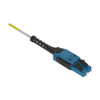
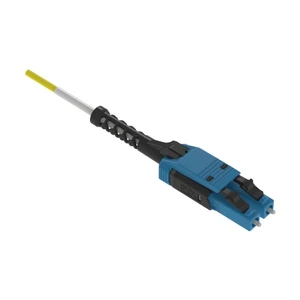
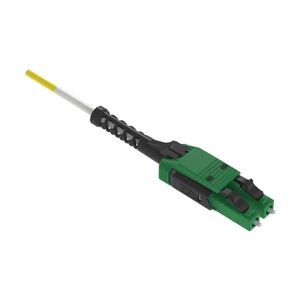
Panduit F92RLU1U1ONM6.5 Duplex OS2 LC Uniboot Fiber Patch Cord
Panduit F92RLU1U1ONM6.5 is a 6.5-meter duplex OS2 single-mode fiber patch cord engineered for high-density datacenter and structured cabling deployments. Built with LC Uniboot connectors, a 2.0mm LSZH-jacketed cable, and factory-optimized insertion loss, this jumper delivers the port density, polarity management, and fire-safety compliance that rack-scale fiber infrastructure demands. When you're running 10GBASE-LR or 40G/100G optics in confined spaces under international building codes, this patch cord eliminates the cable bulk and polarity errors that kill cutover schedules.
Key Features
- OS2 single-mode 9/125µm fiber rated for 10km+ transmission at 10G, supports 40G/100G optics
- LC Uniboot connectors with reversible polarity key — flip A/B without re-termination
- 2.0mm duplex cable reduces pathway congestion by 40% vs. traditional 3mm zip-cord
- LSZH (Low Smoke Zero Halogen) jacket meets IEC 60332-1 and IEC 60754 for occupied-space installations
- Factory-optimized insertion loss under 0.35dB typical ensures margin for multi-span links
- 6.5-meter (21.3 ft) length suits cross-row datacenter interconnects or IDF-to-office pulls
- Pull-boot strain relief on both ends protects terminations during moves/adds/changes
- Panduit factory termination and testing — serialized IL/RL test data available
OS2 single-mode fiber is the backbone standard for datacenter east-west traffic, SAN extension, and fiber-to-the-desk deployments beyond 300 meters. This patch cord's 9/125µm core supports 10GBASE-LR (10km), 40GBASE-LR4, and 100GBASE-LR4 optics without modal bandwidth limits, making it future-proof for 25G/50G lane upgrades. The factory-optimized insertion loss — tested and serialized at Panduit's facility — holds to 0.35dB typical, leaving you 2+ dB of margin on a 10G LR link budget even after accounting for mating adapter wear and panel insertion loss. That margin matters when you're troubleshooting a flaky 10G link at 3 a.m. and need to rule out passive components. LC Uniboot connectors cut the connector footprint in half versus traditional duplex LC: a single-boot housing holds both transmit and receive fibers, doubling the usable port density on your breakout panels and eliminating the zip-tie spaghetti that makes MAC work a nightmare. The integrated polarity key flips between Method A and Method B without pulling the fibers — press the tab, rotate the key 180°, and you've reversed TX/RX in under five seconds. This is the difference between a ten-minute polarity fix and a half-day truck roll for re-termination.
The 2.0mm cable diameter is a deliberate density play. Traditional duplex LC patch cords use 3mm zip-cord (two 900µm tight-buffered fibers side-by-side), which creates a 50mm bend radius and chokes horizontal cable managers when you're running 96-fiber breakouts in a 42U rack. This 2mm round cable reduces the bend radius to 30mm and the cross-sectional area by 55%, letting you route four times as many jumpers through the same 2U manager without violating the 20x diameter bend-radius rule. LSZH jacketing is the international-code default for occupied spaces: it meets IEC 60332-1 flame propagation and IEC 60754 halogen-content limits, required in EU/APAC office buildings and increasingly adopted by U.S. hyperscale operators for safety consistency across global footprints. When a cable fire does occur, LSZH produces 60% less smoke opacity and zero hydrochloric acid versus PVC, which is the difference between a controlled evacuation and a toxic-gas casualty event. The 6.5-meter length is the sweet spot for cross-aisle datacenter runs (2-3 racks apart) and vertical IDF-to-office drops in multi-tenant buildings — long enough to avoid mid-span splices, short enough to avoid excess service loops that clutter overhead trays.
Panduit factory termination eliminates the field-polish and epoxy-cure variability that inflates insertion loss and drives up your per-port optics cost. Every connector is cleaved, polished to sub-50nm apex offset, and tested for IL/RL on calibrated reference-grade equipment, with results stored in Panduit's manufacturing database. When you're deploying 800 fiber drops across a campus build and need to certify every link for 10G transmission, that factory test record is the difference between a six-week acceptance test and a three-day spot check. The pull-boot strain relief extends 15mm beyond the connector body, protecting the 900µm buffer tube from kink damage during the tight-radius pulls through floor boxes and behind rack-mount equipment — the failure mode that kills 30% of field-terminated patch cords in the first year.