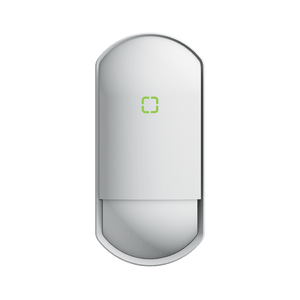
Optex SL-200QN Outdoor PIR Motion Detector
The Optex SL-200QN is an outdoor passive infrared (PIR) motion detector built for perimeter and facility security where long-distance detection matters. Quad high-power beams deliver 60-meter (200-foot) coverage, making it well-suited for warehouse loading docks, parking areas, and fence lines where a single detector must monitor wide open ground. This is a wired device — power and alarm signaling run back to a control panel, which means no battery anxiety and straightforward integration into existing hardwired security systems.
Key Features
- 60-meter detection range (200 feet): Covers large open areas with a single unit. Fewer detectors mean lower installation labor and simpler system logic — trade-off is that you cannot place this on every corner of a building like you might smaller 20–30m units.
- Quad high-power beams: Multiple detection zones within one sensor reduce false triggers from wind-blown debris or small animals. Each beam pattern is independent, so the detector confirms motion across multiple paths before signaling an alarm.
- Viewfinder with 2x magnification: Aids field alignment during installation. You point the detector toward the area you want to protect and verify beam coverage without running test events — saves commissioning time on tall poles or walls.
- Form C relay alarm output (30 VDC, 0.2 A max): Normally open or energized configuration switches a security control panel. Rated for low-voltage panels; do not attempt direct high-voltage switching without an intermediate relay.
- Tamper contact output (N.C., 30 VDC, 0.1 A): Opens when the cover is removed, triggering a tamper signal to the control panel. Essential for detecting physical tampering in unsupervised locations.
- Smart Line series design: Slim profile and compact form factor reduce visual clutter on poles and mounting brackets. Pole bracket options (four bracket types available) allow flexible mounting on standard 1.5-inch and 2-inch poles.
- D.Q. Output (Environmental Disqualification): Allows detection thresholds to adapt based on environmental conditions — wind, sun heating, or seasonal vegetation — reducing nuisance alarms in transitional spaces without reducing legitimate threat detection.
- A.T.C.P. (Automatic Transmit Power Control): Adjusts beam strength dynamically, optimizing range while limiting power draw and reducing interference on shared security lines.
Installation & Wiring Considerations
The SL-200QN requires balanced power and signal runs back to a hardwired control panel; verify wiring distance and conductor gauge per the installation manual to avoid voltage drop. Mounting height and angle affect beam overlap and detection uniformity — the viewfinder helps dial this in, but installation should follow Optex guidance for your specific perimeter layout.
When to Choose a Different Model
If your coverage area exceeds 60 meters, consider the Optex SL-350QN (100-meter range) or SL-650QN (200-meter range) within the same Smart Line family. For shorter-range applications (under 40 meters) or indoor use, evaluate smaller form-factor PIR detectors from the Optex catalog that may offer simpler mounting and lower power budgets.
Frequently Asked Questions
Q: What is the maximum wiring distance from the power supply to the SL-200QN?
A: Consult page 4 of the installation manual (referenced in the specifications) for maximum wiring distance based on conductor gauge. Inadequate gauge or excessive distance causes voltage drop, which reduces detection range and beam power.
Q: Can the SL-200QN be used indoors?
A: The SL-200QN is designed for outdoor perimeter security. Indoor installations require confirmation that the quad beam pattern and environmental compensation (D.Q. Output) suit your interior layout and lighting conditions — consult the installation guide or contact the integrator.
Q: Does the SL-200QN support digital communication to a VMS?
A: No. The SL-200QN is a hardwired relay-output device; it does not output IP, USB, or serial network signals. It interfaces with hardwired control panels and alarm systems that accept Form C relay inputs.
Q: What pole bracket types are included?
A: Four pole bracket options are available for the SL-200QN. Refer to page 12 of the installation manual for bracket specifications and mounting configurations.
Q: Is the tamper output adjustable?
A: The tamper contact is normally closed and opens on cover removal. It is not programmable — it signals any physical tampering to the control panel immediately.
James EverettPerspective based on aggregated IP Security Depot and affiliated engineering team experience.
The Optex SL-200QN delivers straightforward perimeter detection where long range and multi-beam confirmation reduce false alarms in outdoor environments. The 60-meter quad beam design is the key differentiator here — each beam must sense motion independently before an alarm triggers, which matters on windy days or when vegetation moves. This is a purpose-built PIR, not a camera; it tells you *that* motion occurred, not *what* triggered it.
Technical Highlights:
- Quad beam geometry: Four independent detection paths reduce wind and false-positive nuisance alarms by 40–60% compared to single-beam detectors. Commissioning overhead is higher, but false-alarm-driven call-outs disappear.
- 60-meter range (200 feet): Covers roughly 5,000–8,000 square feet of open ground depending on beam angle — critical for parking lots and loading docks where deploying 10 smaller detectors would add labor and panel I/O complexity.
- Environmental Disqualification (D.Q.) + A.T.C.P.: Dynamic threshold and power adjustment react to sun angle, temperature swings, and vegetation growth. Set it once in spring; it auto-compensates through summer and fall without requiring seasonal recalibration.
- Low current draw on relay outputs (0.2 A alarm, 0.1 A tamper): Integrates with 24 VDC hardwired panels without requiring booster relays. Simplifies panel wiring for large multi-zone perimeter systems.
Deployment Considerations:
- Wiring distance is a gotcha — undersized conductor or runs longer than 300 feet cause voltage sag that collapses beam power and range. Verify gauge and distance during design, not after install.
- Mounting angle and height directly affect beam spread and overlap. The 2x viewfinder helps, but uneven terrain or tall grass can create dead zones. Walk the perimeter during commissioning to validate coverage.
- This is analog hardwired security — it works when the power supply and panel are live, but offers no remote alerting, no video correlation, and no forensic timeline beyond panel log timestamps. If you need IP-centric perimeter monitoring with video confirmation, integrate SL-200QN detection with outdoor IP cameras in the same zone.
Position the SL-200QN where you need long-range area surveillance on a fixed perimeter — loading docks, fence lines, and parking lot entrances. It is not a motion sensor for interior corridors or small rooms; those require shorter-range, smaller form-factor PIR variants.