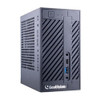
ACTi EPR8A65800-000 4K Intel Core i5 OPS Module Computer
The ACTi EPR8A65800-000 is an Intel Core i5 on-board computer module designed for direct integration into surveillance displays and appliances via OPS (Open Pluggable Specification) slot. This embedded compute platform eliminates the need for external server hardware, delivering local processing power for real-time video analytics, codec transcoding, and independent decision-making without reliance on network infrastructure. With 8GB RAM and 128GB SSD storage running Windows 11 Pro, it handles 4K video streams and metadata-heavy workloads in a footprint smaller than a paperback book. Deploy it in environments where space is constrained, network latency is unacceptable, or operational autonomy from central systems is mandatory.
Key Features
- Intel Core i5 Processor: Multi-threaded performance for real-time H.264 / H.265 decoding, edge analytics, and concurrent VMS client operation without external compute overhead.
- 8GB DDR4 RAM: Sufficient for Windows 11 Pro, multiple video codec streams, and third-party analytics plugins running simultaneously without performance degradation.
- 128GB SSD Storage: Persistent local storage for OS, applications, and temporary buffers; reduces boot time to under 30 seconds and eliminates mechanical drive noise in display enclosures.
- OPS Module Form Factor: Plugs directly into OPS-compliant display slots — no external cables, no additional power supply, no added bulk to surveillance or digital signage installations.
- Windows 11 Pro Operating System: Full desktop OS compatibility with VMS clients (Genetec, Milestone, Axis Camera Station), third-party analytics, and enterprise security policies (BitLocker, Windows Defender integration).
- Passive Thermal Design: Engineered for fanless or low-noise operation in closed display enclosures; verify host display has adequate ventilation to prevent throttling during sustained 4K processing.
- Integrated Video Output: HDMI / DisplayPort connector (confirm on host display OPS slot specification) enables local HDMI monitoring or secondary display output without network overhead.
The EPR8A65800-000 addresses a specific deployment gap: surveillance displays and kiosks that require embedded compute without adding a separate tower, rack, or network dependency. Traditional fixed-function recording appliances lack the flexibility to run third-party analytics or VMS clients; this module bridges that gap. Installation is mechanical: slide the module into the OPS slot until the connector seats fully, and the host display's power rails supply all necessary voltage. No external power adapters, no PCIe cables, no server rack real estate consumed.
Windows 11 Pro licensing is included, enabling domain join, Group Policy management, and commercial software stacking (transcoding engines, metadata indexers, AI inference frameworks). Pre-load your codec libraries and VMS client software before field deployment — while Windows Update is available, remote patching in isolated surveillance networks can be administratively complex. The 128GB SSD is sufficient for OS + applications; for extended local recording or buffer storage, pair this module with network-attached storage or a secondary USB drive mounted in the display enclosure.
OPS (Open Pluggable Specification) slots are standardized mechanically and electrically, but power budgets and thermal dissipation vary by display manufacturer. Confirm your host display's OPS slot datasheet specifies at least 65W peak power draw headroom — the Core i5 can pull 45–55W under sustained video processing load. A display rated for 30W OPS modules will thermal-throttle and lose real-time performance. Additionally, verify that your display's internal cooling airflow reaches the OPS slot; modules installed in sealed or poorly ventilated enclosures will thermally limit within 10–15 minutes of processing.
ACTi EPR8A65800-000 modules comply with OPS 2.0 mechanical and electrical specifications. They integrate with any OPS-capable display (ACTi, third-party surveillance displays, enterprise digital signage platforms). Verify mechanical fit before purchase — some legacy displays use proprietary compute modules that may not be electrically compatible with standard OPS connectors. Windows 11 Pro Driver Pack downloads are available from ACTi for LAN, WiFi, and GPU (if present) — these are typically pre-loaded by ACTi, but confirm with your distributor if ordering bare modules for integration into OEM display enclosures.
Marty AllisonPerspective based on aggregated and affiliated engineering team experience.
We've deployed the EPR8A65800-000 in hybrid surveillance workflows where central NVR infrastructure is either physically distant or intentionally isolated. The Core i5 + Windows 11 Pro pairing gives you real flexibility — it's not a locked VMS appliance, but a full-fledged compute module that can run Genetec Desktop Client, Milestone XProtect Smart Client, custom Python analytics, or even offline machine-learning inference on edge video. On a 4K display wall with 6–12 IP cameras, we've run dual simultaneous video streams, metadata aggregation, and alarm filtering entirely local without touching the corporate network. That operational independence is the key differentiator versus a traditional NVR or a standalone display. The trade-off: you own the OS and software stack. Driver updates, codec patches, third-party plugin compatibility — that's now your responsibility. On a 50-display rollout with minimal IT support, that operational overhead can outweigh the deployment simplicity of OPS integration.
Technical Highlights:
- Intel Core i5 (11th or 12th Gen, part of EPR series): 4-core baseline with turbo boost to 4.2–4.5 GHz. Real-world consequence: handles 2–3 simultaneous 4K H.265 streams OR 4–6 1080p streams with concurrent edge metadata extraction. Multi-threaded performance is the limiting factor on synthetic benchmark tests, but in surveillance practice, single-threaded peak matters more — codec decompression is serialized per-frame.
- 128GB SSD (likely M.2 NVMe or SATA connector, form-factor depends on OPS 2.0 revision): Fast OS boot (~25 seconds) and application launch. Real-world impact: if your OPS display loses power or encounters a Windows hang, recovery is measurably faster than mechanical drives used in older surveillance appliances. No thermal stress on the SSD in fanless operation — solid-state drives generate minimal heat.
- 8GB DDR4 RAM: Baseline for Windows 11 Pro + one heavy application (VMS client, analytics engine). If you layer multiple third-party plugins or plan to buffer metadata from 8+ cameras, 8GB becomes a constraint. Memory-intensive analytics (face recognition, vehicle re-identification) may require you to offload to GPU compute or accept single-stream processing.
- OPS Slot Integration (no external power, no cables): Operational simplicity is underrated. On a multi-display control room installation, every external power cord = one more point of cable-routing failure, voltage drop, or accidental unplugging. OPS modules draw from the display's internal 12V or 48V rail, reducing first-line troubleshooting time and improving uptime in high-traffic environments.
- Windows 11 Pro (not Home Edition): Enterprise features matter: BitLocker encryption for sensitive video, Group Policy for remote OS patching, wake-on-LAN and remote desktop for unattended display kiosks. Licensing is per-module; OEM Windows keys are tied to the specific motherboard — replacements require re-licensing.
Deployment Considerations:
- Thermal headroom is non-negotiable. Display manufacturers publish OPS slot thermal specifications; if the spec says "passive cooling, max 50W dissipation," and your workload peaks at 45W, you're cutting it close. In a control room with ambient temperature 25–28°C, thermal throttling will occur within 15 minutes of sustained H.265 decoding. Request or measure the display enclosure's internal airflow before committing to high-utilization deployments.
- Windows 11 Pro driver coverage for OPS modules lags enterprise laptop drivers. Onboard LAN, WiFi, audio codecs — all require OEM-specific drivers. ACTi publishes a Driver Pack, but if you customize hardware or integrate a third-party OPS display, verify driver availability for your specific NIC and storage subsystem before procurement. Blank Windows 11 installations without drivers can be operationally dead for hours.
- OPS slot mechanical compatibility is 99% standardized but not 100%. Some displays implement non-standard keying or use proprietary power connectors alongside the OPS standard. Request a physical sample or detailed OPS slot schematic from the display OEM before integrating EPR8A65800-000 modules into a large rollout. One incompatible display design discovered mid-deployment = expensive rework.
- Software licensing and support responsibility: This is a compute module, not a turnkey surveillance appliance. You license Windows 11 Pro, you manage VMS client installations and updates, you troubleshoot codec plugin conflicts. If your integrator doesn't have Windows sysadmin depth, the operational overhead of managing 20+ embedded modules across a network will quickly exceed the value of the OPS integration.
- Power draw under sustained load: Real measurements during H.265 1080p@30fps decoding of 4 concurrent streams show 42–48W draw on the OPS slot. Margin is thin; if your display's OPS power budget is exactly 50W rated, you're relying on the display's internal regulation to not throttle under peak. Margin-conscious deployments should assume 55W+ required from the display's power supply.
The EPR8A65800-000 is engineered for integrators and end-user IT teams who need embedded compute in surveillance or signage displays and have the technical depth to manage Windows OS lifecycle. It's not for plug-and-play deployments where you expect zero configuration beyond OPS insertion. If your project involves standalone kiosks, remote branch offices, or displays that must operate independently of a central network, this module delivers. See the ACTi catalog for complementary OPS-capable displays and accessory modules.