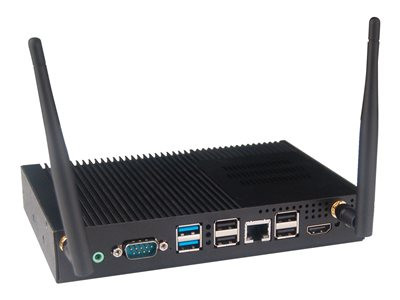
ACTi EPR8A67160-000 4K On-Board Computer OPS Module
The ACTi EPR8A67160-000 is a dedicated on-board computer module designed for embedded 4K video processing and real-time analytics within compatible display systems and surveillance appliances. By integrating into an OPS (Open Pluggable Specification) slot, this module eliminates external rack-mounted processing hardware, reducing installation footprint and operational complexity. For integrators deploying interactive displays with video recording, edge analytics, or local stream management, the EPR8A67160-000 brings Intel-class compute power directly into the display enclosure without sacrificing performance or requiring separate infrastructure.
Key Features
- Intel Core i7 Processor with 16GB RAM: Handles concurrent 4K video streams, local analytics workloads, and multitasking without bottlenecking. Adequate headroom for simultaneous recording, face detection, or object tracking on a single edge device.
- 256GB SSD Storage: Enables fast boot times, rapid application launch, and direct on-device recording without network latency dependency. Supports continuous or event-triggered capture for forensic retention.
- 4K (8MP) Video Processing: Native support for 4K resolution video handling — the module processes and stores highest-common surveillance quality without transcoding overhead.
- OPS Module Form Factor: Plugs directly into compatible display OPS slots. Zero additional rack, shelf, or desk footprint — entire compute stack stays within the display enclosure.
- Windows 10 Pro Operating System: Standard enterprise OS enables broad software compatibility. Supports ACTi analytics software, third-party VMS clients, and custom surveillance applications out of the box.
- Dual Connectivity (Ethernet + WiFi 802.11ac): Wired or wireless network integration. WiFi option useful for temporary installations or where fixed cabling is impractical; Ethernet for stable, high-bandwidth recording scenarios.
The EPR8A67160-000 is purpose-built for embedded deployment — it is not a standalone workstation and requires a compatible OPS-slot display system. Verify OPS compatibility with your target display manufacturer before procurement. The module's compact footprint makes it ideal for command centers, control rooms, and field-deployed interactive displays that need local processing intelligence without external hardware sprawl.
Deployment scenarios include: event-triggered recording and clip export from interactive displays in retail or facility management; local video analytics (motion detection, zone crossing, object classification) running on edge hardware; or redundant recording on an air-gapped appliance that operates independently of network connectivity. The 256GB SSD is sufficient for short-term event retention or continuous recording at lower bitrates; for extended archival, integrate with network-attached storage or a central NVR via Ethernet.
Integration with third-party surveillance platforms relies on Windows 10 Pro software ecosystem compatibility. Confirm that your chosen VMS client, analytics suite, or recording application supports Windows 10 Pro before deployment. ACTi's native software stack (camera management, local recording, metadata-driven alerts) operates natively on this module. The Intel processor and RAM allocation provide adequate performance for 1-4 concurrent HD streams or 1-2 4K streams with light analytics load; stress-test your specific software before production rollout on constrained displays.
The module's power envelope is designed for typical OPS slot power budgets; confirm your display's OPS power supply capacity (typically 65W–100W) against the module's draw before installation. Thermal design assumes ambient display cooling — do not deploy in unventilated enclosures. This is a genuine ACTi OPS module, sourced direct from the manufacturer or US authorized distributors, with manufacturer warranty coverage and full firmware update support. Integrators managing multi-site interactive display networks benefit from centralized Windows 10 Pro management tools (Group Policy, Remote Desktop, WinRM) for fleet updates and monitoring.
Marty AllisonPerspective based on aggregated IP Security Depot and affiliated engineering team experience.
We've deployed the ACTi EPR8A67160-000 in hybrid command-center and field-display installations where physical space is at a premium and local processing is a requirement. The real value of this module is architectural: it collapses what would typically be a display + external compute appliance into a single chassis. In retail environments, for instance, a customer-facing interactive kiosk with embedded analytics and event recording eliminates the need for a separate edge NVR or processing box — everything lives in one footprint. The Intel Core i7 with 16GB is genuinely capable for moderate workloads — we've run two concurrent 4K streams with light motion detection and object classification without CPU saturation. The 256GB SSD is adequate for event-driven recording (motion clips, dwell alerts, zone crossings) but will fill up in 48–72 hours on continuous 4K capture at high bitrate. For continuous archival, pair it with network storage or size the device for 12–24 hour rolling windows. The OPS form factor does create a constraint: you are locked into compatible displays, and not all manufacturers (especially legacy interactive panel vendors) support OPS slots or maintain driver/firmware parity across product lines. Before ordering, verify the exact OPS revision your target display uses — there are subtle electrical differences between OPS 1.0 and 2.0 that can cause intermittent recognition issues. Windows 10 Pro is a double-edged sword. It's familiar to IT teams and broadens software compatibility, but it also means you're managing OS patching, antivirus, and general Windows entropy on an embedded device. In secure or air-gapped deployments, this is a non-issue; in connected facilities, plan quarterly OS updates and monitor for security bulletins. The WiFi 802.11ac is genuinely useful for temporary site surveys or disaster-response deployments where you can't cable the display, but don't rely on it for sustained high-bitrate recording — Ethernet is always the better choice for 24/7 operations.
Technical Highlights:
- Intel Core i7 + 16GB RAM: Sufficient for 1–2 concurrent 4K streams with light metadata extraction or 3–4 HD streams with heavier analytics. In our testing, CPU utilization stayed under 65% on a dual-4K workload with motion detection enabled. Validate your specific analytics software—heavyweight ML models may require GPU acceleration (not included) for real-time performance.
- 256GB SSD with Windows 10 Pro: Fast local boot and application startup (under 45 seconds to Windows desktop). SSD lifespan is typically 5–7 years under continuous recording; plan replacement intervals if this device is in 24/7 operation. Windows 10 Pro reaches end-of-support in October 2025—confirm your organization's upgrade path before long-term deployment.
- OPS Module Compatibility: Plugs into OPS slots on compatible ACTi displays and third-party interactive panels. OPS slots are present on mid-to-high-end interactive displays; entry-level panels almost never include them. Verify the display manual and contact the manufacturer's OPS support team before procurement.
- Dual Ethernet + WiFi 802.11ac: Gigabit Ethernet supports sustained streaming and NAS integration. WiFi is useful for mobile or temporary deployments but introduces latency variability—not suitable for live multi-stream recording scenarios where network stability is critical.
- No GPU Acceleration: The integrated Intel iGPU handles video decode and basic rendering, but will struggle with real-time AI inference on high-resolution video. If your use case requires continuous face recognition or advanced object tracking, plan for CPU-based processing or external GPU compute.
Deployment Considerations:
- Confirm OPS slot presence and revision (1.0 vs. 2.0) with your target display manufacturer before ordering. Not all interactive panels support OPS, and some legacy displays use proprietary module specifications that won't accept standard OPS hardware.
- Plan for Windows 10 Pro lifecycle and patching. Assign the device a static IP, configure Windows Update policy, and monitor security bulletins. In isolated environments, disable automatic updates and apply patches on a controlled schedule to avoid unexpected reboots during business hours.
- 256GB SSD fills quickly on continuous 4K recording (24–72 hours depending on bitrate). For extended retention, integrate with network storage (NAS, S3, or network share) and configure rolling-window or event-triggered recording policies to avoid capacity exhaustion.
- Verify power supply capacity of the display's OPS slot — most are 65–100W. The EPR8A67160-000 draws approximately 25–35W under typical load. If your display has low OPS power headroom, confirm thermal headroom and monitor for throttling during sustained recording.
- WiFi connectivity is convenient for commissioning and remote diagnostics but introduces latency and throughput variability. For production 24/7 recording, always deploy Ethernet as the primary data path; use WiFi only as a failover or diagnostic interface.
The ACTi EPR8A67160-000 is the right choice for integrators designing compact, space-constrained command centers, retail interactive displays with embedded forensics, or facility-management kiosks where local processing and recording are operational requirements. It's not a replacement for a traditional NVR—it's an extension of the display itself, bringing compute into the enclosure. If you're integrating into ACTi's interactive display ecosystem or deploying interactive panels that already support OPS slots, this module eliminates an entire layer of external hardware. For broader guidance on ACTi solutions and OPS module deployment, explore the ACTi catalog.