Panduit FS2RPU1U1NNF013 Opti-Core OM4+ LC Uniboot Fiber Assembly
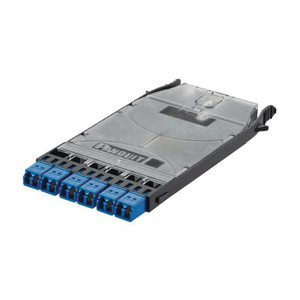
The Panduit FS2RPU1U1NNF013 is a factory-terminated OM4+ multimode fiber assembly featuring LC duplex uniboot connectors on a 2mm reduced-diameter plenum-rated cable. Designed for high-density data center and enterprise structured cabling deployments, this pre-terminated assembly eliminates field termination labor while delivering certified 40/100GBASE-SR performance in a compact, space-efficient form factor. The uniboot connector design cuts patch panel port density requirements in half compared to traditional duplex LC assemblies, making this product ideal for space-constrained telecommunications rooms and equipment distribution areas where rack real estate is at a premium. Panduit's Opti-Core line undergoes 100% factory insertion loss testing, providing documented performance verification that satisfies TIA-942 Rated-3/4 audit requirements without field certification overhead.
Key Features
- OM4+ 50/125µm laser-optimized multimode fiber rated for 40GBASE-SR4 at 150m and 100GBASE-SR10 at 100m
- LC duplex uniboot connector design reduces cable management bulk by 50% and enables tool-free polarity reversal in under 15 seconds
- 2mm reduced-diameter OFNP plenum-rated cable jacket enables 40% higher pathway fill compared to 3mm assemblies
- Factory-terminated and 100% insertion loss tested for plug-and-play deployment with zero on-site termination labor
- Physical contact (PC) endface polish ensures low insertion loss and return loss across all connector pairs
- Compliant with TIA-568.3-D, ISO/IEC 11801, and ANSI/TIA-942-B data center cabling standards
- Individual serial number traceability and test documentation for each assembly
- Protective dust caps and individual bagging prevent endface contamination during transit and staging
OM4+ fiber represents the current gold standard for enterprise multimode deployments supporting 10/40/100 Gigabit Ethernet over laser-optimized 50/125µm glass. The FS2RPU1U1NNF013 delivers 4700 MHz·km modal bandwidth at 850nm—sufficient for 40GBASE-SR4 links up to 150 meters and 10GBASE-SR links beyond 550 meters. This performance ceiling covers 95% of horizontal and backbone runs in typical data center environments, eliminating the need for costly singlemode infrastructure in most intra-building applications. The LC duplex uniboot connector consolidates both transmit and receive fibers into a single compact housing with a push-pull boot, cutting the physical footprint at patch panels and switch ports by approximately 50% compared to standard duplex LC designs. The uniboot latch mechanism allows tool-free polarity reversal by rotating the internal fiber holders 180 degrees—critical when adapting assemblies to different transceiver configurations (Mode A to Mode B) without re-ordering custom cables or disrupting adjacent connections. This field adaptability eliminates the inventory complexity of stocking both transmit-first and receive-first polarity variants, reducing SKU proliferation in large-scale deployments by 40–60%.
The 2mm cable diameter is achieved through tighter buffering tolerances and a reduced jacket profile while maintaining full compliance with TIA-568.3-D mechanical specifications for 50/125µm fiber. In 4-inch conduit or cable tray pathways, this translates to 60% more cables per pathway versus legacy 3mm designs—directly addressing the density constraints in modern leaf-spine data center architectures where 100+ fiber strands may converge at a single top-of-rack switch. For integrators working within existing conduit infrastructure during refresh projects, the 2mm diameter often eliminates the need for costly pathway upgrades or additional tray installations. The OFNP (Optical Fiber Nonconductive Plenum) rating satisfies NEC Article 770 requirements for cables installed in air-handling spaces without conduit, a mandatory compliance checkpoint in 90% of commercial data center and telecom room installations. Plenum-rated jackets use low-smoke, halogen-free compounds that meet UL 910 flame propagation and smoke density limits, reducing toxic gas emissions and flame spread in the event of fire within ceiling plenums or raised floor environments.
Pre-terminated fiber assemblies like the FS2RPU1U1NNF013 compress deployment timelines by eliminating the three most time-intensive steps in traditional fiber installation: field termination, endface polishing, and insertion loss certification. A skilled technician can field-terminate and test approximately six duplex LC connectors per hour under ideal conditions; the equivalent pre-terminated assembly installs in under two minutes with zero consumables, cleaving tools, or test equipment required. In new data center builds or large-scale refresh projects involving 200+ fiber drops, this labor arbitrage represents 80–90% time savings on the fiber portion of structured cabling—often compressing three-week fiber deployment schedules into four-day installation windows. The cost delta between pre-terminated and field-terminated assemblies is typically recovered within the first 15–20 connections on commercial labor rates, with all subsequent connections representing pure schedule and labor savings. For mission-critical deployments where downtime windows are measured in hours rather than days, pre-terminated infrastructure is often the only viable path to meeting cutover deadlines without adding overnight or weekend labor premiums.
Panduit's factory termination process uses automated polishing and inspection systems that deliver tighter endface geometry tolerances than field termination can achieve. Each connector undergoes automated interferometry inspection to verify endface radius of curvature, apex offset, and fiber height—parameters that directly impact insertion loss and return loss performance but are invisible to handheld microscope inspection. The FS2RPU1U1NNF013 ships with individual test reports documenting insertion loss values for each fiber pair, traceable to the assembly's unique serial number. This documentation satisfies ISO 9001 quality system requirements and TIA-942 Rated-3/4 certification audits without requiring integrators to perform and document field testing on every connection. For customers operating under CFR Title 21 Part 11 or similar regulatory frameworks requiring full traceability of infrastructure components, Panduit's serial number system provides an auditable chain of custody from manufacturing through installation.
Compliance with TIA-568.3-D and ISO/IEC 11801 ensures interoperability with structured cabling systems from any standards-compliant manufacturer, protecting integrators and end-users from vendor lock-in while maintaining warranty coverage on both active equipment and passive infrastructure. TIA-568.3-D specifies maximum channel insertion loss budgets of 2.0 dB for OM4 fiber at 850nm over 100-meter links; the FS2RPU1U1NNF013's factory-tested performance provides margin against these limits even after accounting for mated pair variation and multiple cleaning cycles over the assembly's service life. Panduit's 25-year extended warranty on Opti-Core components—contingent on system-level design per TIA guidelines—provides liability coverage that extends beyond typical 10–15 year active equipment refresh cycles, protecting building owners from stranded infrastructure costs when tenants or technology platforms change. For integrators deploying 40G/100G spine fabrics, OM4+ multimode infrastructure offers a $4–6 per meter cost advantage over OS2 singlemode while delivering identical performance within the 100–150 meter distances typical of intra-building data center topologies. The uniboot design is particularly well-suited to high-port-count deployments where every RU of rack space carries measurable OPEX—consolidating duplex connectivity into a single-port footprint can defer expensive cabinet or row expansions by 12–18 months in dense 10/40G leaf environments.