Panduit FZ2RLU1U1ONM6.5 OM4 LC Uniboot LSZH Duplex Fiber Patch Cord
Overview
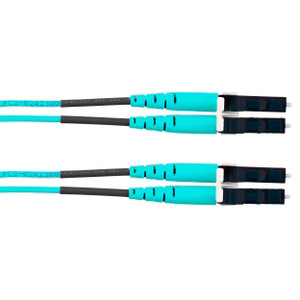
The Panduit FZ2RLU1U1ONM6.5 is a 6.5-meter OM4 duplex fiber patch cord built for data center, enterprise LAN, and structured cabling environments where cable management density and fire-safety compliance both matter. It ships with LC Uniboot connectors on each end — a single-jacket design that consolidates the two fiber strands into one 2.0mm cable body, cutting cable bundle diameter roughly in half compared to standard duplex constructions. If you are managing high-density patch panels in a raised-floor data center or IDF closet, that size reduction is a genuine operational benefit.
The LSZH jacket formulation is the right call for plenum or enclosed spaces where smoke toxicity is a code consideration — hospitals, transit facilities, office towers, and any installation governed by European EN 50575 or equivalent life-safety standards. In a fire event, LSZH materials suppress smoke output and eliminate the halogen acid gases that damage equipment and injure occupants.
Key Features
- OM4 Multimode Fiber: Supports 40G and 100G Ethernet at distances up to 150m (40GBase-SR4) and 100m (100GBase-SR10) — appropriate for spine-leaf data center interconnects and high-bandwidth backbone runs where OM3 falls short on distance margins.
- LC Uniboot Connectors: Two fiber strands in a single 2.0mm jacket means half the cable volume at the patch panel face. Pull-boot design allows polarity reversal in the field without tools — swap A-B to B-A on the fly when troubleshooting cross-connects.
- 2.0mm Cable Diameter: Slim profile improves airflow in high-density racks and reduces stress on cable management arms. In a fully populated 48-port LC panel, the difference between 2.0mm and 3.0mm jackets is measurable in rack-unit space consumed by the cable bundle.
- LSZH Jacket: Meets low-smoke zero-halogen requirements for enclosed and plenum installations. Correct choice wherever local fire codes or customer specs prohibit PVC or OFNR jackets.
- Optimized Insertion Loss: Panduit specifies optimized insertion loss on this connector pair — lower IL means more optical power budget available for longer runs or additional connector pairs in the link, which matters when you are near the edge of your power budget on a long backbone.
- 6.5m Length: Practical for cross-connects between adjacent racks in a row or patch panel to active equipment runs in mid-size IDF closets. Long enough to route cleanly through cable managers without forced bends.
Integration and Compatibility
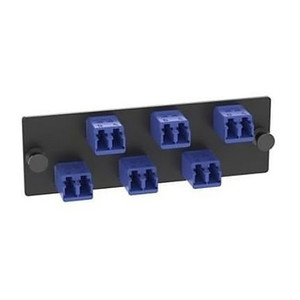
The FZ2RLU1U1ONM6.5 terminates in standard LC connectors compatible with any LC-port SFP+ or QSFP+ transceiver, patch panel, or fiber switch. OM4 fiber is backward compatible with OM3 equipment — link speed and distance will be limited by the lower-spec component, but the physical connection works. Pair with Panduit's fiber optic patch panels and enclosures for a fully matched structured cabling system. For high-density 40G or 100G deployments, verify that your transceiver modules are rated for OM4 to realize the full distance advantage. This cord is sold in a minimum order quantity of 10 units (MOQ10), making it suited to project-level procurement rather than single-cord replacement purchases. Review the structured cabling category for complementary trunk cables, enclosures, and panel hardware. For guidance on matching fiber type to bandwidth and distance requirements, the fiber optic buying guide covers OM3 vs OM4 vs OS2 tradeoffs in detail. See the full Panduit catalog for patch cords, cable management, and data center infrastructure.
Frequently Asked Questions
Q: What is the minimum order quantity for the FZ2RLU1U1ONM6.5?
A: This part carries a minimum order quantity of 10 units (MOQ10), as indicated in the product name. It is intended for project-level purchasing, not single-unit replacement.
Q: Is the LC Uniboot connector field-reversible for polarity changes?
A: Yes. The pull-boot LC Uniboot design allows polarity to be reversed from A-B to B-A in the field without special tools, which simplifies troubleshooting cross-connect polarity mismatches.
Q: What data rates does OM4 fiber support at 6.5 meters?
A: OM4 supports 10G, 40G, and 100G Ethernet. At 6.5 meters the link is well within distance limits for all current multimode standards including 100GBase-SR4.
Q: Why specify LSZH over standard PVC or OFNR jacket for this installation?
A: LSZH is required or preferred in enclosed spaces — hospitals, transit infrastructure, European installations — where fire codes restrict halogen-emitting materials. It suppresses toxic smoke in a fire event, protecting both occupants and equipment.
Q: Is the FZ2RLU1U1ONM6.5 compatible with OM3 patch panels and transceivers?
A: Yes, OM4 is physically backward compatible with OM3 ports. However, link performance (speed and maximum distance) will be constrained by the lower-rated component in the link.
The FZ2RLU1U1ONM6.5 is the cord I reach for when a customer is retrofitting a high-density IDF with 40G or 100G uplinks and needs to keep the cable plant tidy. The 2.0mm Uniboot jacket is the specific detail that makes a real difference — in a 48-port panel you recover meaningful airflow and bend-radius clearance compared to standard duplex 3.0mm constructions, and the pull-boot polarity reversal means your technicians can fix a cross-connect mismatch at the panel face in under a minute.
Technical Highlights:
- OM4 Fiber Grade: Full 150m headroom at 40G (40GBase-SR4) — sized correctly for backbone and spine-leaf interconnects where OM3's 100m ceiling creates margin anxiety.
- LSZH Jacket: Non-negotiable for enclosed spaces under EN 50575 or equivalent; eliminates halogen acid gas risk and meets most European and life-safety facility specs without a variance.
- Optimized Insertion Loss: Lower IL directly expands your optical power budget — critical when you are stacking multiple patch connections in a long structured cabling link and need every tenth of a dB.
Deployment Considerations:
- MOQ10 means plan your cord counts at the project BOM stage — this is not a walk-in single-unit purchase. Factor the quantity into your procurement cycle.
- Uniboot connectors require LC Uniboot-compatible panels or adapter sleeves if your existing patch panels use standard duplex LC ports — verify panel compatibility before committing to a large run.
Best fit for data center row-level cross-connects, high-density IDF closets in healthcare or transit facilities with LSZH mandates, and any 40G/100G structured cabling project where cable management discipline is as important as link performance.