
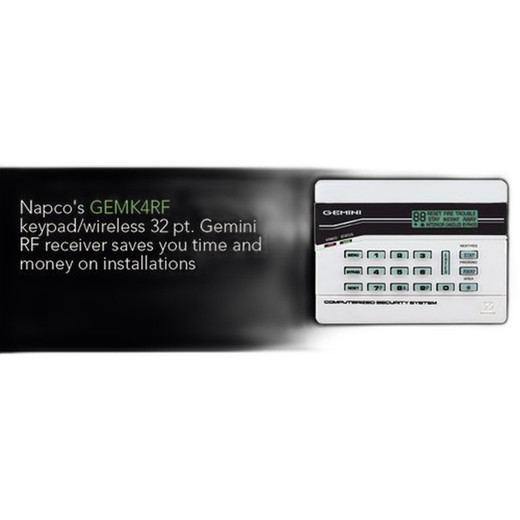

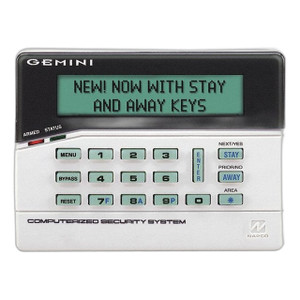

Product images are provided for reference and may not represent the exact model, configuration, or included
components.
Overview
SKU:
GEM-K4RF
Condition:
New
Availability:
Usually ships in 24 hours
Warranty
Manufacturer Warranty
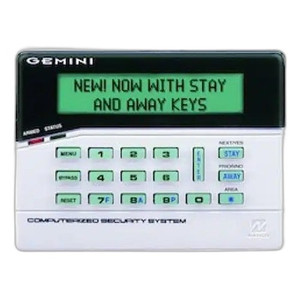
Napco GEM-K4RF Keypad Reader
Napco GEM-K4RF Keypad Reader Overview The Napco GEM-K4RF is a fixed-display keypad reader designed for access control integration in security and ent…
Napco GEM-K4RF Keypad Reader
$240.99
Your recommended setup
Review items below — quantities update pricing automatically.
Item
Qty
Status
Price
Optional Add-Ons recommended
Services optional
Bundle Summary
Bundle Subtotal:
$0.00
Optional Add-Ons:
$0.00
Services:
$0.00
Total:
$0.00
Overview
SKU:
GEM-K4RF
Condition:
New
Availability:
Usually ships in 24 hours
Warranty
Manufacturer Warranty
Description

Napco GEM-K4RF Keypad Reader
Overview
The Napco GEM-K4RF is a fixed-display keypad reader designed for access control integration in security and entry management systems. This reader combines a large backlit display with reliable keypad functionality, making it suitable for facilities requiring straightforward credential entry and access point monitoring. The GEM-K4RF serves as a reader module within broader Napco access control architectures, supporting PIN-based credential verification and hybrid authentication workflows.
Key Features
- Large Backlit Display: Fixed English-language display ensures clear visibility in various lighting conditions, including low-light environments such as parking areas, stairwells, and exterior entry points
- Keypad Entry: Integrated keypad allows PIN and credential input directly at the access point, supporting rapid credential entry by authorized personnel
- Reader Type: Functions as a dedicated keypad reader for credential verification within Napco control panel architectures
- Fixed Language Support: English-language interface for straightforward operator interaction and reduced user confusion during credential entry
- Access Control Integration: Designed for integration into Napco control panels and door management platforms with standard wiring to the control panel
- Reliable Credential Processing: Supports standard access control workflows for door unlock commands and comprehensive event logging
Integration & Compatibility
The GEM-K4RF keypad reader integrates with Napco access control systems and door management platforms. Security integrators should verify compatibility with the target control panel model during the specification phase and confirm credential protocol support requirements, including PIN entry, card reader integration, or multi-factor authentication workflows. Installation requires standard wiring to the control panel and appropriate power supply configuration aligned with the panel's specifications.
Typical deployment scenarios include single-door access points, back-of-house entry, retrofit access control upgrades, and facilities requiring operator-friendly PIN-based or hybrid credential verification. The fixed display provides immediate feedback during credential entry, reducing user confusion and entry errors at access points. The keypad format supports rapid credential entry and integrates easily into retrofit scenarios where panel-mounted readers may not be practical. IT and security teams should confirm event logging capabilities with the paired control panel to ensure audit trail completeness for compliance and forensics requirements.
Operational Considerations
The large backlit display is particularly valuable in low-light environments and exterior entry points where visibility is critical. The keypad reader design simplifies credential entry workflows compared to card-swipe or biometric alternatives, making it practical for facilities where staff require quick, reliable access without complex multi-technology integration. The GEM-K4RF (often searched as GEM K4RF) delivers straightforward PIN-based entry functionality with reliable integration into Napco control architectures. Plan wiring runs to account for backlit display power requirements; standard 12VDC or 24VDC supplies are typical but must be confirmed with your specific control panel specification. Verify event logging configuration during installation to ensure PIN entry attempts and unlock events are captured for audit compliance and forensic analysis.
Jerry Tildsen
I've specified the Napco GEM-K4RF in several retrofit deployments where existing infrastructure required a straightforward reader upgrade. The keypad design and large backlit display make it practical for environments where facility staff need quick, reliable access without complex card-swipe or biometric workflows. The GEM-K4RF delivers solid functionality for PIN-based entry and hybrid credential scenarios across multiple facility types.
Technical Highlights:
- Display Type: Large backlit display with fixed English language support ensures visibility and clarity across day and night operations, particularly valuable in low-light environments such as parking areas and stairwells
- Reader Interface: Keypad-driven credential entry integrates directly with Napco control panel event logging and unlock commands, supporting standard access control workflows
Deployment Considerations:
- Confirm control panel compatibility before order to avoid integration delays—Napco model documentation should specify supported reader types and wiring requirements
- Verify event logging configuration to ensure PIN entry attempts and unlock events are captured for audit compliance and forensic analysis
- Plan wiring runs to account for backlit display power requirements; standard 12VDC or 24VDC supplies are typical but confirm with your panel specification documentation
For facilities standardizing on Napco access control, the GEM-K4RF is a reliable choice that balances ease-of-use with straightforward integration. Request detailed integration guidance from your Napco distributor if deploying across multiple entry points to ensure consistent configuration and audit logging across all access points.
Specifications
Product Type:
Keypad
Display Size:
Large backlit, fixed English display
reader_type:
Keypad
Credential_Type:
PIN entry
Have Questions?
Ask an Expert.
RELATED PRODUCTS

System Design, Deployment & Technical Support
Support services and planning resources for commercial surveillance, access control, and infrastructure deployments.
Fixed scope • Fixed price
System Design Assistance
- Get help validating product compatibility
- Coverage requirements
- Storage planning and deployment architecture before you buy.
Deployment & Configuration Support
- Access fixed-scope support for rollout planning
- User setup guidance
- Migration and system standardization across single-site or multi-site deployments
Guides, Tools & Calculators
- PoE requirements
- Storage retention
- Camera selection and deployment methodology