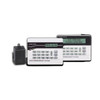
Napco GEM-P3200 Keypad Reader
Overview
The Napco GEM-P3200 is a keypad reader purpose-built for PIN-based access control within Napco security system deployments. Users enter numeric or alphanumeric codes at door access points; the GEM-P3200 transmits the entry to the Napco control panel for PIN validation and door release authorization. This approach eliminates the hardware complexity and cost of card readers or biometric systems when keypad entry meets functional requirements. The GEM-P3200 is field-replaceable, meaning you can swap it without major panel reconfiguration—a practical advantage during maintenance or hardware upgrades.
Key Features
- Keypad-type reader interface: Numeric or alphanumeric code entry at the door—no cards or credentials to issue, manage, or replace.
- PIN-based credential authentication managed by Napco control panel: All code validation happens centrally, so code changes propagate across all GEM-P3200 readers on the system without individual reader reprogramming.
- Compatible with Napco access control system architecture: Direct integration via standard reader wiring to the control panel or compatible reader interface module—no special protocol converters required.
- Standalone reader integration for multiple door entry points: Deploy the GEM-P3200 at facility entry, secure storage areas, and secondary access points without needing separate access control hardware per door.
- Field-replaceable design: Hardware can be swapped in the field if a unit fails or requires upgrade, reducing downtime and simplifying logistics compared to hard-wired reader solutions.
- Standard wiring integration to Napco control panels: Uses conventional keypad reader wiring runs from the reader location to the control panel—no exotic cabling or power distribution.
- User code and door assignment configuration through Napco system programming tools: Integrators define PIN codes, access levels, and which doors each code unlocks using the control panel interface or authorized configuration software—then push changes to all connected readers at once.
- Eliminates requirement for card readers or biometric hardware: PIN entry is simpler to support, audit, and audit trail—no physical credentials to track or biometric enrollments to manage.
Integration and Compatibility
The GEM-P3200 connects to a Napco control panel or compatible reader interface module using standard keypad reader wiring. When a user enters a PIN, the reader transmits the code to the panel; the panel validates the code against the user database, checks the time-based access rules for that user, and either energizes the door strike or relay to unlock the door. During system design, confirm that your specific Napco panel model supports the total number of user codes and door assignments you require. This is critical—undersizing capacity early means retrofitting additional readers or panels later. Refer to your Napco control panel documentation for maximum supported user codes and door zones; the GEM-P3200 itself imposes no additional limits beyond what the panel provides.
Typical Deployment Applications
The GEM-P3200 addresses access control where PIN-based entry provides sufficient authentication and physical credential management is undesirable. Common deployments include facility entry doors, secure storage areas, server rooms, and secondary access points in office, warehouse, or industrial environments. PIN-based access is especially practical where user code rotation is managed through the Napco control panel and you want to avoid the overhead of card issuance, card readers, card lifecycle management, or biometric hardware enrollment. Before deployment, confirm with Napco technical documentation that your panel supports the required number of users and door assignments—this prevents capacity surprises after installation.
Installation Requirements
Installation involves running standard keypad reader wiring from the GEM-P3200 location to the Napco control panel or reader interface module. Verify that power is available at each reader installation location and that wiring runs comply with Napco installation guidelines. System programming defines user PIN codes, access levels, and door assignment parameters through the control panel interface or authorized configuration software. Before commissioning, test code entry and door release operation at each keypad. Maintenance and replacement procedures are documented in Napco technical resources—review these before deployment to ensure your support team can handle field troubleshooting and unit replacement within your required response time.
Frequently Asked Questions
Q: What happens if a user forgets their PIN code?
A: PIN codes are managed centrally through the Napco control panel. An authorized administrator can reset, change, or issue a new code through the panel interface without needing to reprogram the GEM-P3200 reader itself. The change takes effect immediately on all connected readers.
Q: Can I use the GEM-P3200 at multiple doors?
A: Yes. Multiple GEM-P3200 readers can be deployed throughout a facility, each wired to the same Napco control panel or reader interface module. A single user code can be configured to unlock specific doors, or different users can have access to different doors, all managed from the control panel.
Q: Is the GEM-P3200 suitable for outdoor installation?
A: The current evidence does not specify an IP rating or environmental rating for the GEM-P3200. Consult the datasheet or Napco technical support to confirm suitability for outdoor or wet environments before deploying it outside or in areas exposed to direct moisture.
Q: What is the typical wiring distance from the GEM-P3200 to the control panel?
A: The evidence does not specify maximum wiring distance or voltage drop limits. Standard practice for keypad readers is 500–1000 feet of 22 AWG pair; confirm with Napco installation documentation for your specific panel and wiring gauge requirements.
Q: Can the GEM-P3200 be integrated with a third-party VMS or access control software?
A: The GEM-P3200 is designed to integrate with Napco control panels and compatible reader interface modules. For third-party VMS or software integration, confirm compatibility with Napco technical support before design—integration may require additional middleware or may not be supported.
Q: Is there a backup power option if the main power fails?
A: The evidence does not specify battery backup or uninterruptible power supply options for the GEM-P3200 reader itself. Consult Napco documentation regarding panel-level backup power (battery or UPS) and how it affects reader operation during power loss.
Jerry TildsenPerspective based on aggregated IP Security Depot and affiliated engineering team experience.
The Napco GEM-P3200 is a straightforward keypad reader option for integrators designing PIN-based access control systems. The core strength of the GEM-P3200 is simplicity: keypad entry eliminates card reader hardware, card issuance overhead, and biometric enrollment—you just assign codes through the control panel, and the GEM-P3200 does the rest. During system planning, confirm that your target Napco panel supports the required user code capacity and door assignments; this is the single largest constraint on system size and scope.
Technical Highlights:
- Field-replaceable design: If a GEM-P3200 reader fails, you can swap it in the field without panel reconfiguration. That means shorter downtime and simpler logistics compared to hard-wired reader solutions.
- Centralized code management: All PIN codes are managed at the control panel. When you add a user, change a code, or modify access levels, those changes push to all connected GEM-P3200 readers simultaneously—no per-reader reprogramming.
- Standard wiring integration: The GEM-P3200 uses conventional keypad reader wiring to the control panel. No exotic protocols, no special power distribution, no VMS middleware—just straightforward access control architecture.
Deployment Considerations:
- Verify Napco panel capacity before design. Undersizing the panel's user code or door zone count early forces retrofitting additional hardware later—a costly mistake on a mid-sized deployment.
- The GEM-P3200 specification evidence does not include environmental ratings (IP/IK), operating temperature, or outdoor suitability. If you need outdoor deployment, confirm with Napco technical support or the product datasheet before committing to the design.
- PIN-based access is appropriate when credential lifecycle management (card issuance, replacement, recovery) is undesirable. It is NOT appropriate if you need accountability tied to physical credentials or if users frequently change and code reuse is a concern.
The GEM-P3200 is well-suited to small-to-medium office, warehouse, or light industrial access control deployments where PIN entry meets security requirements and you want to avoid card reader hardware and card management overhead. For large multi-site deployments or environments requiring card-based audit trails or biometric authentication, evaluate higher-capacity Napco access control panels or card reader alternatives.