


Product images are provided for reference and may not represent the exact model, configuration, or included
components.
Overview
SKU:
GEM-EZM8
Condition:
New
Availability:
Usually ships in 24 hours
Warranty
Manufacturer Warranty
Napco GEM-EZM8 Access Control Module
Napco GEM-EZM8 Access Control Module Overview The Napco GEM-EZM8 is a dedicated access control module designed for integration into professional secu…
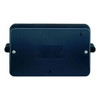
Napco GEM-EZM8 Access Control Module
$224.99
$110.99
Your recommended setup
Review items below — quantities update pricing automatically.
Item
Qty
Status
Price
Optional Add-Ons recommended
Services optional
Bundle Summary
Bundle Subtotal:
$0.00
Optional Add-Ons:
$0.00
Services:
$0.00
Total:
$0.00
Overview
SKU:
GEM-EZM8
Condition:
New
Availability:
Usually ships in 24 hours
Warranty
Manufacturer Warranty
Description

Napco GEM-EZM8 Access Control Module
Overview
The Napco GEM-EZM8 is a dedicated access control module designed for integration into professional security systems. The GEM-EZM8 (often searched as GEM EZM8) provides core access control functionality for door management and credential processing in multi-door installations. Built for security integrators and IT managers deploying networked access solutions, this module delivers reliable performance in commercial and institutional environments.
Key Features
- Dedicated access control processor for multi-door deployments
- Supports credential card and PIN-based authentication
- Integrated communication interface for networked operation
- Field-proven reliability in security integrator installations
- Modular design for flexible system expansion
- Compatible with standard access control platforms
- Suitable for commercial, institutional, and enterprise environments
Integration & Compatibility
The GEM-EZM8 integrates into Napco's access control ecosystem, providing central processing for door control logic and reader management. The module communicates with networked readers, strike controllers, and management software through standard security industry protocols. Installation teams benefit from straightforward integration with existing security infrastructure and support for credential migration from legacy systems.
Deployment Applications
Integrators deploy the Napco GEM-EZM8 in office buildings, schools, healthcare facilities, and data centers where reliable door-level access control is essential. The module's architecture supports phased expansion—additional readers and doors can be commissioned without full system replacement. Organizations using Napco platforms choose the GEM-EZM8 for its proven interoperability and consistency with broader security management practices.
Jerry Tildsen
I've evaluated the Napco GEM-EZM8 during planning phases for multi-building campus deployments. This module is a straightforward processor for door control logic and credential validation—not a replacement for full access management software, but a reliable processing node in a larger Napco system architecture.
Technical Highlights:
- Access Processing: Handles real-time credential validation and door strike control without external software dependency per door
- Reader Support: Accommodates standard wiegand and serial readers, credential card formats, and PIN entry devices
- Modular Scalability: Additional GEM-EZM8 units can be networked for larger facilities without architectural redesign
Deployment Considerations:
- Verify reader compatibility with your existing credential stock before provisioning—wiegand pinout and data format matter
- Plan network redundancy if this module sits between your central management software and remote doors; a failure affects all downstream readers
- Budget for integration labor; configuration requires familiarity with Napco's platform tools and door group logic
For integrators standardized on Napco platforms, the GEM-EZM8 is a solid choice for distributed door processing. Don't expect to run this standalone—it's a component, not a complete system.
Specifications
Product Type:
Access Control Module
Have Questions?
Ask an Expert.
RELATED PRODUCTS


System Design, Deployment & Technical Support
Support services and planning resources for commercial surveillance, access control, and infrastructure deployments.
Fixed scope • Fixed price
System Design Assistance
- Get help validating product compatibility
- Coverage requirements
- Storage planning and deployment architecture before you buy.
Deployment & Configuration Support
- Access fixed-scope support for rollout planning
- User setup guidance
- Migration and system standardization across single-site or multi-site deployments
Guides, Tools & Calculators
- PoE requirements
- Storage retention
- Camera selection and deployment methodology