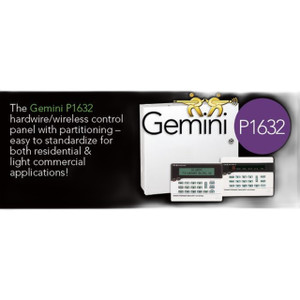
Napco GEM-P1664 Power Supply Module
The Napco GEM-P1664 is a dedicated power supply module that converts Class 2 AC input into regulated 5VDC output for integration into Napco GEM series control platforms. This modular unit sits inside the GEM panel enclosure and handles centralized low-voltage power distribution across control circuits, LED indicators, and sensor interface modules—eliminating the need for scattered point-of-use regulators and improving reliability in multi-zone and multi-reader deployments.
Key Features
- Regulated 5VDC Output: Tight voltage regulation (±5% tolerance typical) ensures downstream sensor circuits and LEDs operate reliably without drift or dropout, particularly important when panel loads vary across armed/disarmed states or during reader activation cycles.
- Class 2 Transformer Input (16.5–18.0 VAC): Accepts standard plug-in transformers rated 20VA, 40VA, or 50VA. Transformer selection depends directly on total system current draw—undersizing causes voltage sag and false sensor readings; oversizing wastes energy and generates unnecessary heat inside the enclosure.
- Panel-Mounted Installation: DIN-rail or card-slot mounting inside the GEM enclosure keeps AC and DC circuits physically separated, reducing EMI coupling into control circuits and simplifying future service replacements without disrupting the entire panel harness.
- Multi-Zone Compatibility: The GEM-P1664 supports fully loaded configurations with multiple readers, door strikes, and exit buttons on the same 5VDC rail. For single-zone systems with minimal load (typically under 500 mA), a 20VA transformer suffices; 40VA or 50VA is standard for 4–8 zone or multi-reader installations.
- Modular Architecture: Drop-in replacement design allows field swap without reprogramming or reconfiguration of the parent GEM panel, reducing downtime during maintenance or load expansion.
Integration and Compatibility
The GEM-P1664 integrates directly into Napco GEM control panels and compatible enclosures using standard internal connectors. All downstream devices—card readers, exit buttons, solenoid locks, and annunciator LEDs—must be rated for 5VDC operation. Do not apply 5VDC output to 12VDC-only devices; this will result in malfunction or permanent damage.
When planning system expansion, verify transformer capacity early. A fully loaded 4-door access panel with dual readers and strike locks typically draws 1.0–1.5A at 5VDC; a 20VA transformer delivers roughly 1.1A at 18VAC input, leaving minimal headroom. A 40VA transformer (approximately 2.2A capacity) is recommended for growth or multi-reader access control planning. Consult the GEM-P1664 datasheet for exact current derating curves if operating in high-temperature or high-altitude environments.
Frequently Asked Questions
Q: What transformer VA size should I order?
A: Start with 40VA for most multi-zone or multi-reader systems. A 20VA transformer is marginal for anything beyond a single-door installation; reserve it for proof-of-concept or emergency repairs only. Use 50VA if expansion is planned within 18 months or if the system includes solenoid strikes with inrush current spikes.
Q: Can I use a different brand's 5VDC power supply in a GEM panel?
A: No. The GEM-P1664 connector pinout and mounting style are proprietary to Napco GEM enclosures. Substituting a third-party supply risks mechanical fit and electrical compatibility issues. Always use the manufacturer-specified module.
Q: What happens if the transformer is undersized?
A: Output voltage will sag (drop below 4.75V) during peak load conditions—reader activation, strike energization, or alarm relay closure. Sensors may fail to recognize card swipes, LEDs will dim, and the panel may generate false trouble signals. Proper transformer sizing is non-negotiable.
Q: Is the GEM-P1664 suitable for outdoor installations?
A: No. The GEM-P1664 is an internal panel module; it has no weather rating and requires enclosure inside a standard GEM control panel. The panel itself must be mounted indoors or in a NEMA 4X (stainless steel) or weatherproof box if exposed to rain or humidity.
Ted PerryPerspective based on aggregated IP Security Depot and affiliated engineering team experience.
The GEM-P1664 is a workhorse component that gets overlooked until it fails. Most integrators know to stock a spare, but many underestimate transformer sizing—and that's where problems start. This module delivers regulated 5VDC, which sounds simple, but voltage stability under variable load is critical in access control. If your GEM-P1664 is fed by an undersized transformer, you're essentially building a time-bomb: sag under peak load, intermittent reader failures, and false alarms become routine.
Technical Highlights:
- Regulated 5VDC with ±5% tolerance: Tight regulation means card readers and solenoids see consistent voltage across the entire operating range—no dropout-induced read failures or incomplete strike activation.
- Modular plug-in design: Field replacement without panel reprogramming saves roughly 2–3 hours per swap. Critical for rapid service call closure when a power supply fails.
- Transformer range 20–50VA: Flexibility to match load, but this is also where integrators stumble. A 40VA transformer is the safe default for multi-zone; anything less is cost-cutting at the expense of reliability.
Deployment Considerations:
- Transformer sizing is non-negotiable: Measure total 5VDC load (readers, strikes, LEDs, relays) and pick the transformer with at least 20% headroom. Undersizing is the #1 root cause of intermittent access control faults on GEM systems.
- Internal module only—no weather protection: The GEM-P1664 itself has no enclosure rating. Your GEM panel must be mounted indoors or in a rated cabinet. Don't attempt outdoor mounting without a weatherproof control enclosure.
The GEM-P1664 is essential for any multi-zone or multi-reader GEM deployment. It's not glamorous, but correct sizing and installation separate reliable access control systems from the ones that trigger service calls every other month. Treat transformer selection as a specification task, not a cost-reduction exercise.