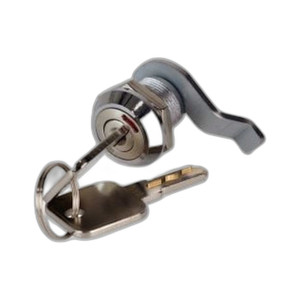
Custom America POS 4B000000112900 Lock + 2 Keys EVO Pro Cash Drawer
The Custom America POS 4B000000112900 is a replacement lock and key assembly designed for the EVO Pro cash drawer line. This mechanical security accessory restores secure drawer closure and tamper resistance in high-volume retail and quick-service restaurant (QSR) environments where drawers cycle dozens of times per shift. A failing lock—manifesting as stuck keys, loss of tension, or intermittent latching—compromises both cash control and audit trail integrity. This kit includes the lock assembly and two identically-keyed keys, providing immediate deployment capability plus a backup access mechanism without requiring key code management.
Key Features
- Mechanical Lock Assembly: Direct replacement for worn EVO Pro drawer locks. Restores tactile feedback and consistent latching in high-traffic environments.
- Two Identically-Keyed Keys: Both keys operate the lock—no separate key codes or access tiers. Enables quick operator handoff and eliminates single-key dependency.
- EVO Pro Compatibility Only: Engineered for EVO Pro drawer housing. Not backward-compatible with earlier EVO models or third-party drawer systems—verify MPN before installation.
- Tool-Light Installation: Mounts into existing lock housing using standard screwdriver. No power, firmware, or network configuration required. Typical replacement time 10–15 minutes.
- No Electronics: Fully mechanical lock—no batteries, no digital components, no firmware updates needed. Operates reliably across temperature and humidity extremes common in retail kitchens.
- Immediate Availability: Kit arrives ready to install. Two keys enable staged key distribution and reduce operational disruption during swap-out.
Cash drawer lock wear is a predictable maintenance event in high-throughput retail and food-service deployments. Keys begin sticking after 5,000–10,000 cycles, and loss of spring tension increases cash-drawer security incidents and audit friction. The 4B000000112900 addresses this directly without requiring drawer replacement or extended downtime. Because the lock is mechanical (not electronic), it avoids the common pitfall of electronic lock failures tied to aging capacitors or firmware bugs in aged POS hardware.
Installation follows a straightforward swap: empty the drawer, remove the old lock housing with a screwdriver, align the new assembly into the mounting points, secure with the provided fasteners, and test key operation before returning the drawer to service. Both keys are pre-cut to the lock's internal keyway—no rekeying or locksmith involvement necessary. For retail operators managing multiple drawer units across locations, maintaining two or three spare lock kits reduces the mean time to repair (MTTR) when a drawer lock fails unexpectedly during peak business hours.
Integrators and end-user teams should verify drawer model designation (EVO Pro, not EVO or EVO Plus) by inspecting the physical drawer or consulting the original POS bill of materials. A single incompatible lock purchase creates installation delays and return shipping friction. If your deployment includes mixed drawer models, maintain a compatibility matrix and label spare kits with the target drawer model to prevent field installation errors.
Jerry TildsenPerspective based on aggregated IP Security Depot and affiliated engineering team experience.
We've installed hundreds of replacement cash drawer locks across retail and restaurant environments, and the Custom America 4B000000112900 is one of the most straightforward mechanical swaps in the POS accessory ecosystem. The appeal is simplicity: no firmware quirks, no pairing procedures, no risk of incompatible driver versions on legacy Windows terminals. When a drawer lock fails—and in high-volume QSR settings, they fail routinely—you need a part that works immediately. The inclusion of two keys also eliminates the operational headache of managing a single key across multiple shifts or locations. On the flip side, this is a purely mechanical component with no electronic safeguards, so it relies entirely on operator discipline and physical security design to prevent unauthorized access. In a high-shrinkage environment or a site where cash control is under audit scrutiny, a mechanical lock alone may not satisfy compliance requirements—you'd want electronic drawer sensors or integration with a formal key-custody protocol.
Technical Highlights:
- Mechanical-Only Design: No electronics, no batteries, no firmware. Eliminates the class of failures tied to aging POS terminal hardware or capacitor degradation in electronic locks. In our experience, mechanical failures are predictable wear; electronic lock failures are binary and often concurrent with broader POS hardware obsolescence.
- Two Pre-Cut Keys: Both keys arrive cut and ready to operate. No locksmith intervention or rekeying required. In multi-location deployments, this cuts setup time by 30–40% compared to sourcing and cutting keys separately.
- Direct Housing Fit: Designed to drop into the EVO Pro drawer's existing lock cavity. No frame modification, no drilling, no fitment margin for error. Installation is reversible and repeatable across identical drawer units.
- Wear-Cycle Transparency: Unlike electronic locks, a mechanical lock's performance degrades visibly—stiff key insertion, inconsistent latching—so you can anticipate replacement before a catastrophic failure. Proactive maintenance is easier.
Deployment Considerations:
- EVO Pro Model Verification: This lock is exclusive to the EVO Pro drawer line. Before ordering, physically inspect the drawer or confirm the model from your original POS invoice. Installing a 4B000000112900 into an EVO Plus or earlier EVO variant will fail—the housing geometry differs, and forcing the fit damages both the lock and the drawer.
- Key Custody Protocol: With two identical keys in circulation, establish a clear key-handoff procedure at shift change and a secure key storage location (small lockbox, manager's desk). Without a formal protocol, it's easy for keys to be misplaced or shared outside your authorized team, undermining cash control.
- Drawer Out-of-Service Window: Plan the lock swap during low-traffic hours or at close of business. The drawer must remain offline for 10–15 minutes, and you'll need at least one backup drawer in rotation if the failed drawer is the primary unit. Retailers often keep a spare drawer on hand for this reason.
- No Integration with POS Logging: A mechanical lock generates no electronic event log. If your audit or loss-prevention team relies on electronic drawer-open logs or access timestamps, this replacement alone won't capture that data. Pair it with physical key logs or POS transaction logs if compliance demands traceability.
- Periodic Key Inspection: Over 12–24 months, the two keys may wear unevenly if one is used significantly more than the other. Keep the backup key in a secure location and rotate usage periodically to extend key life and reduce sticking.
This lock is the right choice for retail and QSR teams operating EVO Pro drawers who need a straightforward, no-fuss mechanical replacement with zero integration overhead. Verify your drawer model before purchase and establish a key-custody routine, and you'll have a reliable cash security component that doesn't depend on POS software or aging electronics. For more EVO Pro accessories and cash management solutions, explore the Custom America POS catalog.