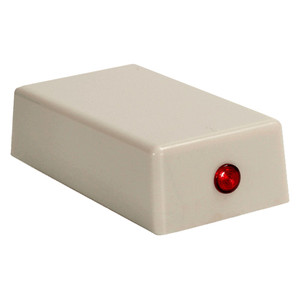
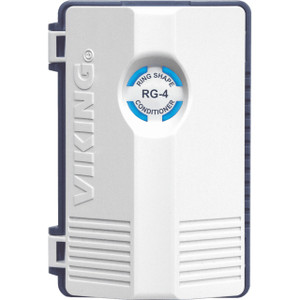
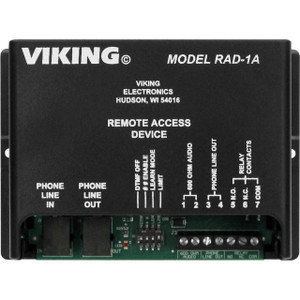
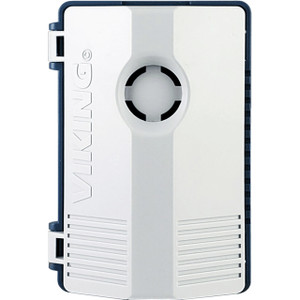
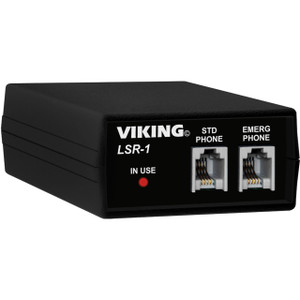
Viking Electronics LPL-1 Line Powered Off-Hook, Ring and Message Waiting Indicator
Overview
The Viking Electronics LPL-1 is a telephone line powered indicator designed for analog phone lines and analog station ports on PBX and key systems. It provides three distinct visual and audible alerts — ringing indication, off-hook (line-in-use) indication, and message waiting indication — all without requiring a separate power supply. The LPL-1 draws everything it needs directly from the telephone line, making installation a straightforward two-wire connection that works wherever a standard analog loop is present.
This is a practical fit for reception desks, warehouse offices, break rooms, server closets, and any location where staff need a reliable at-a-glance signal of phone status without being tethered to a handset. The LPL-1 (often searched as LPL 1) is a compact, wall-mountable unit from Viking Electronics — a manufacturer with a long track record in telephone signaling and intercommunication hardware for commercial installations.
Key Features
- Line-Powered Operation: The LPL-1 draws power directly from the telephone line — no wall adapter, no power brick, no separate circuit. In a retrofit or temporary installation where adding a power outlet is impractical, this eliminates a real constraint.
- Three-Function Signaling: A single unit handles ring indication, off-hook (line-in-use) indication, and message waiting indication. In a shared-office context, this replaces three separate signal devices with one.
- 92 dB SPL at 1 Meter: That's loud enough to be heard clearly across a standard office workspace or above light ambient noise on a warehouse floor. Compare: a typical desk phone ringer is around 75–80 dB — the LPL-1 runs roughly 12–17 dB above that, which is the difference between easily missed and clearly audible.
- 40V AC RMS Ring Voltage Threshold at 20–30 Hz: This matches the standard North American analog ring signal spec, so compatibility with POTS lines and the vast majority of analog PBX station ports is reliable. If your system runs a non-standard ring voltage, verify before deploying.
- RJ-11 Jack Plus Screw Terminal Connections: The dual connection options — one RJ-11 jack and two screw terminals — give installers flexibility. Screw terminals are preferred in permanent commercial wiring runs; the RJ-11 is useful for quick bench testing or temporary installations.
- 7-Foot Line Cord: Long enough to route from a wall jack to a desk or shelf-mounted position without an extension — a practical detail that saves a trip back to the supply bin on most installs.
- 0°C to 32°C Operating Range: This covers standard indoor commercial environments. It is not rated for unheated spaces, loading docks in winter, or outdoor enclosures — plan accordingly if the target location sees temperature extremes.
- Compact Form Factor: At 65mm × 35mm × 20mm and under half a kilogram, the LPL-1 mounts discretely in tight spaces — behind a counter, inside a telecom cabinet, or on a partition panel — without occupying meaningful real estate.
Integration and Compatibility
The LPL-1 connects to any standard analog phone line or the analog station port of a PBX, hybrid key system, or VoIP gateway with FXS (analog) output. It does not require a specific vendor's equipment — any interface that delivers a standard North American analog ring signal (40V AC RMS, 20–30 Hz) will drive it. For telephone signaling accessories, this broad compatibility is the primary reason to choose a line-powered device: no dependency on proprietary power buses, controller cards, or network connectivity.
In multi-tenant or open-plan environments, the LPL-1 pairs naturally with Viking's own line of analog intercom and paging systems where a visual ring indicator at a remote station simplifies call routing without additional wiring infrastructure. If you are deploying across a larger facility, review your telephone line accessory options for splitters and line distribution hardware that may be needed to branch the signal to multiple indicator units.
Note that the LPL-1 is strictly an analog device — it has no SIP, VOIP, or digital interface capability. If your phone system runs entirely on IP with no FXS ports, a telephone adapter or ATA will be required between the system and this unit.
Frequently Asked Questions
Q: Does the LPL-1 require an external power supply?
A: No. The LPL-1 is fully line powered — it draws operating power directly from the connected telephone line. No wall adapter or separate power source is needed.
Q: What ring voltage does the LPL-1 require to activate?
A: The LPL-1 requires a minimum of 40V AC RMS at 20–30 Hz, which is the standard North American analog ring signal. It is compatible with POTS lines and most analog PBX or key system station ports that deliver standard ring voltage.
Q: Can the LPL-1 be used with a VoIP phone system?
A: Only if the VoIP system includes an FXS (analog) port or if an ATA (Analog Telephone Adapter) is used to bridge the IP system to an analog loop. The LPL-1 has no native SIP or IP connectivity.
Q: How loud is the LPL-1 ringer?
A: The LPL-1 produces a maximum of 92 dB SPL measured at 1 meter — significantly louder than a standard desk phone ringer and suitable for noisy environments like warehouse offices or production floor break rooms.
Q: What connection types does the LPL-1 provide?
A: The LPL-1 includes one RJ-11 jack and two screw terminals, plus a 7-foot line cord. Screw terminals are suited to permanent commercial wiring; the RJ-11 is convenient for quick connections or bench testing.
Q: What is the operating temperature range of the LPL-1?
A: The LPL-1 operates from 0°C to 32°C (32°F to 90°F) with 5% to 95% non-condensing humidity. It is intended for standard indoor commercial environments and is not rated for unheated or outdoor locations.
The LPL-1 is one of those products that solves a specific problem cleanly — when you need ring, off-hook, and message waiting indication at a location away from the phone itself, and you do not want to run a power circuit to do it. The 92 dB SPL output at 1 meter is the spec I focus on first: that level is audible over ambient office or light industrial noise without being disruptive in a quiet reception environment.
Technical Highlights:
- Line-Powered Design: Draws all operating current from the telephone line — eliminates the need for a nearby outlet or low-voltage power supply, which is a real constraint in older commercial builds where telephone wiring was run without companion power.
- 40V AC RMS @ 20–30 Hz Ring Threshold: This aligns precisely with the standard North American ring spec, making the LPL-1 reliable across POTS and the majority of analog PBX station ports without any configuration adjustment.
- Dual Connection Options — RJ-11 + Screw Terminals: Screw terminals handle permanent commercial installs cleanly; the RJ-11 jack lets you test function before committing to a punch-down. A small detail that saves time on job sites.
Deployment Considerations:
- The 0°C to 32°C operating range is tighter than you might expect — confirm ambient temps in the target location, particularly in server closets that run warm or near loading areas that may drop in winter.
- This is an analog-only device. If the facility is on a fully IP phone system with no FXS ports, budget for an ATA before specifying the LPL-1 — otherwise the ring signal will never arrive at the unit.
The LPL-1 is the right pick for shared reception counters, break-room phone stations, and warehouse supervisor offices on analog or hybrid PBX systems where a remote visual and audible ring signal is needed without running new power infrastructure to the location.