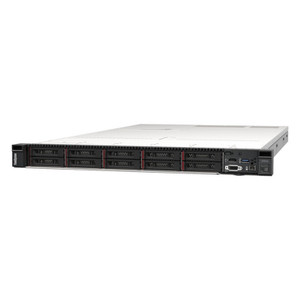
Lenovo 4XG7A63605 AMD EPYC 7453 28-Core Processor Option for ThinkSystem SR665
Overview
The Lenovo 4XG7A63605 is an AMD EPYC 7453 processor option kit designed for the ThinkSystem SR665 server platform. Rated at 28 cores and 56 threads with a 2.75 GHz base clock and a 3.45 GHz boost frequency, this CPU targets compute-dense workloads where per-core throughput and memory bandwidth both matter — think large-scale video analytics back-ends, surveillance platform hosts, or multi-tenant virtualization layers where you need real parallelism without stepping up to full socket count. If you are speccing a new SR665 build or upgrading an existing one, the 4XG7A63605 drops into the Socket SP3 platform with DDR4-3200 octa-channel memory support already on the board.
Key Features
- 28 Cores / 56 Threads (AMD EPYC 7453): 56 logical threads handle heavily concurrent workloads — running simultaneous IP camera decode streams, VMS analytics engines, or containerized microservices without serializing at the CPU. Each thread gets real hardware support, not hyperthreading workarounds.
- 2.75 GHz Base / 3.45 GHz Boost: The 700 MHz headroom between base and boost means single-threaded tasks (license-plate decode, alarm event handling) get a meaningful clock lift automatically without manual overclocking or tuning. Sustained multi-threaded loads hold at the 2.75 GHz floor reliably under the 225W TDP envelope.
- 64 MB L3 Cache (AMD EPYC Milan Architecture): 64 MB of on-die L3 cache reduces DRAM round-trip latency for working datasets that fit — relevant for databases, in-memory queues, and analytics pipelines that repeatedly scan the same frame buffers or metadata indexes. Fewer cache misses means lower average latency per inference call.
- Octa-Channel DDR4-3200 Memory Support: Eight independent memory channels running at 3200 MHz deliver substantial aggregate memory bandwidth — critical when the server is ingesting high-bitrate streams from dozens of network video recorders or running parallel AI inference. Bandwidth saturation, not core count, is often the real bottleneck on analytics hosts; octa-channel removes that ceiling.
- Socket SP3 (AMD EPYC Platform): The SP3 socket is a mature, well-documented platform with broad ecosystem support. For IT architects speccing against a server procurement standard, SP3 offers a known quantity — validated memory configurations, predictable BIOS support, and a wide third-party accessory ecosystem.
- 225W TDP / 240W Configurable TDP-Up: The 225W base TDP is the thermal ceiling for normal operation; the 240W cTDP-up option allows the platform to extract additional sustained performance when cooling headroom exists. Plan rack power and cooling budgets around the 240W figure if you intend to push workloads hard — under-spec'd PDUs are a common commissioning oversight on dense EPYC deployments. Note that no cooler is included with this option kit; thermal solution sourcing is a separate line item.
- 64-bit / 56-Thread Processing Mode: Full 64-bit operation with 56 logical threads means modern hypervisors (VMware, Hyper-V, KVM) can present large vCPU counts to guest VMs without over-committing. A single SR665 socket running the 4XG7A63605 can support a meaningful number of isolated VMs running video management software instances or analytics containers simultaneously.
Integration and Compatibility
The 4XG7A63605 is a Lenovo option kit validated specifically for the ThinkSystem SR665 platform. Compatibility is governed by Lenovo's SR665 Hardware Maintenance Manual and the PSREF (Product Specifications Reference) document for your specific SR665 generation — verify the exact SR665 sub-model (V1/V2/V3) before ordering, as AMD EPYC generations are not cross-compatible across major socket revisions even within the SR665 family. Memory compatibility depends on the installed DIMM configuration: octa-channel bandwidth is only realized with DIMMs populated across all eight channels per socket; partial population reduces effective bandwidth accordingly. The 225W TDP requires validated Lenovo cooling options — this kit ships without a heatsink, so thermal solution procurement is mandatory before commissioning. For deployments integrating with AMD-optimized network switching or SmartNIC acceleration, the EPYC 7453 supports PCIe Gen 4 on the SR665 platform, enabling high-bandwidth connectivity to GPU accelerators or RDMA-capable NICs where the application stack demands it.
Frequently Asked Questions
Q: Does the Lenovo 4XG7A63605 include a heatsink or thermal solution?
A: No. The 4XG7A63605 processor option kit does not include a cooler. A compatible Lenovo heatsink for the ThinkSystem SR665 must be sourced separately before the server can be commissioned.
Q: What memory speed does the AMD EPYC 7453 support?
A: The EPYC 7453 supports DDR4-3200 MHz across eight memory channels. Full octa-channel bandwidth is only achieved when DIMMs are installed across all eight channels per socket.
Q: What is the thermal design power of the 4XG7A63605?
A: The base TDP is 225W. The configurable TDP-up (cTDP-up) ceiling is 240W. Size rack PDUs and cooling infrastructure to the 240W figure if the processor will run sustained workloads at maximum utilization.
Q: Is the AMD EPYC 7453 compatible with all ThinkSystem SR665 variants?
A: Compatibility depends on the specific SR665 sub-model and firmware revision. AMD EPYC processor generations are tied to socket SP3 but not necessarily cross-compatible across SR665 hardware revisions. Verify against Lenovo's PSREF and the SR665 Hardware Maintenance Manual for your exact chassis before ordering.
Q: How many virtual machines can a single 4XG7A63605 processor support?
A: The EPYC 7453 presents 56 logical threads to the hypervisor. Actual VM density depends on per-VM vCPU allocation, workload type, and memory configuration. For lightly threaded VMs (2–4 vCPU), the processor can support a significant number of simultaneous guests on a properly memory-equipped SR665.
The 4XG7A63605 lands in a specific sweet spot: you need more than a mid-range EPYC for a serious analytics or virtualization workload, but you are not ready to commit to the full 64-core die. At 28 cores and 56 threads with a 64MB L3 cache and 225W TDP, the EPYC 7453 gives you meaningful per-socket throughput on the SR665 without the power and cooling infrastructure jump that the top-bin processors demand.
Technical Highlights:
- 56 Threads at 2.75–3.45 GHz: The 700 MHz boost range is the practical working range for surveillance analytics — base clock sustains multi-stream decode, boost handles event-driven single-threaded spikes (alarm processing, metadata indexing) without a separate thread scheduler intervention.
- 64 MB L3 Cache: Large enough to hold working datasets for mid-scale analytics pipelines in cache rather than DRAM — reduces average inference latency on frame-by-frame detection workloads that read the same model weights repeatedly.
- Octa-Channel DDR4-3200: Eight memory channels at 3200 MHz means memory bandwidth rarely becomes the bottleneck first. On a fully populated SR665, this is the difference between 40 streams and 80 streams before you hit a hardware ceiling.
Deployment Considerations:
- No cooler is included — this is a processor option kit only. Order a validated Lenovo SR665 heatsink at the same time or the server cannot POST. Missing this step is the most common commissioning delay on SR665 CPU upgrades.
- The cTDP-up ceiling is 240W, not 225W. If your rack PDU or cooling is sized exactly to 225W per socket, sustained compute workloads can trip the thermal limit and trigger throttling. Budget 240W per socket in the power plan.
For a mid-size physical security operations center deploying a centralized analytics host — running VMS, AI-based video analytics, and a virtualized access control management layer on a single SR665 — the EPYC 7453 gives you the thread count and memory bandwidth to handle that stack without forcing a dual-socket chassis investment.