Lenovo 4XB7A93899 ThinkSystem 2.5-Inch U.2 NVMe PCIe 4.0 12.8TB Mixed-Use SSD
Overview
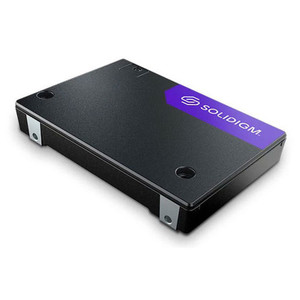
The Lenovo 4XB7A93899 is a 12.8TB hot-swap U.2 NVMe SSD engineered for ThinkSystem server platforms running mixed read/write workloads — think database query serving, analytics pipelines, and virtualization environments where both sequential throughput and sustained random IOPS matter simultaneously. Built on a PCIe 4.0 x4 interface, it delivers up to 900,000 random read IOPS and 337,000 random write IOPS at a 4KB block size, giving architects real headroom to consolidate storage tiers without sacrificing latency under load. The 2.5-inch hot-swap U.2 form factor means you can pull and replace drives under power, eliminating maintenance windows on production servers — a practical requirement in any always-on environment.
Explore the full Lenovo server storage line for compatible drives, caddies, and platform-matched accessories.
Key Features
- 12.8TB Mixed-Use Capacity: 12.8TB of usable NVMe flash in a single 2.5-inch bay gives dense storage configurations without sacrificing the random-access performance that mixed-use workloads demand. Consolidating this much fast storage into one slot reduces cabling complexity and frees bays for additional drives in scale-out builds.
- PCIe 4.0 x4 Interface: PCIe 4.0 doubles the per-lane bandwidth of PCIe 3.0 — so if your ThinkSystem platform supports Gen 4, this drive can saturate that bandwidth advantage. If you are deploying on an older Gen 3 chassis, the drive will operate at Gen 3 speeds; confirm platform compatibility during procurement to avoid leaving performance on the table.
- 900,000 Random Read IOPS (4KB): At 900K read IOPS, this drive handles the burst-heavy read patterns typical in database caching, virtualized desktop infrastructure (VDI), and analytics query layers without creating a storage bottleneck. That figure applies at a 4KB block size, which reflects real-world transactional access patterns rather than synthetic sequential benchmarks.
- 337,000 Random Write IOPS (4KB): 337K sustained write IOPS supports write-intensive mixed workloads — logging, write-back caching, and OLTP environments — without requiring write tiering to a separate high-endurance SSD. The mixed-use designation means the drive is rated for significant write cycles, not just read-heavy deployments.
- Hot-Swap U.2 Form Factor: The U.2 interface combined with the hot-swap backplane carrier lets you replace a failed drive without powering down the server. In production environments with SLAs tied to uptime, this eliminates the forced maintenance window that a non-hot-swap drive would require. Verify your ThinkSystem chassis has a populated U.2 hot-swap bay before ordering.
- Multi-Vendor Qualification: The "Multi Vendor" designation in the product name indicates this drive is validated across multiple ThinkSystem server generations, not locked to a single platform SKU. That broadens your deployment options and simplifies sparing strategies when managing a mixed fleet of Lenovo servers.
Integration and Compatibility
The 4XB7A93899 is designed for deployment in Lenovo ThinkSystem servers with U.2 NVMe hot-swap bays. PCIe 4.0 x4 connectivity requires a host platform that supports Gen 4 to achieve rated IOPS; Gen 3 systems will operate the drive at Gen 3 bandwidth. Confirm your specific ThinkSystem model's storage configuration guide for supported bay types and drive qualifications before deployment — Lenovo publishes per-platform compatibility matrices in the ThinkSystem Product Guide series.
For architects building out enterprise NVMe storage across server fleets, U.2 offers a cabling and density advantage over M.2 at this capacity point — a single U.2 cable handles both power and signal, and the 2.5-inch hot-swap caddy integrates with standard Lenovo backplanes without adapter cards. If you are evaluating storage options for high-density server builds, also consider pairing this drive with a compatible ThinkSystem RAID controller depending on your redundancy and write-caching requirements.
Frequently Asked Questions
Q: What interface does the Lenovo 4XB7A93899 use?
A: The 4XB7A93899 uses a PCIe 4.0 x4 NVMe interface via a U.2 connector. It is backward compatible with PCIe 3.0 platforms but will operate at Gen 3 bandwidth on those systems.
Q: What are the random IOPS specs for the 4XB7A93899?
A: At a 4KB block size, the drive delivers up to 900,000 random read IOPS and 337,000 random write IOPS. These figures reflect mixed-use workload performance under transactional access patterns.
Q: Is the 4XB7A93899 hot-swappable?
A: Yes. The HS (Hot Swap) designation in the product name confirms the drive is designed for hot-swap deployment in compatible ThinkSystem chassis with U.2 hot-swap backplanes. You can replace the drive under power without a server shutdown.
Q: What server platforms is the 4XB7A93899 compatible with?
A: The drive carries a "Multi Vendor" qualification for ThinkSystem server platforms. Confirm compatibility with your specific ThinkSystem chassis model via Lenovo's ThinkSystem Product Guide before ordering, as U.2 bay availability varies by chassis configuration.
Q: What workloads is the 4XB7A93899 rated for?
A: It is rated for mixed-use workloads — environments with significant read and write activity such as OLTP databases, VDI, analytics platforms, and virtualization hosts. It is not a write-intensive (DWPD-heavy) endurance drive; verify the drive's endurance rating in the Lenovo ThinkSystem Product Guide if your workload is write-dominant.
The 4XB7A93899 hits a specific sweet spot I keep coming back to in high-density ThinkSystem builds: 12.8TB of NVMe flash at 900,000 read IOPS in a single hot-swap U.2 bay is a real consolidation play for architects trying to collapse tiered storage into fewer, faster drives per chassis. PCIe 4.0 x4 is the interface to have if your platform supports it — Gen 4 doubles per-lane bandwidth over Gen 3, and at this capacity point that headroom matters when multiple VMs compete for storage simultaneously.
Technical Highlights:
- 900K Read / 337K Write IOPS: Both figures measured at 4KB block size — the most representative block size for OLTP and virtualization workloads. Many NVMe drives publish impressive sequential numbers that mask mediocre random performance; these IOPS figures are what actually determines database and VDI responsiveness.
- PCIe 4.0 x4 via U.2: U.2 carries PCIe signal and power on a single cable, keeps the drive in a standard hot-swap bay, and avoids the thermal and retention headaches of M.2 at high capacities. At 12.8TB, U.2 is the correct form factor — M.2 does not scale here.
- Hot-Swap HS Designation: Hot-swap matters in production. Without it, replacing a failed NVMe drive requires a server shutdown — a meaningful downtime event on any platform with uptime commitments. The HS rating is not cosmetic; it requires a compatible hot-swap backplane in the chassis.
Deployment Considerations:
- PCIe 4.0 performance is only realized on Gen 4 ThinkSystem platforms. If your chassis is Gen 3, the drive installs and operates correctly but benchmarks will reflect Gen 3 ceiling — plan accordingly when sizing throughput for the application tier.
- The "Mixed Use" endurance rating sits between read-intensive and write-intensive designations. If your workload is write-dominant (high daily write endurance required), verify the drive's DWPD rating in the Lenovo ThinkSystem Product Guide — a write-intensive variant may be the more appropriate selection.
For a ThinkSystem deployment running a converged database and virtualization tier — where the storage layer needs to absorb both sequential analytics reads and high-concurrency transactional writes without a separate caching SSD — the 4XB7A93899 is the drive to evaluate first at this capacity point.