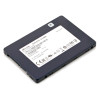
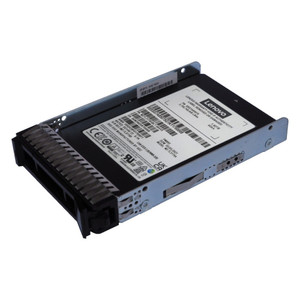
Lenovo 4XB7A08508 ThinkSystem 3.5-Inch 1.92TB Entry SATA SSD
Overview
The Lenovo 4XB7A08508 is a 1.92TB, 3.5-inch hot-swap solid-state drive designed for ThinkSystem servers where you need consistent, low-latency read performance on a SATA 6Gb/s budget. This is an entry-class drive in Lenovo's SSD lineup — meaning it is optimized for read-intensive workloads (surveillance video retrieval, log archives, VDI boot volumes, web serving) rather than mixed or write-heavy applications. At 540 MB/s sequential reads and 93,000 random read IOPS, it handles the sustained throughput that data storage environments demand without the cost premium of enterprise NVMe or SAS alternatives. If your team deploys Lenovo ThinkSystem servers and needs to expand storage capacity without rebuilding the I/O architecture, this drive slots directly into existing 3.5-inch hot-swap bays.
Key Features
- 1.92TB TLC NAND, SATA 6Gb/s Interface: Triple-level cell flash gives you a favorable cost-per-gigabyte for read-dominated workloads. The 6Gb/s SATA interface is the practical ceiling for this protocol — sequential reads hit 540 MB/s and writes reach 520 MB/s, which is more than adequate for most server-attached storage scenarios that don't demand NVMe latency.
- 93,000 Random Read IOPS (4KB): For surveillance video indexing, database reads, or VDI boot storms, 93K read IOPS means the drive won't become the bottleneck. Compare this to a spinning 7200 RPM SATA HDD at roughly 150 IOPS — the SSD handles concurrent I/O requests that would stall a mechanical drive entirely.
- 24,000 Random Write IOPS (4KB): Write IOPS are significantly lower than read IOPS, which is the defining characteristic of an entry-class TLC drive. Plan accordingly: this drive belongs in read-heavy roles. If your workload is write-intensive (transactional databases, high-churn logs), you'll want a higher-endurance drive from the ThinkSystem 5200 or 5400 series.
- 500 µs Read and Write Latency: Half a millisecond on both read and write operations keeps response times consistent under queue depth. For surveillance playback or log retrieval, this latency profile eliminates the seek-time variability that mechanical drives introduce — a real operational difference when pulling footage under investigation timelines.
- Hot-Swap 3.5-Inch Form Factor: The drive ships in a 3.5-inch carrier, compatible with ThinkSystem servers that use standard large-form-factor hot-swap bays. Hot-swap capability means you can replace a failed drive without bringing the server offline — critical for always-on environments like video management systems or 24/7 application servers.
- 256-Bit AES Hardware Encryption: Data-at-rest encryption is handled at the drive level via 256-bit AES. If a drive is pulled from a decommissioned server, the data is unreadable without the encryption key. This matters for HIPAA, PCI-DSS, or any deployment where physical drive disposal is a compliance concern.
- S.M.A.R.T. Monitoring Support: The drive reports health metrics via S.M.A.R.T., which integrates with Lenovo's XClarity Administrator and most enterprise monitoring platforms. You'll get early warning on wear indicators before a failure event — proactive replacement scheduling rather than reactive downtime.
- 2,000,000-Hour MTBF: The rated mean time between failures of 2 million hours translates to an annualized failure rate under 0.05%. In a multi-drive server deployment, lower AFR directly reduces the frequency of rebuild cycles and the associated performance degradation during RAID reconstruction.
- 5.5W Power Draw (Read and Write): At 5.5W under both read and write loads, power consumption is flat and predictable. In a high-density chassis with 24 or more drive bays, consistent per-drive wattage simplifies thermal and power budget calculations — no unpredictable spikes during write bursts.
Integration and Compatibility
The 4XB7A08508 is a ThinkSystem-qualified component, designed for integration into Lenovo's ThinkSystem server lineup. It uses a standard 3.5-inch hot-swap tray and SATA 6Gb/s interface, which means it will also physically fit in any server chassis that accepts 3.5-inch SATA drives — however, firmware compatibility and Lenovo XClarity management features are only guaranteed on ThinkSystem-validated platforms. For network video recorders and surveillance server builds, SATA SSDs at this capacity tier provide a significant reduction in retrieval latency compared to NAS-grade HDDs. Pair this drive with a ThinkSystem server platform already in your stack to preserve existing management tooling. S.M.A.R.T. data is accessible via standard ATA commands, making it compatible with third-party monitoring tools including Nagios, Zabbix, and most IPMI-based management stacks. The 256-bit AES encryption does not require a separate key management appliance for basic deployment, but integrating with enterprise KMS solutions (such as KMIP-compatible servers) requires verifying ThinkSystem BIOS/firmware support for your specific server model before deployment.
Frequently Asked Questions
Q: Is the Lenovo 4XB7A08508 compatible with non-Lenovo servers?
A: The drive uses a standard 3.5-inch SATA 6Gb/s interface, so it will physically fit in any compatible bay. However, Lenovo qualifies this drive specifically for ThinkSystem servers. Full XClarity management integration and firmware-level compatibility are only guaranteed on validated Lenovo platforms. Use in third-party servers at your own risk — basic SATA functionality should work, but Lenovo will not support the drive in that configuration.
Q: Is this a read-intensive or write-intensive drive?
A: This is an entry-class, read-optimized drive. Random read IOPS are 93,000 (4KB) versus 24,000 random write IOPS — a roughly 4:1 read/write IOPS ratio. Best suited for surveillance video retrieval, VDI boot volumes, web content serving, and log archives. For write-heavy workloads such as high-transaction databases, consider a higher-endurance ThinkSystem SSD variant.
Q: Does the 4XB7A08508 support hardware encryption?
A: Yes. The drive includes 256-bit AES hardware encryption, which encrypts data at rest at the drive level. This is relevant for deployments with data-at-rest compliance requirements (HIPAA, PCI-DSS, etc.). Verify that your ThinkSystem server's BIOS and firmware support the drive's encryption management features before relying on them in a compliance context.
Q: Can I replace this drive while the server is running?
A: Yes. The drive is hot-swap capable, meaning it can be removed and replaced without powering down the server — provided your ThinkSystem server chassis and RAID controller support hot-swap operations (most do). This is a key operational feature for always-on environments like surveillance recording servers or production application hosts.
Q: What is the rated reliability of this drive?
A: Lenovo rates the drive at 2,000,000 hours MTBF. This translates to an annualized failure rate well under 0.1%, which is typical for enterprise-class SSDs. For RAID deployments, lower AFR means less frequent rebuild cycles and reduced exposure to the double-drive-failure window during reconstruction.
Q: What monitoring does the 4XB7A08508 support?
A: The drive supports S.M.A.R.T. (Self-Monitoring, Analysis, and Reporting Technology), which exposes wear and health indicators to compatible monitoring platforms including Lenovo XClarity Administrator and standard third-party tools (Nagios, Zabbix, IPMI-based systems).
The 4XB7A08508 is a drive I'd reach for when a ThinkSystem deployment needs to move bulk surveillance footage off spinning disks without the cost of NVMe — the 93,000 random read IOPS and 500 µs read latency keep footage retrieval snappy even when multiple operators are pulling concurrent clips, and the 1.92TB capacity gives you meaningful runway before you're stacking drives.
Technical Highlights:
- Sequential Throughput: 540 MB/s reads and 520 MB/s writes saturate SATA 6Gb/s, which is the practical ceiling for this interface — you won't leave bandwidth on the table with this drive on a standard SATA controller.
- IOPS Asymmetry: 93,000 read vs. 24,000 write IOPS (4KB) is a clear signal about workload fit. Read-dominant roles — surveillance archive retrieval, VDI boots, static content — are where this drive performs. Don't put it on a write-heavy database without understanding that write endurance is entry-tier.
- 2,000,000-Hour MTBF: In a 24-bay dense storage chassis, the difference between 1M and 2M MTBF at scale is measurable in fewer annual drive swaps and shorter windows where a RAID set is degraded and vulnerable to a second failure.
Deployment Considerations:
- Hot-swap is genuinely hot-swap only if the server's backplane and RAID controller both support it — confirm ThinkSystem compatibility for your specific server model before counting on zero-downtime drive replacement in production.
- The 256-bit AES encryption is hardware-capable, but activating it requires BIOS/firmware support on the host ThinkSystem server and, for enterprise KMS integration, a verified KMIP configuration — don't assume it's plug-and-play on every chassis revision.
This drive is the right call for ThinkSystem-based surveillance recording servers or read-heavy archive nodes where you need SSD-class latency at 1.92TB density without stepping up to SAS or NVMe pricing — specifically, any deployment running 24/7 multi-channel video retrieval where HDD seek latency was the pain point.