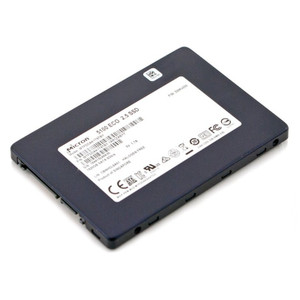
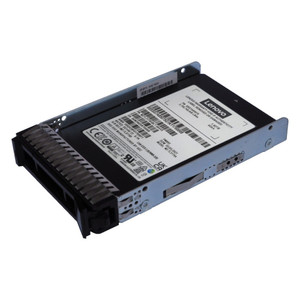
Lenovo 4XB7A08504 ThinkSystem 2.5" 5100 1.92TB Entry SATA 6Gb/s Hot-Swap SSD
The Lenovo 4XB7A08504 is a 1.92TB entry-class SATA SSD engineered for server and workstation storage in ThinkSystem platforms. Built on 3D TLC NAND, it delivers sequential read speeds of 540 MB/s and sequential write speeds of 520 MB/s over a SATA 6Gb/s interface — performance that handles the read-heavy workloads common in database read replicas, log archives, and video surveillance back-end storage tiers without the cost premium of NVMe. Hot-swap support means drive replacement during a maintenance window doesn't require a full server shutdown, a practical advantage in environments where uptime is non-negotiable.
Key Features
- 1.92TB 3D TLC NAND Capacity: At 1.92TB per slot, you can build out meaningful storage density in a 2U rack without turning every bay into a spinning-disk farm. 3D TLC NAND balances cost-per-gigabyte against endurance — the right trade-off for read-dominant workloads like object storage tiers or archived video repositories where write cycles are modest.
- 540 MB/s Sequential Read / 520 MB/s Sequential Write: Both read and write bandwidth land within 4% of each other, which matters for mixed-traffic workloads. Compared to a 7200 RPM SAS HDD at roughly 200–220 MB/s, this drive roughly doubles sequential throughput — a real factor when multiple services are pulling data simultaneously from the same storage node.
- 93,000 Random Read IOPS (4K) / 24,000 Random Write IOPS (4K): Random read performance at 93K IOPS makes this drive viable for database query caching layers and VMS index operations, where small-block random reads dominate. The 24K write IOPS ceiling is worth noting if your workload mixes heavy concurrent writes — tier accordingly.
- 500 µs Read and Write Latency: Consistent 500-microsecond latency on both read and write paths eliminates the multi-millisecond seek penalty of mechanical drives. For applications that poll storage at high frequency — analytics engines, real-time alerting pipelines — this keeps response times predictable under load.
- 256-Bit AES Hardware Encryption: Encryption is handled on-drive, not by the host CPU, which means you don't pay a performance tax to meet data-at-rest compliance requirements. This is relevant in any deployment subject to HIPAA, PCI-DSS, or government data-handling mandates — the drive handles the cryptographic workload transparently.
- Hot-Swap (2.5" SFF Form Factor): The 2.5" small form factor with hot-swap capability fits standard SFF drive bays in ThinkSystem servers. A failed drive can be swapped while the array remains online under RAID, cutting MTTR without scheduling a maintenance window. Factor this into your HA storage design.
- SATA 6Gb/s Interface: The SATA interface ensures broad compatibility with existing ThinkSystem backplanes and storage controllers without requiring a PCIe lane allocation or NVMe driver changes. If your server already runs SATA HDDs, this is a direct performance upgrade with zero infrastructure changes.
- 2,000,000-Hour MTBF: A 2-million-hour mean time between failures rating translates to roughly 228 years of continuous operation in theory — in practice, it signals drive-tier reliability suitable for 24/7 enterprise workloads. For deployments running continuous video ingestion or persistent database services, this reliability floor matters.
- 5.5W Average Power Draw: At 5.5W average, this drive draws significantly less than a comparable-capacity 7200 RPM spinning disk (typically 8–12W active). In a dense 24-bay server, that difference compounds into meaningful per-rack power and cooling savings.
- S.M.A.R.T. Support: S.M.A.R.T. telemetry integrates with server management tools (Lenovo XClarity, vendor IPMI platforms) to surface predictive failure indicators before a drive actually fails. In a managed storage environment, proactive alerting is how you avoid unplanned downtime rather than reacting to it.
Integration and Compatibility
The 4XB7A08504 is a Lenovo ThinkSystem-qualified component, designed for deployment in ThinkSystem rack and tower servers that support 2.5" hot-swap SATA drive bays. The SATA 6Gb/s interface is backward-compatible with SATA 3Gb/s backplanes, though throughput will be limited by the backplane's maximum negotiated speed. For server storage planning in mixed-drive environments, pair this drive with a RAID controller that supports SATA SSDs — not all legacy HBA cards enumerate SSD SMART attributes correctly. Hardware AES encryption requires the host server's security configuration to enable self-encrypting drive (SED) mode; verify Lenovo XClarity or UEFI firmware settings before relying on encryption at rest. If your deployment involves network video recorders or surveillance back-end servers, the read-heavy profile of this drive aligns well with VMS databases and clip-retrieval workloads where sequential read bandwidth and low latency are the dominant performance requirements. Weight is 0.70 lb, and with physical dimensions of 7.00 × 5.00 × 2.50 inches, the drive ships in standard 2.5" SFF packaging compatible with hot-swap drive sleds in ThinkSystem chassis.
Frequently Asked Questions
Q: What servers is the Lenovo 4XB7A08504 compatible with?
A: The 4XB7A08504 is a Lenovo ThinkSystem-qualified 2.5" SATA SSD. It is designed for ThinkSystem servers with 2.5" hot-swap SATA drive bays. Verify your specific ThinkSystem model's compatibility matrix for confirmed support.
Q: Does the 4XB7A08504 support hardware encryption?
A: Yes. The drive includes 256-bit AES hardware encryption. Encryption is performed on-drive, adding no CPU overhead to the host server. Enabling SED (self-encrypting drive) mode requires configuration through Lenovo XClarity or the server UEFI firmware.
Q: Can the 4XB7A08504 be replaced without shutting down the server?
A: Yes. The drive supports hot-swap, meaning it can be removed and replaced while the server remains powered on, provided the server is configured with a compatible RAID array. The RAID controller must support hot-spare or hot-swap operations for this to function without data loss.
Q: What is the random read IOPS performance of this SSD?
A: The 4XB7A08504 delivers 93,000 random read IOPS and 24,000 random write IOPS at a 4KB block size. Sequential read speed is 540 MB/s and sequential write is 520 MB/s over the SATA 6Gb/s interface.
Q: Is this drive suitable for 24/7 continuous operation in a surveillance server?
A: The drive carries a 2,000,000-hour MTBF rating and is classified for server/workstation use, making it suitable for 24/7 deployment. Its read-heavy performance profile — 93K random read IOPS, 540 MB/s sequential read — aligns with VMS back-end storage and video clip retrieval workloads. Verify endurance (TBW) specifications with Lenovo's ThinkSystem 5100 series datasheet for write-intensive surveillance ingestion scenarios.
Q: What NAND type does the 4XB7A08504 use?
A: The drive uses 3D TLC NAND flash. This technology stacks memory cells vertically to increase density and manage cost-per-gigabyte, making it well-suited for read-dominant enterprise workloads. Write endurance is lower than SLC or MLC NAND, so this drive is best positioned as a read-tier or mixed-use storage component rather than a high-cycle write target.
The 4XB7A08504 is a drive I'd specify specifically for read-dominant server storage tiers — the 93,000 random read IOPS at 4KB blocks and 540 MB/s sequential read give it a clear advantage over spinning SAS in any workload that punishes seek latency. Where it earns its place in a ThinkSystem rack is the combination of hot-swap 2.5" form factor and on-drive 256-bit AES encryption: you get live serviceability without rebuilding RAID from scratch, and data-at-rest compliance without routing encryption through the host processor.
Technical Highlights:
- 3D TLC NAND at 1.92TB: High-density vertical cell stacking keeps cost-per-gigabyte competitive for large read caches or archival tiers. At 1.92TB per bay, a 24-slot server can provision 46TB of SSD capacity — meaningful for VMS back-end or object storage nodes.
- 500 µs Read/Write Latency: Symmetrical 500-microsecond latency on both paths is the spec that matters most for database index lookups and VMS clip metadata retrieval. You're not waiting on seek time the way you would with even a fast 15K RPM SAS drive.
- 5.5W Average Power: In a dense storage server, the delta between 5.5W (this drive) and a comparable-capacity 10K SAS spinning disk at 10–12W active adds up to 108–156W across a full 24-bay chassis — real rack cooling savings at scale.
Deployment Considerations:
- Hot-swap is only live-serviceable if the backplane and RAID controller are both configured for it — validate ThinkSystem RAID adapter compatibility before assuming you can pull a drive mid-operation without triggering a degraded array state.
- TLC NAND endurance is the limiting factor here: 3D TLC is built for read-heavy workloads. If you're writing continuous surveillance streams directly to this drive rather than to a dedicated write-tier, budget for a TBW (terabytes written) review against your expected daily write volume — Lenovo's ThinkSystem 5100 series documentation covers endurance ratings by capacity point.
This drive belongs in a ThinkSystem surveillance back-end server where VMS database reads, clip retrieval, and metadata queries are the dominant I/O pattern — a server handling 32+ camera streams where the storage tier needs to keep up with simultaneous read requests from multiple operator workstations without the latency floor of spinning media.