Lenovo 30HT004VUS ThinkStation P3 Tower Gen 2 Workstation
Overview
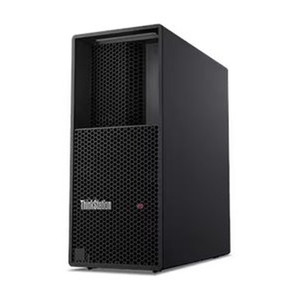
The Lenovo ThinkStation P3 Tower Gen 2 (30HT004VUS) is a commercial-grade tower workstation built around Intel's Core Ultra 5 235 processor — a 14-core architecture designed for sustained multi-threaded work without the thermal throttling that plagues lower-spec commercial desktops. At 9 lbs, it ships ready for deployment with 16GB of DDR5-5600 SDRAM and a 512GB PCIe 5.0 NVMe SSD out of the box, running Windows 11 Pro. This is the workstation to consider when your team's workflow demands more than a business PC but doesn't require the full ISV-certified GPU stack of a P5 or P7.
For tower workstations in security operations centers, physical security management platforms, or enterprise IT deployments, the P3 Tower Gen 2 balances compute density with a conventional tower form factor that integrates cleanly into existing rack-adjacent or under-desk infrastructure. Browse the full Lenovo workstation catalog for the complete P-series lineup.
Key Features
- Intel Core Ultra 5 235 — 14 Cores, No Hyperthreading Overhead: The 235 is a 14-core (14-thread) processor from Intel's Core Ultra 200 series, built on the Intel 18A-derived process node. Unlike the older 13th-gen Raptor Lake parts, the Core Ultra architecture separates performance and efficiency cores at the silicon level — you get predictable sustained throughput on compute-heavy tasks like VMS server-side processing, access control database queries, or concurrent video analytics jobs without core-sharing contention. Fourteen threads means fourteen genuinely parallel workloads.
- DDR5-5600 at 16GB Starting Capacity — 256GB Ceiling: The 30HT004VUS ships with a single 16GB DDR5-5600 DIMM in one of four available slots, leaving three slots open. DDR5-5600 delivers roughly 1.8× the bandwidth of DDR4-3200, which matters when the processor is streaming large video frames or running in-memory analytics. The practical implication: this unit is field-upgradeable to 256GB without touching the chassis — a significant runway for teams whose memory footprint grows with camera counts or analytics load.
- 512GB PCIe 5.0 NVMe SSD — Sequential Reads Built for Large-File Work: PCIe 5.0 NVMe doubles the interface bandwidth ceiling compared to PCIe 4.0 — sequential read speeds on Gen 5 drives typically land between 10,000–14,000 MB/s. On a VMS workstation or security operations platform, that translates to near-instant application load, fast export of recorded footage clips, and responsive database access even under concurrent read/write from multiple camera streams. The 512GB capacity covers OS plus a working application stack; supplemental storage expansion through the tower's internal bays handles longer-term local retention if needed.
- DVD±RW Optical Drive — Physical Media Support Retained: Enterprise and government deployments still encounter software provisioning via disc, BIOS updates distributed on optical media, and evidence export workflows that require DVD write capability. The included DVD±RW eliminates the need for an external USB drive that can walk off a desk — a minor but real operational consideration in staffed security environments.
- Tower Form Factor at 9 lbs — Deployable Without Special Infrastructure: At 9 lbs, the P3 Tower Gen 2 sits in a conventional mid-tower footprint compatible with standard under-desk deployment, open shelving, or lockable IT cabinets. No rack ears, no rail kits, no raised floor dependency. For branch offices, remote security posts, or control rooms where rack space is premium or unavailable, the tower format keeps the deployment simple.
- Windows 11 Pro Included — Enterprise Feature Set Ready: Windows 11 Pro ships pre-loaded, covering BitLocker encryption, Remote Desktop, Hyper-V, Group Policy, and domain join — the feature set that enterprise IT requires for managed deployment. No additional OS licensing overhead on day one.
- Four DIMM Slots — Phased Memory Expansion Without Board Replacement: The 4× DIMM slot layout supports a phased upgrade path: deploy at 16GB (1×16GB), expand to 32GB (2×16GB), 64GB (4×16GB), or push toward the 256GB ceiling with higher-density DIMMs as workload demands grow. This is operationally cleaner than platforms that require populating in pairs from the start.
Integration & Compatibility
The ThinkStation P3 Tower Gen 2 runs Windows 11 Pro and uses standard Intel platform connectivity, making it compatible with enterprise management frameworks including Microsoft Endpoint Manager (Intune), SCCM, and Active Directory domain environments. The Core Ultra 5 235 platform supports Intel vPro manageability features on compatible configurations — confirm vPro enablement with your procurement team for this specific SKU before banking on OOB management.
For NVR and VMS workstation deployments, the PCIe 5.0 storage interface and DDR5 memory architecture accommodate high-channel-count video management software platforms. Pair with a managed PoE switch for camera infrastructure and a dedicated GPU add-in card (purchased separately) if your VMS platform requires hardware-accelerated decoding beyond Intel's integrated graphics. Consult your VMS vendor's hardware certification list for GPU recommendations specific to your channel count and codec mix — H.265 decode acceleration requirements vary significantly by platform and camera density.
The four available DIMM slots and PCIe expansion bays in the tower chassis support add-in cards for additional storage controllers, capture cards, or network interfaces, giving the platform genuine longevity for evolving security infrastructure. For a full workstation selection guide, see the workstation buying guide.
Frequently Asked Questions
Q: What processor does the 30HT004VUS include, and how many cores does it have?
A: The 30HT004VUS ships with an Intel Core Ultra 5 235 processor featuring 14 cores and 14 threads from Intel's Core Ultra 200 series architecture.
Q: Can the memory be upgraded, and what is the maximum supported RAM?
A: Yes. The unit ships with a single 16GB DDR5-5600 DIMM installed in one of four DIMM slots, leaving three slots open for expansion. The platform supports up to 256GB of DDR5-5600 SDRAM total.
Q: What storage interface does the 30HT004VUS use, and is it upgradeable?
A: The included 512GB SSD uses a PCIe 5.0 interface — the current-generation NVMe standard offering peak sequential throughput in the 10,000–14,000 MB/s range. The tower form factor provides internal expansion bays for additional storage.
Q: Does the 30HT004VUS include an operating system?
A: Yes. Windows 11 Pro is pre-installed, covering BitLocker, Remote Desktop, Hyper-V, Group Policy, and domain join for enterprise managed environments.
Q: Is the 30HT004VUS suitable for running video management software (VMS)?
A: The P3 Tower Gen 2 is a capable VMS workstation platform — the Core Ultra 5 235's 14-core architecture, DDR5-5600 memory bandwidth, and PCIe 5.0 NVMe handle concurrent stream processing and database access effectively. For high channel counts requiring hardware-accelerated decode, an add-in GPU (sold separately) may be needed depending on your VMS platform and codec requirements.
Q: What is the weight of the 30HT004VUS, and does it require rack mounting?
A: The unit weighs 9 lbs and ships in a conventional tower form factor — no rack mounting required. It is suitable for under-desk, open-shelf, or lockable IT cabinet deployment without additional hardware.
When evaluating the 30HT004VUS for security infrastructure deployments, the detail that stands out most is the DDR5-5600 memory architecture paired with a four-slot DIMM configuration. You ship it at 16GB and field-upgrade it to 256GB without a board swap — that's a practical operational advantage in environments where camera counts and analytics workloads grow faster than budgets allow for full hardware refreshes.
Technical Highlights:
- Intel Core Ultra 5 235 (14C/14T): Fourteen independent execution threads handle parallel workloads — concurrent VMS recording, playback, and analytics processing — without the core-sharing latency that affects lower-thread-count platforms under sustained load.
- PCIe 5.0 NVMe SSD (512GB): Gen 5 interface delivers roughly double the peak sequential throughput of PCIe 4.0, keeping OS, VMS application, and active database access snappy even when multiple camera streams are writing simultaneously.
- DDR5-5600, 256GB ceiling with 3 open slots: The 1×16GB shipping configuration intentionally leaves room. A four-DIMM platform at this memory speed handles in-memory analytics databases and multi-stream frame buffers without becoming a bottleneck as deployments scale.
Deployment Considerations:
- The base configuration ships with integrated Intel graphics only — if your VMS platform requires hardware-accelerated H.265 decode beyond Intel's iGPU capabilities (common above 32–64 channel counts depending on resolution), budget for a discrete GPU add-in card and verify PCIe slot availability in this chassis before ordering.
- Confirm Intel vPro enablement for this specific SKU with your procurement channel if out-of-band management (AMT/KVM) is a requirement for your IT team — not all Core Ultra 5 SKUs ship with vPro active even on the same board.
The 30HT004VUS is the right fit for a security operations workstation or mid-size VMS server deployment where you need a expandable DDR5 platform with PCIe 5.0 storage, Windows 11 Pro pre-loaded, and a conventional tower footprint — without committing to the cost and complexity of a full rack-mount server architecture.