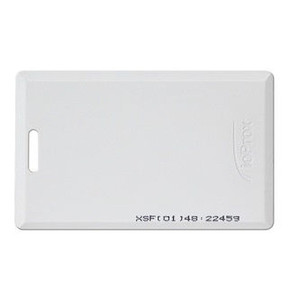
Kantech SH-CMG4/GG Dye Sub Card KSF Blank Magstripe
The Kantech SH-CMG4/GG is a dye-sublimation-printable credential card in Kantech Secure Format (KSF) with a blank magstripe, designed for facilities deploying unified photo badging and proximity access control. Print cardholder imagery, facility branding, and supplemental graphics directly onto the card stock in-house, then encode the magstripe with site-specific access logic — combining visual identification and machine-readable credentials on a single card. This dual-credential approach eliminates the operational friction of separate ID and proximity cards while maintaining backward compatibility with existing Kantech reader infrastructure.
Key Features
- Dye Sublimation Print Technology: Full-color, fade-resistant photographic imagery and branding. Prints directly onto professional-grade card stock without lamination, yielding vibrant, durable badges suitable for long-term facility use and outdoor exposure.
- KSF (Kantech Secure Format): Native format ensures plug-and-play compatibility with Kantech access control systems. Eliminates format-translation overhead and reader firmware incompatibilities common in multi-vendor deployments.
- Blank Magstripe: Custom-encodable magnetic stripe ready for your facility's access logic. Encode via standard magstripe writers or integrated badging software; supports Wiegand protocol communication between readers and controllers.
- ISO/IEC 7810 ID-1 Dimensions: Standard 3.375 × 2.125 inch card size fits all stock badge holders, wallets, and card slots. No custom hardware or mechanical adapters required.
- Professional-Grade Card Stock: Engineered for durability in high-traffic environments. Resists creasing, fading, and physical wear common in daily-carry badging scenarios.
- Visitor and Employee Badging: Supports mixed-credential deployments — photo ID for human verification, magstripe encoding for automated access control and audit trails.
- In-House Production Capability: Dye-sub printing workflow allows rapid badge issuance, emergency replacements, and design iterations without reliance on external card vendors or production delays.
- Thermal Storage Range: Operating storage temperature −30°C to 65°C ensures stability across climate-controlled data centers, lobbies, and outdoor kiosk installations.
The SH-CMG4/GG addresses a common pain point in hybrid access environments: the need for both human-verifiable identification and machine-readable credentials without issuing two separate cards. Kantech's KSF format is native to their controllers and readers — no format conversion or protocol translation overhead. The blank magstripe accepts encoding via standard magnetic stripe hardware or your badging software's built-in writer interface. This means a single card production workflow handles both the visual and digital identity layers, reducing badge inventory overhead and simplifying cardholder management during hiring, transfers, and termination.
Dye sublimation printing on KSF blanks is faster than traditional card lamination workflows and produces sharper photographic reproduction — especially critical for visitor badges where image quality directly affects acceptance and verification speed at security checkpoints. The card's professional-grade stock resists creasing and fading even in high-volume, daily-carry scenarios. Storage stability across the −30°C to 65°C range ensures that blank card inventory remains print-ready for extended periods without image distortion or magstripe encoding drift.
Compatibility with Kantech's multiCLASS readers extends the card's utility in environments bridging legacy proximity (125kHz) and modern smart-card (13.56MHz iCLASS) technology. Wiegand protocol communication ensures seamless reader-to-controller handshake, allowing the magstripe data to integrate directly into audit logs and access-policy enforcement. This is particularly valuable in facilities where proximity credentials are being phased out in favor of smart cards — the SH-CMG4/GG card lets you run both technologies simultaneously without replacing installed readers.
Before deployment, verify that your installed Kantech readers explicitly support KSF card format. Not all Kantech proximity readers accept smart-card formats; some models are hard-coded for 125kHz proximity only. Confirm magstripe encoding compatibility with your badging software or standalone magnetic stripe writer — encoding parameters (ISO Track 1, Track 2, or custom) must align with your controller's credential-matching logic. Dye-sublimation printing requires a compatible card printer configured for KSF blank stock; consult your printer manufacturer for media settings and thermal specifications. Keep blank card inventory in climate-controlled storage to prevent premature print-head wear and encoding reliability.
Marty AllisonPerspective based on aggregated IP Security Depot and affiliated engineering team experience.
We've deployed Kantech KSF dye-sub cards across a range of corporate and hybrid-credentialing environments, and the SH-CMG4/GG fills a real niche: facilities that need both visual badging and proximity/magstripe access on a single card without the cost and logistics of traditional laminated card production. The dye-sublimation workflow is faster than you'd expect — a typical badging workstation can produce 100+ cards per shift in-house, cutting emergency badge issuance from days to hours. The KSF format is proprietary to Kantech, so there's zero format-translation latency; the card presents natively to Kantech readers and controllers. The blank magstripe is the critical detail: it accepts custom encoding, which means you're not locked into Kantech's pre-printed access logic — you encode the stripe yourself based on your facility's zone assignments and credential hierarchy. That flexibility matters in large deployments where access policies change quarterly.
Technical Highlights:
- Dye Sublimation + Magstripe Combination: Single card carries photo ID and machine-readable credential. Eliminates the operational overhead of tracking two separate cards per employee and simplifies badge replacement workflows. The card material is professional-grade, resisting creasing and fading — critical for visitor and contractor badging where card quality reflects facility professionalism.
- KSF Native Format: No protocol translation between reader and card. Kantech controllers recognize KSF credentials immediately, reducing authentication latency and eliminating format-conversion license fees or middleware overhead common in multi-vendor environments.
- Custom Magstripe Encoding: You control the access logic on the stripe — no reliance on Kantech's pre-encoded credential data. This is invaluable in facilities where access zones are facility-specific and change frequently. Standard magstripe encoding tools (ISO Track 1/Track 2) work seamlessly with Kantech's Wiegand-based readers.
- In-House Production Throughput: Dye-sub printing yields 100+ cards per shift on a typical badging workstation. Emergency badge issuance, design iterations, and high-volume contractor onboarding are no longer bottlenecked by external card vendors. Thermal storage (−30°C to 65°C) keeps blank inventory stable across seasonal climate variations and extended storage cycles.
- ISO/IEC 7810 ID-1 Compliance: Standard 3.375 × 2.125 inch form factor guarantees compatibility with all stock badge holders, wallets, and card slots. No custom mechanical adapters or reader firmware tweaks required.
- Hybrid Credential Bridge: Works with Kantech multiCLASS readers that bridge 125kHz proximity and 13.56MHz smart-card protocols. Allows facilities to run legacy and modern access technologies in parallel during migration phases.
Deployment Considerations:
- Verify that your installed Kantech readers support KSF format explicitly. Not all Kantech proximity readers accept smart-card credentials; some models are hard-coded for 125kHz proximity only. A reader firmware mismatch will cause silent authentication failures — test a sample card batch before bulk issuance.
- Dye-sublimation printing requires a compatible card printer configured for KSF blank stock. Thermal head temperature and ribbon type vary by printer model; consult your equipment manufacturer's media specifications. Improper settings cause image fading, color drift, and magstripe encoding misalignment.
- Magstripe encoding parameters (Track 1, Track 2, or custom) must match your Kantech controller's credential-matching logic. Verify encoding format compatibility with your badging software or standalone magstripe writer before first production run.
- Store blank card inventory in climate-controlled conditions (ideally 20–25°C, 40–50% RH). Thermal excursions above 65°C or below −30°C degrade both the card material and the printer's thermal head, shortening equipment lifespan and increasing scrap rates.
- Blank card lifespan in inventory is typically 12–18 months before dye-sublimation adhesion or magstripe coating begins to degrade. Rotate stock regularly and establish a reorder schedule aligned with badge issuance velocity.
The SH-CMG4/GG is ideal for medium-to-large organizations running Kantech access control who need rapid, in-house photo badging without outsourcing card production. It's equally valuable in facilities bridging legacy proximity and modern smart-card credentials — the card plays nicely with multiCLASS readers and doesn't force you into a single-technology migration timeline. If you're managing Kantech controllers and want to consolidate photo ID and access credentials onto a single card while maintaining full control over encoding logic, this is the right choice. Explore the full range of Kantech credential solutions in the Kantech catalog.