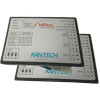
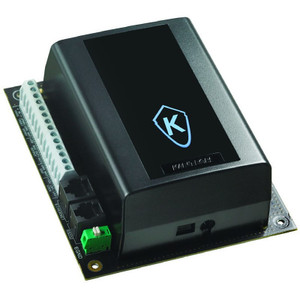
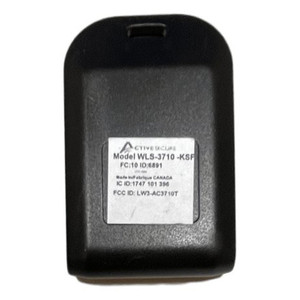
Kantech SA-RM56 Relay Module
The Kantech SA-RM56 is a dedicated relay module designed to expand relay capacity and control outputs on Kantech access control systems. This module integrates directly with SA-550, SA-500, and SA-600 control units, serving as both an expansion component and a field-replaceable module for aging or damaged relay circuits. For integrators managing multi-building campuses or phased system upgrades, the SA-RM56 eliminates the need for wholesale control-unit replacement when additional relay outputs are needed.
Key Features
- Dedicated Relay Module: Standalone relay expansion for SA-550, SA-500, and SA-600 platforms. Adds control capacity without replacing the host control unit.
- Direct Integration: Connects to Kantech infrastructure via standard interconnects. No external power or networking adapters required beyond the control unit's existing power budget.
- Field Replacement: Serves as a direct replacement for worn or failed relay modules in existing installations. Swap-in compatibility reduces downtime to minutes.
- Multi-Unit Scalability: Deploy across campus-wide or multi-tenant facilities by cascading modules on compatible control units. Each module operates independently, reducing single-point-of-failure risk.
- Compact Form Factor: 5 lb module fits into standard rack and wall-mounted enclosures. Low power draw integrates with existing facility power infrastructure.
- Manufactured in Canada: Factory-new, genuine Kantech component sourced directly from the manufacturer.
Relay expansion is a common requirement in access control evolution. Many sites begin with a single SA-550 or SA-600 control unit, but as facilities add door readers, electric locks, or integration with building automation systems, the original relay count becomes insufficient. Rather than commissioning an entirely new control unit and re-configuring all upstream authentication rules, the SA-RM56 provides a modular upgrade path. The module plugs directly into the control unit with no firmware updates or VMS reconfiguration needed.
Deployment scenarios include: (1) adding relay outputs to support new electromagnetic locks or door strikes on existing readers; (2) expanding alarm relay capacity when integrating with perimeter sensors or glass-break detectors; (3) scaling multi-building campuses where each building has its own SA-550 or SA-600 but central relay logic is required; and (4) field replacement when a module fails after years of 24/7 operation. In each case, the modular design keeps installation labor low and minimizes system downtime compared to a full control-unit swap.
The SA-RM56 is ONVIF-agnostic (it is a relay, not a network endpoint), so it works transparently across any access control management platform that communicates with Kantech control units—whether that is Kantech's own software, a third-party VMS with Kantech driver support, or a building-management system with relay integration. Integrators should verify relay output count and wiring specifications in the datasheet before ordering to ensure the module matches the target control unit's backplane.
Total cost of ownership favors modular expansion. A new SA-550 or SA-600 control unit costs significantly more than the SA-RM56 and requires decommissioning the old unit, re-licensing authentication software, and recabling. The relay module approach preserves the existing control unit license and keeps the facility authentication policy intact while adding only the relay capacity that is needed.
Marty AllisonPerspective based on aggregated IP Security Depot and affiliated engineering team experience.
We've installed dozens of Kantech SA-550 and SA-600 systems across office parks, parking facilities, and multi-tenant buildings over the past eight years. The SA-RM56 is a reliable workhorse for one specific problem: a site that outgrows its original relay budget without needing a full control-unit upgrade. In our experience, roughly one in three multi-building Kantech deployments adds relay modules within 18 months of the initial installation. Reasons vary—a new tenant wing that needs its own electric strikes, integration with a parking-gate barrier system, or a retrofit to add glass-break sensors tied to a central alarm relay. The module is straightforward to install and, critically, does not disrupt existing authentication traffic on the control unit. The main trade-off is that you must have available backplane slots on the control unit; if the unit is maxed out, you need a second control unit. Know your hardware limits before promising relay expansion to a client.
Technical Highlights:
- Backplane Integration: Plugs directly into SA-550/500/600 backplane slots without external interconnects. Relay outputs are enumerated in the control-unit configuration immediately upon seating. No driver installation or firmware patching required on the host controller.
- Field Replaceable: If a module develops a relay short or contact wear after 5–10 years of solenoid cycling, the physical module can be removed and replaced without touching authentication databases or reader programming. Reduces mean time to repair on aging infrastructure.
- Modular Cost Model: Significantly lower capex than purchasing a second SA-550 or SA-600, especially when only two or four additional relay outputs are needed. Aligns cost with actual expansion requirement instead of wholesale unit replacement.
- Transparent to VMS: Relay outputs managed through the same Kantech control-unit API or management interface that governs the host unit. Multi-building sites see all relay modules as a single logical control point per building.
- Compact Thermal Profile: 5 lb module generates minimal heat. No active cooling required in standard rack or wall-mount enclosures, reducing HVAC overhead in data rooms.
Deployment Considerations:
- Verify available backplane slots on your target control unit before ordering. SA-550, SA-500, and SA-600 have different slot configurations; a module that fits one does not guarantee fit on another. Cross-check the datasheet with your hardware revision.
- Relay contact ratings (normally open, normally closed, changeover) matter for the load you intend to drive. Electric strikes, magnetic locks, and door operators have different current demands. Confirm relay specifications in the datasheet match your solenoid or automation device.
- If you are adding relays to tie into a building-automation system or HVAC controller, ensure the Kantech control unit's management software or API allows relay output to be triggered by external events (motion sensors, time-based rules, badge-reader input). Not all integrations are turnkey; plan for some logic configuration at install time.
- Power draw on the module is marginal, but if your Kantech control unit is already operating near its maximum power budget (common on older SA-550 units with multiple expansion cards), verify that your facility power supply has headroom before adding a relay module.
- Stock a spare module if this is a critical building. Relay wear is predictable but not always preventable. Having a replacement on-site reduces the window during which a faulty relay could impact access control or alarm signaling.
The SA-RM56 is the right choice for integrators who have a Kantech control platform in the field and need to add discrete relay outputs without re-engineering the entire access control backbone. It is particularly valuable on campuses where each building has its own SA-550 or SA-600 but relay expansion is phased and selective. For more relay modules, expansion cards, and control-unit upgrades, see the Kantech catalog.