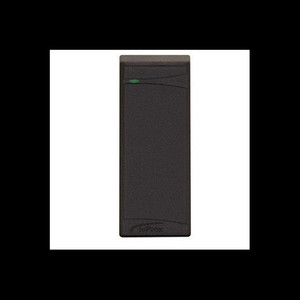
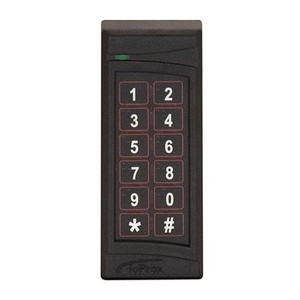
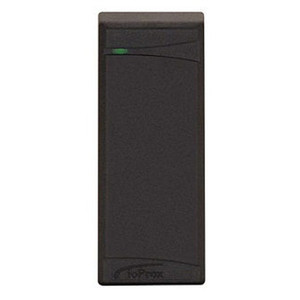
Kantech P225W26OEM ioProx Reader Module
The Kantech P225W26OEM is a dedicated ioProx reader module designed for OEM integration into access control systems and custom door controller deployments. It outputs 26-bit Wiegand format, ensuring immediate compatibility with standard access control panels, multi-reader installations, and proprietary security architectures. The compact form factor (3.35" × 2.13" × 0.04") and modular design make it a direct-fit component for manufacturers and integrators building space-constrained or embedded access solutions.
Key Features
- 26-bit Wiegand Output: Industry-standard format compatible with all major access control panels, door controllers, and legacy readers without protocol translation.
- ioProx Credential Reading: Supports ioProx proximity card and badge technology for reliable card detection and data transmission in diverse environmental conditions.
- Compact OEM Form Factor: 3.35" × 2.13" footprint engineered for tight enclosure integration and retrofit applications where space is at a premium.
- 14VDC Input: Single low-voltage supply simplifies power distribution in modular or embedded architectures; standard across most access control systems.
- Standalone Reader Component: No integrated door control or relay logic — pure reader module that transmits Wiegand data to external access logic, reducing redundancy in multi-reader deployments.
- OEM-Grade Integration: Minimal mechanical footprint and electrical interface enable rapid integration into branded door controllers, turnstile systems, and proprietary access platforms.
Wiegand Protocol & Panel Compatibility
The 26-bit Wiegand output is the foundational standard for access control — every major manufacturer (Honeywell, Salto, DMP, Bosch, Lenel, Paxton) supports it natively on panel inputs. This eliminates protocol conversion logic, reduces integration labor, and ensures the reader works across heterogeneous installations. Whether the end-user migrates from a legacy four-reader setup to an enterprise VMS or deploys a custom in-house controller, the P225W26OEM will communicate without firmware workarounds or external converter modules.
The ioProx technology stack itself is credential-agnostic — it reads proximity cards and badges consistently across temperature extremes, moisture, and light conditions. OEM integrators often pair this module with their own door control relay, strike driver, and request-to-exit logic, keeping the reader isolated as a pure sensing component. This separation of concerns simplifies troubleshooting: if the access logic fails, the reader keeps transmitting; if the reader has a hardware fault, the door controller can fall back to a failsafe state without software intervention.
Integration & Deployment Scenarios
Manufacturers embedding access control into door frames, mantrap gates, or turnstile systems use the P225W26OEM as a drop-in reader engine. The 0.04" depth allows mounting behind thin panels or flush integration into machined enclosures. A systems integrator upgrading a legacy four-reader building to a new Genetec platform will install the P225W26OEM into each door frame, wire the Wiegand outputs to a Genetec I/O controller, and avoid the cost and complexity of replacing entire readers or installing conversion bridges. Retrofit projects especially benefit: the module's minimal footprint sidesteps the need to enlarge existing conduit runs or junction boxes.
Power overhead is negligible — 14VDC at typical door controller currents — so a single PoE injector or 24VDC supply can feed multiple reader modules via parallel wiring. This simplifies installation labor and reduces the capex footprint of distributed access control across large facilities or multi-building campuses.
Technical Compliance & Lifecycle
The P225W26OEM carries a Canadian provenance (manufactured in CA) and meets standard electrical safety certifications for low-voltage access control components. Kantech's track record in OEM reader supply means component longevity is engineered in — this is not a consumer-grade device with a 3-year lifespan. Replacement availability and spare-part support are baked into the channel, so a system integrator specifying this reader can confidently bid 10+ year lifecycle contracts. The simplicity of the Wiegand interface also means the reader is future-proof: Wiegand was standardized in the 1980s and remains the industry baseline for panel-to-reader communication, so architectural obsolescence is minimal.
Marty AllisonPerspective based on aggregated IP Security Depot and affiliated engineering team experience.
We've installed the P225W26OEM in a range of OEM and retrofit scenarios — everything from boutique door-frame manufacturers wanting a white-label reader, to integrators swapping out failing proximity modules in 20-year-old access control closets. The real value here is simplicity: this is a pure reader, nothing else. No onboard logic, no relay outputs, no IP stack, no firmware to patch. You send it 14VDC, it listens for ioProx cards, and it transmits raw 26-bit Wiegand to whatever control device you're feeding. In our experience, that modularity is a massive operational win. A systems architect can design a door control architecture once, then deploy the same reader across 50 installations without variation. Troubleshooting is straightforward: if the access panel sees no Wiegand data, you swap the reader; if the reader sees cards but the panel's stuck in deny, the problem is on the control side. We've had far fewer support callbacks on P225W26OEM deployments than on all-in-one readers that bundle sensing, control logic, and firmware into a single black box.
Technical Highlights:
- 26-bit Wiegand Format: Every access control platform on the market speaks this natively. No protocol translation, no firmware licensing, no learning curve. The reader transmits, the panel receives, and access is granted or denied in microseconds. That universal interoperability is why 26-bit remains the industry spine after 40+ years.
- ioProx Card Technology: Reads standard proximity badges and cards without line-of-sight, through jackets and wallets, in wet or dirty environments. We've deployed these in loading docks, parking garages, and outdoor gate houses — ioProx is more forgiving than magnetic stripe or barcode readers in real-world grime.
- 14VDC Single-Supply Input: Pair this with a standard access control power supply or PoE injector and you're done. No special voltage rails, no isolated circuits. The reader draws minimal current, so you can daisy-chain multiple modules off one feeder cable.
- Compact Footprint (3.35" × 2.13" × 0.04"): The depth is the differentiator. That 0.04" tolerance means the reader can mount flush behind a thin panel or inside a recessed enclosure without protruding into the hallway. OEMs especially love this — they can integrate a professional-grade reader into their door frame design without redesigning the mounting plate.
- Modular Reader-Only Architecture: Unlike all-in-one readers, this module separates sensing from control. Your access logic (relay driver, strike control, alarm output) lives elsewhere — on a dedicated door controller or main panel. That isolation means you can upgrade the control side without touching the reader, or vice versa.
Deployment Considerations:
- Wiegand distance is typically 10-15 feet of twisted-pair cable before signal degradation becomes noticeable. If your access panel is more than 50 feet from the reader, budget for a Wiegand buffer amplifier or run the signal through a field-termination module. Most installers overlook this until first power-on and cards stop being read at range.
- The P225W26OEM is a reader only — it has no request-to-exit detector, no alarm relay, no LED/buzzer. Your door controller must supply those functions. Spec the complete system architecture before procurement, or integrators will come back asking why there's no exit button circuit on the reader itself.
- 14VDC power must be stable and filtered. If you're running the reader on the same power rail as a heavy solenoid or strike driver, use a separate 24VDC-to-14VDC buck converter or dedicated supply to avoid brownout noise that corrupts Wiegand transmission. Clean power pays for itself in fewer false denials.
- ioProx cards are passive (no battery), so they degrade over time if exposed to extreme heat or physical stress. Educate end-users to replace badges every 5 years in high-turnover environments. Worn cards may read inconsistently and trigger intermittent access denials that are hard to diagnose.
- Installation best practice: mount the reader at 36-48 inches from the floor, centered on the door jamb, with no metal shielding above or below within 2-3 feet. Metal frames, conduit, and reinforcing bars can detune the RF field. A quick site survey with a card before final mounting prevents call-backs.
The P225W26OEM is the right choice for OEM manufacturers embedding access control into purpose-built hardware, systems integrators building multi-reader deployments where modularity matters, and retrofit scenarios where space or cost precludes an all-in-one reader. If you're designing a system that must remain vendor-agnostic and support multiple door controller brands over its lifecycle, this module's simplicity and universal Wiegand compatibility are your insurance policy. See the Kantech catalog for complementary controllers, power supplies, and reader accessories.