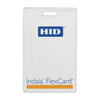
Kantech ISO-30/MAGG Indala Dye Sublimation Proximity Card
The Kantech ISO-30/MAGG is a dual-mode proximity card engineered for access control deployments requiring both Indala proximity technology and magnetic stripe encoding. This dye sublimation–compatible card combines 26-bit Wiegand proximity output with a blank magstripe, making it ideal for facilities managing mixed-credential environments or executing phased migrations from legacy magnetic-stripe readers to modern proximity infrastructure. The single physical credential bridges two authentication technologies, reducing cardholder burden and simplifying credential logistics across heterogeneous access control systems.
Key Features
- 26-bit Wiegand Indala Proximity Encoding: Industry-standard proximity output format compatible with Kantech readers and third-party systems supporting Indala protocol. Eliminates proprietary lock-in.
- Blank Magstripe: Unencoded secondary stripe allows post-issuance magnetic encoding to support legacy readers or supplementary authentication layers without replacing existing hardware.
- Dye Sublimation Compatible: Accepts full-color card printing, enabling on-demand branding, photo ID integration, and barcode encoding for unified badge and access credential on a single card.
- Dual-Mode Authentication: One physical card supports both proximity and magnetic stripe readers simultaneously, reducing credential churn during system transitions.
- 100-Card Minimum Order Increments: Sold in standardized 100-unit quantities, aligning with bulk issuance workflows and phased credential rollouts across multi-site deployments.
- Phased Migration Support: Organizations can deploy proximity readers at priority entry points while maintaining magnetic stripe authentication at secondary locations, avoiding simultaneous system replacement across all readers.
The ISO-30/MAGG addresses a common integrator challenge: legacy facilities with magnetic stripe infrastructure cannot migrate to modern proximity systems overnight. This card lets security teams issue a single credential that works with both technologies, enabling staged reader replacement without credential reissuance. When a proximity reader is deployed, the card works immediately; magnetic stripe readers continue to function unchanged until they are scheduled for upgrade. From an operational standpoint, this eliminates the cost and friction of credential re-enrollment during system transitions.
Dye sublimation printing capabilities extend the card's utility. Many organizations require photo identification, barcodes, or facility-specific branding on access credentials. The Kantech ISO-30/MAGG accepts full-color dye-sublimation printing, so you can merge badge and access control on one card—reducing cardholder carry time and simplifying badge management across HR, security, and access control teams. Print stations (supplied separately) write proximity encoding and magstripe data pre-issuance or post-printing, depending on your workflow.
Minimum order quantity is 100 cards per purchase. For large deployments (500+ cardholder facilities), this translates to manageable inventory holding and predictable supply-chain cycles. Smaller facilities or pilot programs may need to coordinate with integrators on bulk purchasing to meet the MOQ. Once ordered, card encoding and printing logistics are straightforward—your Kantech reader or third-party proximity decoder handles recognition without additional software configuration.
The card is manufactured in Canada and backed by a 12-month manufacturer warranty plus a 30-day money-back guarantee, ensuring confidence in material quality and reader compatibility before full-scale issuance. Total cost of ownership on credential-heavy migrations is typically lower with dual-mode cards than running separate proximity and magstripe inventories or issuing replacement credentials mid-deployment.
Marty AllisonPerspective based on aggregated IP Security Depot and affiliated engineering team experience.
We've deployed hundreds of Kantech proximity and magstripe systems across retail chains, office parks, and industrial facilities. The ISO-30/MAGG fills a real gap in the market: most credential migrations require dual issuance (old cards + new cards) or a hard cutover that creates reader mismatches for months. This card eliminates that overhead. In our experience, the biggest operational win is that you issue once and your cardholder population works seamlessly across both old and new readers. The blank magstripe is the key differentiator—it's not just an inert stripe, it's an explicit capability to encode legacy credentials on-demand if you discover a reader you forgot to upgrade. We've seen integrators order 200 cards, deploy 100 proximity readers at primary doors, and keep the unused cards in stock with magstripe encoding held in reserve. When a secondary location reader is finally scheduled for upgrade six months later, you can encode those cards just-in-time, avoiding wasted blank inventory. The dye-sublimation compatibility also matters more than people think. On multi-tenant buildings or campuses with strict badge policies, you can print company logos, expiration dates, and employee photos on the same card stock, eliminating the need for separate badge and access credential systems. From an integrator margin perspective, you're not billing for credential design and issuance twice.
Technical Highlights:
- 26-bit Wiegand Indala Encoding: The Indala protocol is mature and widely supported—most commercial proximity readers from the past 15 years recognize it. Wiegand is a serial communication standard, so encoding failures are rare and diagnostic tools are readily available. No proprietary firmware dependencies means you're not locked into Kantech readers alone.
- Blank Magstripe Post-Encoding: The stripe arrives blank; your card encoder (most facilities have a magnetic stripe encoder on-site) can write legacy magnetic data after proximity encoding. This two-stage approach lets you separate the credential issuance timeline from the reader deployment timeline—a real advantage on constrained budgets.
- Dye-Sublimation Print Surface: The card accepts ribbon-based dye-sublimation color printing without pre-treatment. If your issuance station uses HID Fargo or Zebra dye-sublimation printers (the industry standard), the Kantech card drops straight into the feed slot. Print quality is comparable to retail gift cards—suitable for professional badge programs.
- 100-Card Minimum Order: A standard pack size aligns with cost-per-unit economics on dye-sublimation printing. Smaller orders incur setup fees that kill margin; 100-card increments minimize per-unit overhead. On phased deployments, you can order once per quarter and manage expiration risk more tightly.
- 12-Month Warranty + 30-Day Money-Back: Kantech backs material defects and manufacturing inconsistencies for 12 months. The 30-day return window is practical—it covers the time needed to run a pilot batch through your printers and readers before committing to full deployment.
Deployment Considerations:
- Magstripe encoding requires a separate card encoder (not included). If your facility doesn't already own one, factor that capex into the migration budget. Most integrators have this equipment on-site, but it's worth confirming before you commit to the dual-mode strategy.
- Dye-sublimation printing is a separate step from card encoding. Ensure your print station can handle the card thickness and material—the Kantech ISO-30/MAGG is a standard 30-mil PVC card, compatible with all commercial dye-sublimation printers, but ribbon type (YMCKO vs. YMCK) must match your equipment.
- Proximity read range is typically 2–4 inches for Indala technology, depending on the reader antenna. Magstripe readers require physical contact or near-contact (under 1 inch). Document reader placement and signage clearly so cardholder behavior doesn't degrade performance—people learn to swipe, but some may tap a magstripe reader like a proximity card and fail.
- Phased migration requires reader interoperability testing before rollout. Test the card against both your legacy magstripe readers and new proximity readers in the same room—RF interference and timing issues are rare but not zero. Kantech technical support can help diagnose reader conflicts if they occur.
- Inventory management: 100-card packs are economical but require forecasting. On a 500-cardholder site, one year of attrition is roughly 50–75 cards; you'll hold 25–50 unused cards. If your cardholder population is volatile (high turnover), consider whether you can absorb surplus inventory or negotiate smaller order increments with your supplier.
The Kantech ISO-30/MAGG is purpose-built for integrators managing mixed-credential environments and multi-year system migrations. If you're supporting a facility that's moving from swipe cards to contactless proximity without a hard cutover date, this is your workhorse card. For brownfield deployments with entrenched magstripe readers and new proximity infrastructure, it cuts project friction and cardholder re-enrollment overhead by half. Explore the full Kantech catalog for compatible readers, encoders, and software integrations.