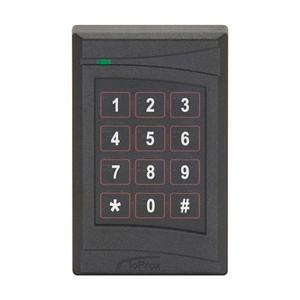
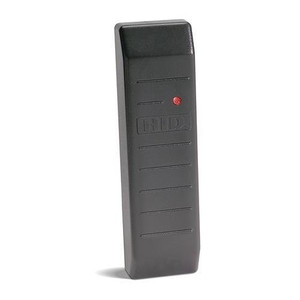
Kantech HID-PIVR40HP Single Gang Reader
The Kantech HID-PIVR40HP is a wall and rack-mountable credential reader engineered for enterprise access control systems requiring FIPS 140-2 Level 3 compliance. Built on HID's pivCLASS architecture, this reader delivers cryptographic authentication and 75-bit encrypted credential processing, making it the right choice for secure facilities, data centers, and institutional deployments where identity verification integrity is non-negotiable.
Key Features
- 75-Bit FIPS Encrypted Credential Support: Processes high-entropy credentials with AES encryption for multi-factor authentication workflows. This encryption depth protects against credential cloning and interception attacks — critical when your access control data feeds into compliance audits for healthcare, federal, or financial sectors.
- FIPS 140-2 Level 3 Certified Cryptographic Module: This certification means the reader has undergone rigorous testing for tamper detection, identity-based authentication, and secure key management. Meets federal procurement standards (GSA, NIH, DoD) directly — no waiver requests, no compliance rework downstream.
- pivCLASS R40 Architecture: Certificate-based authentication eliminating legacy Wiegand, magnetic stripe, or proximity protocols. Role-based access control (RBAC) is enforced at the reader level, not in software, reducing the attack surface and simplifying credential revocation across hundreds of access points.
- Single Gang Form Factor: Fits standard single-gang electrical boxes used in wall-mounted corridor and entry deployments. Retrofit-friendly — integrates into existing infrastructure without panel modifications or extensive rewiring.
- Dual Mount Options (Wall and Vertical Rack): Deploy horizontally on wall panels at entry points or vertically in data center server racks. Flexibility matters in multi-facility deployments where space constraints and aesthetic standards vary by zone.
- Professional Black Faceplate: Finished appearance suitable for office corridors, secure facilities, and institutional access points — no industrial-gray plastic, so it doesn't signal "security infrastructure" in client-facing areas.
Why Choose This Model
The HID-PIVR40HP addresses a critical gap in enterprise access control: readers that prioritize cryptographic security over legacy proximity protocols. Organizations migrating from magnetic stripe or RFID proximity systems will discover that pivCLASS architecture requires updated backend integration (controller and management software), but the security payoff justifies the transition cost. Federal contractors, healthcare networks, and research institutions already standardized on PIV (Personal Identity Verification) or PIV-I credentials will find immediate compliance alignment.
The absence of Wiegand or proximity output is intentional — this reader is purpose-built for modern certificate-based authentication systems where credential data must be encrypted end-to-end. If your existing access control controller relies on legacy Wiegand protocol, you will need a controller upgrade or a separate integration gateway.
Integration & Compatibility
The HID-PIVR40HP processes PIV and PIV-I credential formats natively, supporting certificate-based authentication workflows. Pair this reader with a compatible Kantech access control controller supporting pivCLASS architecture. Verify your existing controller documentation before deploying — if your system runs older proximity-only firmware, a firmware update or controller replacement will be required.
Typical Applications
- Federal and government facility access control (GSA-compliant procurement)
- Healthcare and pharmaceutical secure areas (HIPAA environments)
- Data center and server room entry management
- Corporate headquarters and secure office zones
- Research institutions and laboratories
- Infrastructure and utility access points
Frequently Asked Questions
Q: Is the HID-PIVR40HP compatible with my existing Kantech proximity card system?
A: Not directly. The HID-PIVR40HP uses pivCLASS certificate-based authentication, not proximity technology. Your existing proximity readers and controllers will not recognize pivCLASS credentials. You will need a controller upgrade and new PIV or PIV-I credentials. This is a deliberate security design — mixed proximity and certificate-based systems create a weak link at the proximity layer.
Q: What does FIPS 140-2 Level 3 certification mean for my facility?
A: Level 3 means the cryptographic module has been tested and validated by NIST for tamper detection, identity-based authentication, and secure key management. It qualifies the reader for federal procurement, healthcare compliance frameworks, and institutional audits that mandate FIPS certification. You avoid regulatory rework and procurement delays.
Q: Can I mount the HID-PIVR40HP in a server rack vertically?
A: Yes. The reader supports both wall-mounted (horizontal) and rack-mounted (vertical) configurations, making it suitable for data center entry control where space is constrained and aesthetics matter less than functionality.
Q: Does the HID-PIVR40HP require a separate power supply?
A: Specifications do not document power consumption or supply requirements in the available evidence. Confirm with the controller documentation or manufacturer before finalizing your electrical design.
Q: What happens if I lose or revoke a PIV credential?
A: Certificate-based revocation is managed at the controller and credential issuer level. The reader validates the certificate in real-time (or near-real-time depending on your backend architecture). Revocation is instantaneous across all readers on the network — no credential cloning, no lag time.
Q: Is the HID-PIVR40HP NDAA Section 889 compliant?
A: NDAA compliance status is not documented in the available evidence. Contact the manufacturer or a system integrator to confirm compliance requirements for your procurement.
Ted PerryPerspective based on aggregated and affiliated engineering team experience.
The HID-PIVR40HP addresses a genuine gap in enterprise access control infrastructure: credential readers that enforce cryptographic security from the hardware layer up. Its FIPS 140-2 Level 3 certification signals rigorous third-party validation — this is not marketing speak, it is NIST-tested tamper detection and identity-based authentication built into the reader itself. Organizations already running PIV credentials (common in federal, healthcare, and research environments) will find immediate compliance alignment.
Technical Highlights:
- 75-Bit AES Encryption: Credential data is encrypted at the reader, not in software. This eliminates the attack vector of unencrypted proximity signals being captured in air or through cable taps. PIV-I credentials carrying biometric or role data remain protected in transit to the controller.
- Certificate-Based Authentication: pivCLASS architecture validates each credential through public-key cryptography. Revocation is instantaneous across all readers on the network — no lag time, no credential cloning window.
- Single Gang Form Factor: Fits standard electrical boxes, reducing retrofit cost and installation complexity. Dual mounting (wall horizontal, rack vertical) handles both traditional corridor entry and data center server room deployments without tooling changes.
Deployment Considerations:
- Controller Dependency: The HID-PIVR40HP is not a drop-in replacement for proximity readers. Your existing Kantech controller must support pivCLASS architecture. If your system runs older proximity-only firmware, plan for a controller firmware update or replacement — this is a deliberate security boundary, not a limitation.
- Credential Migration: Deploying this reader means issuing new PIV or PIV-I credentials to all cardholders. Budget for credential stock, issuance hardware, and enrollment management. In large deployments, this is typically a phased rollout (secure zones first, then corridors and general access).
- Power and Wiring: Specifications do not document power consumption or supply type in available evidence. Confirm electrical requirements with your controller documentation before running conduit or ordering UPS capacity.
The HID-PIVR40HP is the right choice for federal contractors, healthcare networks, and research institutions where PIV credentials are standard and cryptographic compliance is audited. If you are still running proximity-only infrastructure and need to keep legacy readers in place, consider a phased migration strategy — deploy the HID-PIVR40HP in highest-security zones first, then migrate remaining corridors as credentials are reissued.