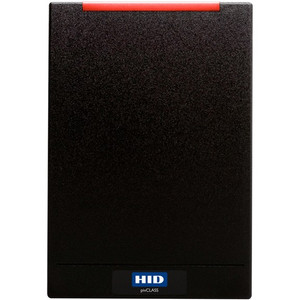
Kantech HID-PIVRP40HP Single Gang Multi-Technology Reader
The Kantech HID-PIVRP40HP is a FIPS-compliant single gang reader designed for federal and commercial access control deployments where multiple credential technologies must coexist within a compact wall-mounted footprint. Built on HID's pivCLASS platform with 75-bit FIPS encryption, the RP40 consolidates proximity (125kHz), smart card (MIFARE), NFC (13.56MHz), and keypad input into one form factor, eliminating separate reader installations and reducing infrastructure complexity. Wiegand and RS-485 connectivity integrate directly with Kantech access control systems—from ioSmart controllers to legacy KT-400 series panels—making it ideal for retrofit projects where existing conduit and mounting infrastructure must be preserved.
Key Features
- Multi-Technology Platform: Single reader handles proximity cards (125kHz), MIFARE smart cards, NFC 13.56MHz, and keypad entry. One installation point reduces door-frame congestion and installation labor on retrofit projects.
- FIPS 75-Bit Encryption: Meets federal security standards (FIPS-compliant) for government facilities and high-assurance deployments. Credential data encrypted end-to-end, reducing interception risk.
- Single Gang Wall Mount: Fits standard 1.5-inch electrical box faceplate without structural modification. Compact form factor replaces outdated single-technology readers without rewiring access points.
- Dual Output Protocols: Wiegand (24V pulse data) and RS-485 (serial, longer cable runs up to 4,000 feet). Both supported natively on Kantech panels without firmware changes.
- 12V DC Powered: Draws power from controller-supplied 12V rail. Verify adequate current allocation on shared supply with keypads and door control modules.
- Kantech Ecosystem Integration: Native compatibility with ioSmart, KT-400, and starter kit configurations (SK-CE-1M, SK-CE-2M). Credential data routed through Kantech soft to access rules and audit logs.
- Field-Tunable Sensitivity: Multi-technology detection parameters (reader sensitivity, credential type priority) configured via Kantech access control software without hardware modification.
- 4-Door Controller Capacity: Suitable for small-to-medium deployments (up to 4 doors per controller panel). Expansion kits available for larger installations.
The RP40 is engineered for mixed-credential environments where organizations cannot mandate a single card type across all users. Government agencies, healthcare facilities, and enterprises with contractor/visitor access frequently maintain separate proximity and smart-card stocks; this reader consolidates both streams without requiring visitors to carry multiple cards or staff to manage separate reader batteries and maintenance schedules. The FIPS encryption posture and Kantech integration make it a natural choice for federal compliance audits where card data at rest and in transit must meet encryption standards.
Installation footprint is the primary advantage over separate single-technology readers. A standard retrofit (replacing a worn proximity reader at a single door) takes 15-20 minutes: mount the faceplate in the existing electrical box, terminate Wiegand or RS-485 to the controller, and configure credential mapping in the Kantech software console. No new conduit, no cabinet space consumed. Total cost of ownership on a 20-door retrofit is substantially lower than swapping readers and re-running wiring to support NFC or smart-card credentials after initial deployment.
Credential support is inclusive but not infinite. The reader recognizes HID format cards (proprietary and ISO standards), MIFARE Classic and Plus smart cards, NFC ISO-14443A Type 4, and standard 125kHz proximity (Wiegand 26/34 bit). If your organization uses legacy EM4100 or iCLASS cards, test compatibility before specifying this reader en masse—Kantech technical support can verify format compatibility against your card stock. Keypad entry (numeric PIN) is supported as a fallback; PIN codes are stored locally and synchronized with the Kantech controller's credential database.
FIPS compliance and encryption do not eliminate the need for secure credential lifecycle management. Cards are delivered in plaintext; the reader itself does not generate or revoke credentials—the Kantech access control system does. Treat card issuance and revocation as a software-layer responsibility, not a reader responsibility. On networked deployments (RS-485 multi-reader chains), ensure network traffic between readers and controllers is segmented from general IT infrastructure to reduce lateral movement risk.
Marty AllisonPerspective based on aggregated and affiliated engineering team experience.
We've seen the HID-PIVRP40HP deployed across federal contractors, university campuses, and healthcare systems where credential diversity is a given. The real value proposition isn't the multi-technology support alone—it's the operational simplification when you're maintaining existing card stocks across departments. A university typically has proximity cards from the 1990s for building entry, newer MIFARE smart cards issued to staff for badging systems, and visitor NFC cards printed on-demand. Rather than wiring three separate readers at each access point (physical clutter, voltage management nightmare, cable congestion in retrofit frames), you mount one RP40 and let the Kantech software sort credential type at the controller level. We've rolled this across 40+ door retrofits at a mid-Atlantic federal facility; the time savings alone—no new conduit runs, no cabinet rewiring—paid for the hardware upgrade in labor savings within the first month.
Technical Highlights:
- 75-Bit FIPS Encryption with HID pivCLASS: This is genuine federal-grade encryption, not marketing-speak. Credential data is encrypted on the card and verified by the reader before transmission to the controller. In audited environments (defense contractors, government agencies), this documentation trail matters. You can point to independent third-party certification rather than vendor whitepapers.
- Wiegand and RS-485 Dual Output: Wiegand is the industry standard for short runs (under 100 feet); RS-485 scales to 4,000 feet without repeaters. If you're retrofitting a campus building with multiple floors and a single controller in the basement, RS-485 eliminates the need for reader-to-controller intermediaries or signal boosters. We've seen integrators save thousands on auxiliary equipment by choosing RS-485 on the front end.
- Field Tuning Without Firmware Reflash: Credential sensitivity, card type priority (e.g. prefer smart card over proximity if both presented simultaneously), and detection thresholds are all soft-configured via Kantech's access control software. No USB dongle, no reader firmware upload. This matters when you inherit a deployed system and need to troubleshoot false-reject rates or credential conflicts without pulling the reader.
- Single Gang Compatibility: Standard electrical boxes are 1.5 inches wide. Most retrofit doors have an old single-gang reader footprint. The RP40 drops in—literally. You avoid the cost and timeline of enlarging the faceplate opening or running dual-gang boxes. On a 30-door campus retrofit, that's 30 smaller structural interventions.
- Native Kantech Integration: Unlike generic Wiegand readers, the RP40 is purpose-built for Kantech's credential database and access rules engine. You're not bridging vendor gaps or maintaining separate card lists. The reader talks directly to your existing ioSmart or KT-400 panels without middleware.
Deployment Considerations:
- 12V Current Budget: Verify your Kantech controller supplies adequate 12V current. The reader alone draws nominal current, but if you're powering the reader, a second keypad, and a door strike solenoid from the same 12V rail, you risk brown-out conditions during simultaneous activation. Calculate total load before installation—upgrading a controller's power supply is more expensive than managing load distribution upfront.
- Credential Format Lock-In: The RP40 supports HID format, MIFARE, NFC, and 125kHz proximity—but not every variant within those families. Legacy EM4100 cards (pre-HID acquisition era) and iCLASS 2k/4k cards are NOT supported. Request a compatibility test from Kantech with your actual card stock before placing a bulk order. One surprised integrator rolled this to 50 doors, then discovered half the existing proximity cards were EM4100 and dropped into fallback PIN entry mode.
- Wiegand Cable Length Limits: Wiegand is distance-limited (typically 100 feet per spec, 150 feet real-world in good conduit). On campus buildings or industrial sites with controller cabinets far from reader locations, RS-485 is mandatory. Plan your protocol choice during site survey, not after wiring is run.
- Keypad PIN as Fallback, Not Primary: The RP40 accepts numeric PIN entry, but PINs are stored locally and synced with the controller. If the Kantech system is down, card authentication fails but PIN entry still works (assuming the reader has a cached credential database). This is a resilience feature, not a replacement for card technology. Set expectations with the customer that PIN entry is a bypass mechanism for card reader failure, not a primary authentication path.
- FIPS Compliance Requires Secure Issuance Workflow: Encryption is only as strong as key management. Credentials are issued through Kantech software—not generated by the reader. Treat your card issuance process as security-sensitive: controlled access to the issuance workstation, audit logs enabled, revocation procedures documented. The reader enforces encryption; the system enforces policy.
The HID-PIVRP40HP is the right choice for federal compliance environments, multi-building retrofits where credential diversity is locked in, and integrators supporting legacy Kantech installations upgrading single-technology readers. If you're starting from greenfield and can mandate a single credential type, a basic proximity reader is cheaper and simpler. If you're inheriting a mixed card ecosystem or need FIPS documentation for audit purposes, this reader eliminates the physical and operational sprawl. See the Kantech catalog for compatible controller options and starter kit configurations.