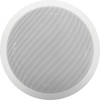
Viking Electronics 40-IP IP Ceiling Speaker for SIP and Multicast Paging
The Viking Electronics 40-IP is a PoE-powered ceiling speaker engineered for enterprise paging, background music distribution, and SIP endpoint deployments where running separate speaker wire and amplifier infrastructure is impractical or cost-prohibitive. A single Cat5e/Cat6 cable handles both power and audio, pulling under 13 watts via 802.3af PoE class 3 — no external amplifier, no separate power supply, no conduit for low-voltage speaker runs. If you're replacing an aging overhead paging system or building a new IP intercom network, the 40-IP (often searched as 40 IP) is the straightforward solution.
Key Features
- PoE Class 3 Power (<13W): Draws under 13 watts from any 802.3af-compliant switch port. One cable in, speaker works — eliminates the amplifier rack, separate power drops, and the 70V speaker wire runs that legacy paging systems require.
- 105 dB SPL at 1 Meter: The onboard 6-watt Class D amplifier produces 105 dB SPL at 1 meter — enough output for warehouses, noisy corridors, and loading docks where background noise competes with pages. Smaller breakrooms and quiet offices may not need this much headroom, but it keeps you from over-engineering coverage zones.
- SIP 2.0 (RFC 3261) Compliance: Registers as a SIP endpoint on your existing IP PBX or hosted UC platform. Compatible with G.711u, G.722, and G.711a codecs — G.722 delivers noticeably clearer wideband audio for intelligibility in large open spaces.
- Multicast Paging Support: Supports multicast groups (G.711u and G.722) so a single page transmission reaches every speaker on the group simultaneously, without individual SIP call legs. Critical for large facilities where dialing each zone separately isn't operationally viable.
- Paging Prioritization: Built-in prioritization interrupts background music or lower-priority multicast streams when an emergency or all-call page fires. You don't have to engineer a separate priority scheme at the PBX.
- Programmable LED Indicator: The LED can be configured to illuminate during active paging — useful for hearing-impaired staff or visual confirmation in high-noise areas where someone at the speaker can't easily hear the audio source.
- Wide Operating Temperature Range (-40°F to 140°F): Rated from -40°F to 140°F (-40°C to 60°C) — covers unheated warehouses, loading docks, and outdoor-adjacent installations that would disqualify most commercial indoor speakers.
- Dual Connectivity Options: Ships with one RJ45 10/100Base-T port and a 6-position terminal block, giving installers flexibility to loop network connections or wire auxiliary outputs without adding a separate patch panel.
- FCC, CE, and ICES-003 Class A Certified: Meets North American and European regulatory requirements out of the box — no variance or additional certification burden for standard commercial deployments.
Integration and Compatibility
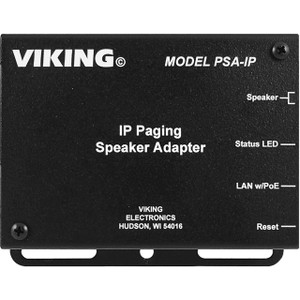
The 40-IP integrates with any SIP 2.0-compliant PBX or call manager, including Cisco, Avaya, FreePBX, and hosted platforms that support RFC 3261 endpoints. On the multicast side, it pairs with IP paging systems and controllers that push G.711u or G.722 multicast streams — including Viking's own PA-IP paging adapter for facilities bridging analog and IP zones. For broader Viking Electronics paging and intercom products, the 40-IP fits within a larger Viking IP ecosystem alongside talkback units like the 22TB-IP and 40TB-IP. Network infrastructure requires a PoE switch with 802.3af support; review your PoE switch port budget before deploying across large speaker counts. The 100Base-TX interface is standard — no gigabit switch port needed, freeing up higher-capacity ports for cameras and other bandwidth-intensive devices. The 11" x 11" ceiling tile form factor fits standard 2x2 and drop-ceiling grids; back-box dimensions of 9.25" x 9.25" x 3.45" determine the rough-in space required above the tile. For facilities combining paging with IP intercom systems, the 40-IP's SIP compliance allows it to participate in the same dial plan as door stations and intercoms without a separate audio controller.
Frequently Asked Questions
Q: Does the 40-IP require a separate amplifier or power supply?
A: No. The 40-IP is fully PoE-powered via 802.3af class 3 (under 13 watts). The built-in 6-watt Class D amplifier is integrated — a single Cat5e/Cat6 run to a PoE switch port is all that's needed.
Q: What SIP codecs does the 40-IP support?
A: G.711u, G.711a, and G.722 for SIP endpoint mode. Multicast mode supports G.711u and G.722. G.722 provides wideband audio for improved speech intelligibility in noisy environments.
Q: Can the 40-IP be used for background music in addition to paging?
A: Yes. It supports multicast audio streaming for background music distribution, with built-in paging prioritization that interrupts music streams when a page is triggered.
Q: What is the maximum sound output of the 40-IP?
A: 105 dB SPL at 1 meter, driven by the integrated 6-watt Class D amplifier — sufficient for high-ambient-noise environments like warehouses and manufacturing floors.
Q: What are the operating temperature limits for the 40-IP?
A: -40°F to 140°F (-40°C to 60°C) with 5% to 95% non-condensing humidity. This covers most unheated indoor and semi-outdoor paging locations.
Q: Will the 40-IP fit a standard drop ceiling grid?
A: The speaker measures 11" x 11" x 4" overall, with a back box of 9.25" x 9.25" x 3.45". It is designed for standard ceiling tile installations — confirm above-tile depth clearance before rough-in.
The spec I keep coming back to on the 40-IP is that -40°F to 140°F operating range paired with 802.3af PoE power. Most commercial ceiling speakers tap out around 32°F — the moment you're talking about a loading dock, a cold storage anteroom, or an unheated warehouse bay, you're usually pulling spec sheets and finding out the speaker you've been quoting doesn't qualify. The 40-IP does, without any additional enclosure or heating element.
Technical Highlights:
- 105 dB SPL / 6W Class D Amplifier: 105 dB at one meter is genuine warehouse-grade output. The Class D topology keeps heat dissipation minimal inside the ceiling plenum — relevant when you're running 20+ units on a single switch stack.
- G.722 Wideband Codec: Both SIP and multicast paths support G.722 (50–7,000 Hz). In a distribution center where a forklift is running 30 feet away, narrowband G.711 pages frequently lose intelligibility. G.722 restores the consonant clarity that makes pages actually understood.
- Paging Prioritization over Multicast Music: The prioritization logic is hardware-level, not PBX-dependent. You don't need a separate routing rule in your call manager — the speaker interrupts the background music stream on its own when a page arrives.
Deployment Considerations:
- Confirm your PoE switch budget before scaling. At under 13W per port, a 24-port 802.3af switch (typically 185–190W total budget) can realistically power 14–15 units before you hit the power ceiling — plan switch count accordingly for larger floor areas.
- Back-box depth is 3.45 inches. In low-clearance ceiling plenums or above concrete decking with minimal stud depth, verify this before rough-in. Ordering without confirming plenum depth on renovation jobs is the most common field problem with this unit.
The 40-IP is the right call for manufacturing facilities, distribution centers, and any multi-zone campus where the paging infrastructure needs to survive temperature extremes and integrate cleanly into an existing SIP call manager — without the transformer, amplifier rack, and 70V speaker wire that legacy systems demand.