
LPR Cameras (License Plate Recognition)
Showing Results for LPR Cameras (License Plate Recognition)
-

Speco Technologies
SKU: O2BLP2M
Speco Technologies O2BLP2M 2MP H.265 License Plate Bullet Camera
2MP license plate camera with 10:1 zoom and 30-50m IR
- 5-50mm varifocal lens delivers 10:1 zoom for plate capture at 15-50m without lens swaps.
- H.265 compression cuts bitrate 40-60% vs H.264, reducing storage load across 24/7 NVR deployments.
- PoE 802.3af power and ONVIF compliance simplify integration into existing IP network infrastructure.
$1,802.80 $695.99 Save $1,106.81 -
Speco Technologies
SKU: O4DM
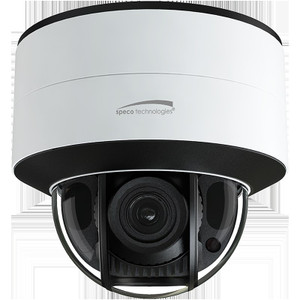
Speco Technologies O4DM 4MP Dome Camera 2.8-12mm Varifocal LPR
4MP dome with motorized zoom and edge LPR for parking/perimeter
- 2592×1520 at 30 fps with edge LPR eliminates server-side processing overhead.
- IP67/IK10 and −40 to 140 °F operation removes housing requirements in most climates.
- Motorized 2.8–12mm lens lets technicians adjust zoom post-mount without a return visit.
$1,153.60 $636.99 Save $516.61 -
Speco Technologies
SKU: UTPGLPR
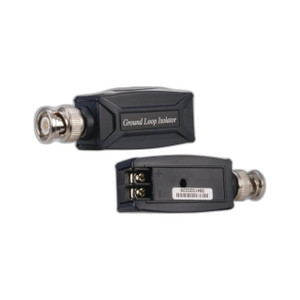
Speco UTPGLPR Video Ground Loop Isolator UTP
Passive ground loop isolator for UTP video—eliminates 50/60 Hz hum
- Passive design requires no external power, simplifying installation in remote locations.
- Eliminates 50/60 Hz hum bars caused by ground loops across UTP video cable runs.
- Ships as a matched isolator pair, ensuring consistent performance across multi-camera blocks.
$131.25 $72.99 Save $58.26 -

Ubiquiti
SKU: UVC-AI-LPR-B
Ubiquiti UVC-AI-LPR-B UniFi AI License Plate Recognition Camera
4MP AI license plate recognition camera with edge processing and PoE++
- Edge-based LPR on a quad-core Cortex-A53 cuts latency without cloud dependency.
- 25.5W actual draw over GbE RJ45 simplifies single-cable PoE++ deployment.
- F/1.53–ƒ/3.3 varifocal lens and IR support plate capture from -20 to 50 °C.
$541.99 -

Vivotek
SKU: IP9165-LPRKIT-S-V2 (50MM)
Vivotek IP9165-LPRKIT-S-V2 License Plate Recognition Box Cam
License plate recognition box cam captures vehicles up to 60 mph
- 9-50mm varifocal lens with snap-in IR for day and night operation
- Recognizes over 70 country plate formats with i-CS compression for readability
- Complete kit with embedded access control for gates and barriers
$4,528.00 $3,148.99 Save $1,379.01 -

Vivotek
SKU: IP9165-LPRKIT-S-V2 (40MM)
Vivotek IP9165-LPRKIT-S-V2 License Plate Recognition Camera
License plate recognition camera for vehicles up to 60 mph with 70+ formats
- 12-40mm variable lens with integrated IR illumination for day and night capture
- Recognizes 70+ international license plate formats at highway speeds
- Embedded access control integration for direct gate and barrier system connection
$3,986.00 $3,127.99 Save $858.01
LPR Cameras (License Plate Recognition)
LPR cameras are purpose-built for capturing clear, readable license plates in moving traffic. These systems rely on controlled shutter speeds, optimized lens selection, and proper mounting alignment to ensure reliable plate identification in commercial and municipal environments.
Plan Your Deployment
- Vehicle speed and shutter speed calibration
- Lane width and mounting distance alignment
- Infrared illumination and nighttime performance
- Lens focal length and plate pixel density targets
- Storage impact and event-based recording configuration
LPR Cameras (License Plate Recognition) — Engineering-Grade IP Surveillance for Commercial Deployments
This category covers 11 working models of lpr cameras (license plate recognition) sourced manufacturer-direct or through channel-direct US distribution. Build the rest of your system around the architectural choices below — compatibility, environmental rating, and lifecycle decisions made here propagate through every downstream component you specify.
What to Look For
Resolution drives both image utility and bandwidth budget. 2MP and 4MP cameras cover most general-purpose surveillance at modest storage cost; 8MP and higher resolutions trade bandwidth for forensic detail useful when you need to identify faces or read plates at distance. Decide the minimum pixel density required at your scene's farthest target — most face-identification work needs 80 pixels per foot of subject — before locking in lens focal length and sensor count.
Low-light performance matters more than raw resolution in most real deployments. Sensor size, lens aperture, IR cut-filter behavior, and starlight-class technologies (Ambarella, Sony Starvis, Hanwha Wisenet X) determine whether your camera produces a usable image at 2 AM in a poorly-lit lot. Confirm minimum illumination figures at color and B/W modes — and read the test methodology, not just the headline lux number.
Compatibility with your video management software (VMS) is non-negotiable. ONVIF Profile S/T conformance is the baseline; verify the specific camera firmware against your VMS integration matrix before ordering. Edge analytics — object classification, line crossing, intrusion detection — often require manufacturer-native integration rather than ONVIF passthrough, which limits which cameras pair with which recorders.
Total cost of ownership extends well beyond unit price. Plan for installation labor (mast, conduit, PoE switch capacity), storage growth from higher-resolution streams, and warranty/service horizons. Cameras with 5-year warranties and free firmware updates almost always outlast cheaper alternatives that hit end-of-life within three years and force a refresh just as the surrounding system stabilizes.
Key Specs in This Category
| Spec | Available Options |
|---|---|
| Resolution | 4MP, 2MP, 3MP |
| IP Rating | IK10, IP66, IP67 |
| Connectivity | Wired, Wi-Fi |
| Power | PoE, PoE++ |
| Storage | microSD |
| Type | Dome, Bullet, Camera, LPR, PoE Injector |
Top Brands in This Category
Frequently Asked Questions
What resolution do I need for license plate capture?
For dependable license plate recognition at 25-30 mph, plan for 80-100 pixels per foot at the plate, which usually means a dedicated LPR camera with a long focal length and short shutter speed. General-purpose 4MP cameras can read plates only at close range and low vehicle speed. Combine an LPR-specific camera at chokepoints with overview cameras covering wider context for full coverage.
Do I need NDAA-compliant cameras?
If you sell to U.S. federal agencies, federally-funded projects, or many state and local government customers, yes — Section 889 of the NDAA bans Hikvision, Dahua, Huawei, and several other manufacturers from those installations. We carry NDAA-compliant lines from Axis, Hanwha, i-PRO, Pelco, Vivotek, and Bosch. Commercial private-sector buyers face no federal restriction but may inherit one through a customer's procurement rules.
What's the difference between PoE, PoE+, and PoE++?
PoE (802.3af) supplies up to 15.4W and powers most fixed-lens cameras. PoE+ (802.3at) goes to 30W and is the default for heated outdoor housings, PTZs, and motorized-zoom optics. PoE++ (802.3bt) reaches 60-90W and is required for large outdoor PTZs, multi-imager cameras with built-in IR, and accessories with integrated heaters and wipers. Always confirm the camera's PoE class against your switch budget per port.
How long do I need to retain video?
Storage retention is driven by regulation, insurance, or operational policy. Cannabis, banking, and gaming often require 30-90 days; most commercial buildings retain 14-30 days. Calculate storage as resolution × frame rate × compression × camera count × retention days. H.265 cuts the load roughly in half versus H.264 with comparable image quality. Build in 20% headroom for events that trigger higher-bitrate recording.
Can I mix camera brands on one recorder?
You can, but you give up edge analytics and convenience features tied to manufacturer-native integration. ONVIF Profile S/T provides basic streaming, PTZ control, and event subscription across brands, but advanced AI classification and per-stream metadata typically require same-brand camera and VMS. For deployments where you're standardizing, pick one VMS and align cameras to its supported list rather than mix arbitrarily.
Need help choosing? Talk to a Senior Specialist — direct line 877-277-7147 or request a quote.