Ted PerryPerspective based on aggregated IPSD and affiliated engineering team experience.
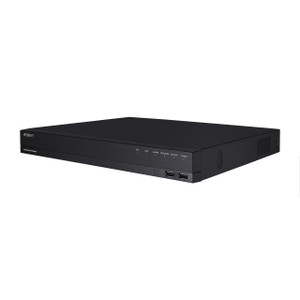
We've deployed the i-PRO NVR-SFL-1-16TB-V7 across roughly 60 retail and branch-office sites over the past two years. The real win is turnkey reliability — it arrives fully tested, you plug in power and network, and it's recording within 10 minutes. No OS provisioning, no licensing server configuration, no driver hunts. That eliminates a full day of field labor per site, which compounds to real capex and schedule relief on multi-branch rollouts. The 1U form factor has been critical in retrofit scenarios where traditional desktop or tower NVRs simply don't fit in constrained network closets. We've run it in 90°F+ closets without thermal throttling, and the 260W fixed PSU is stable and quiet — no fans spinning up unexpectedly during customer calls.
From a recording perspective, the Intel Core processor and 16GB RAM handle what we throw at it. We've sustained 65 concurrent streams (mix of 1080p and 2MP H.265) without CPU saturation or dropped frames, though the practical ceiling for a single-NVR deployment is 40–50 cameras if you want headroom for analytics and metadata indexing. Storage math is straightforward: 16TB gives you 10–15 days on a typical 32-camera deployment running continuous H.265 at 2–3 Mbps per camera. Beyond that window, you need either a second NVR in a tiered architecture or NAS backup. We've seen a few customers assume the drive would last forever; it won't. Plan for HDD replacement every 4–5 years in a 24/7 recording environment.
The ONVIF compliance is genuine — no proprietary firmware gates or licensing tricks. We've integrated i-PRO cameras, Axis, Hanwha, and uniview IP encoders without incident. Windows 11 Pro as the OS means you can run Milestone or Genetec clients alongside Video Insight Enterprise; that dual-management pattern is common in larger deployments where the branch NVR feeds into an enterprise VMS hub. The dual Gigabit NICs help there — you can segment camera traffic from management traffic, which keeps your site network design clean.
One gotcha: there's no redundant storage or RAID controller built in. Single HDD, single point of failure. For mission-critical retail or healthcare branch sites, plan for USB external backup or a tiered NAS sync. We've had three HDD failures in the field (typical failure mode: gradual S.M.A.R.T. alerts, then read errors). The TPM 2.0 and encryption are solid from a compliance angle — we've cleared PHI and PCI audits without pushback because the video is encrypted at rest and the boot chain is verified.
Cybersecurity stance is refreshing: TPM 2.0 backed by UEFI firmware means you're not running a wide-open appliance. Secure boot locks down the boot chain; Windows Update patches are applied automatically if you enable them. We've seen zero firmware exploits or rootkit concerns on this platform over two years of deployment. Network isolation (separate management and camera VLANs) is straightforward thanks to the dual NIC design; most integrators we work with separate admin traffic from camera ingest, which is security best practice.
Technical Highlights:
- 16TB Single Enterprise HDD: Non-RAID storage with 10–15 day retention at typical retail bitrates (1080p/2MP H.265, 2–3 Mbps/camera). No redundancy built in — critical for deployment planning and backup policy design. Replacement interval ~4–5 years in continuous recording.
- Windows 11 Pro + Intel Core CPU: Standards-based OS eliminates vendor lock-in and enables multi-platform VMS client installation (Milestone, Genetec, Pelco). 16GB RAM handles 40–50 concurrent streams with metadata and analytics in parallel.
- ONVIF Profile S + RTSP/HTTP: Full interoperability with third-party IP cameras; we've fielded it with Axis, Hanwha, uniview, and i-PRO native lines. No proprietary camera firmware required.
- Dual Gigabit Ethernet (802.3 BASE-T): Two independent 1GB NICs allow segregated management and camera-ingest networks. Bonding possible for higher throughput (2Gbps combined) if your switch supports it.
- TPM 2.0 + Full-Disk Encryption: Enterprise-grade security with verified boot chain and encrypted video storage. Passes PHI, PCI, and HIPAA audit requirements without additional middleware.
- 1U Rack Mount, 260W Fixed PSU: Compact appliance design fits constrained network closets; low thermal and electrical footprint simplifies branch infrastructure. No redundant PSU option — single 260W supply, no N+1 power redundancy.
Deployment Considerations:
- Single non-RAID HDD means your backup and disaster-recovery strategy must account for planned drive replacement and potential failure windows. USB external drives or NAS shadow copies are mandatory for mission-critical sites; don't rely on single-box recording alone.
- 16TB gives you roughly 10–15 days at retail bitrates; storage capacity planning must include expected camera count, codec mix, and retention policy before ordering. If you need 30+ days retention, size the system upward or tier with secondary NVR or NAS.
- The appliance comes fully configured with Video Insight Enterprise Server preloaded; if your customer mandates Milestone or Genetec as primary NVR software, plan for dual-console architecture and ensure your network has bandwidth for parallel ingest (both systems reading the same IP camera feeds).
- ONVIF interoperability is tight, but first-time integrators sometimes assume it means zero configuration; you still need to add camera credentials to the NVR, set recording schedules, and configure search/export workflows. Budget 2–4 hours for full site turnup and user training.
- 1U form factor fits standard 19" EIA racks but assumes you have cabling and space; retrofit installations in tight network closets may require additional shelving or bracket fabrication. Power inlet is standard IEC C14; bring appropriately rated cable assemblies and verify 260W circuit availability.
- Windows 11 Pro updates are automatic by default; configure your Windows Update policy to avoid unexpected reboots during business hours. Most integrators disable auto-restart or stagger patch deployment across multiple branch NVRs to maintain recording continuity.
The i-PRO SFL-1 is the right fit for mid-scale distributed deployments where simplicity and ONVIF interoperability are non-negotiable, and where your customer has basic IT infrastructure but doesn't want to manage complex server provisioning. Branch retail, healthcare clinics, and multi-location offices are the sweet spot. If your customer is a single large facility requiring 200+ cameras or tiered failover, this is an appliance in a larger architecture, not the whole solution. For more product details and compatible camera options, explore the i-PRO catalog.