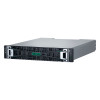
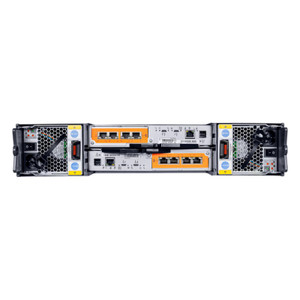
HPE P89065-B25 MSA 2070 LFF Dual 16Gb Fibre Channel Controller Storage Array
Overview
The HPE MSA 2070 LFF storage array (P89065-B25) is a 2U dual-controller SAN platform built for mid-range virtualization, database, and mixed-workload environments that need reliable block storage without the complexity of enterprise-tier systems. Shipping with two 16 Gb Fibre Channel controllers — four ports each, eight ports total across the pair — it delivers the redundant, high-bandwidth fabric connectivity that VMware, Windows Server, and Linux shops running multi-host clusters depend on. If you are sizing block storage for a VMware vSphere cluster, a SQL or Oracle workload, or a mixed file/block infrastructure that has outgrown direct-attached storage, the P89065-B25 is worth a close look before moving to significantly more expensive all-NVMe alternatives.
The base model supports up to 12 LFF (large form factor) drives — spinning SAS/SATA HDDs or LFF SSDs — in its 2U chassis. That alone gives you meaningful raw capacity per rack unit, and the real story is in expansion: add up to nine additional enclosures in any combination of the 2U 24-drive SFF enclosure or the 2U 12-drive LFF enclosure, pushing the total raw footprint to as much as 2.88 PB depending on drive selection. For network-attached and SAN storage deployments where capacity growth is the dominant planning variable, that expansion ceiling removes a common mid-lifecycle refresh trigger.
Key Features
- Dual 16 Gb Fibre Channel Controllers (8 Ports Total): Each controller in the P89065-B25 carries four 16 Gb FC ports, delivering 64 Gb/s aggregate per controller — enough bandwidth to feed multiple high-I/O hosts simultaneously without port contention. Dual controllers also mean active-active failover: if one controller fails, the other takes over without dropping host connections, which is a hard requirement for any production SAN.
- Up to 2.88 PB Raw Capacity: Starting at 12 LFF drive bays in the base array and scaling with up to nine expansion enclosures, the MSA 2070 grows with your environment rather than forcing an early platform swap. Planning a five-year retention window for surveillance or archival data? The expansion math works in your favor here.
- LFF Drive Support with SFF Expansion Mix: The base chassis accepts large form factor drives (3.5-inch HDDs and LFF SSDs) for maximum per-spindle density. When you need faster random I/O in secondary tiers, the 2U 24-drive SFF enclosure lets you mix in smaller-form-factor SSDs in the same rack footprint — useful for tiered storage architectures where hot data and cold archive live on the same array infrastructure.
- Broad OS and Hypervisor Compatibility: The array is validated against Windows Server 2022, 2019, and 2016; VMware vSphere 6.7; Red Hat Enterprise Linux 8; and SUSE SLES 15. For current and extended compatibility matrices, HPE SPOCK is the authoritative reference. If your environment runs a mix of these platforms — common in organizations consolidating physical and virtual workloads — you are not locked into a single hypervisor or OS stack.
- 2U Rack Form Factor: A 2U chassis keeps the base footprint tight. In constrained data center or server-room environments where rack space carries a real cost, the density-per-U math matters. Combined with expansion enclosures, you can build a large-capacity SAN without consuming excessive vertical rack space.
- Redundant Controller Architecture: Dual controllers are not just a bandwidth feature — they are your protection against unplanned downtime. In a single-controller failure event, the remaining controller maintains all host paths, keeping your workloads online while the failed unit is replaced. This architecture is a baseline expectation for any shared storage supporting production VMs or databases.
Integration & Compatibility
The HPE MSA 2070 integrates with the HPE storage and server portfolio, including ProLiant and Synergy compute platforms, through standard Fibre Channel SAN fabric using 16 Gb HBAs on the host side. OS compatibility spans the major enterprise platforms listed above; consult HPE SPOCK for version-specific interoperability before finalizing HBA and switch selection. The array supports a range of SAN storage configurations and is compatible with HPE StoreVirtual and third-party FC fabric switches from leading vendors. For environments planning capacity growth, verify expansion enclosure model compatibility with your reseller or HPE prior to procurement — enclosure mix (LFF vs. SFF) affects cable management and drive population planning. Organizations evaluating storage area network planning should account for HBA port count on each host when sizing the eight available FC ports across both controllers. For rack integration planning, consider rack accessories and cable management components appropriate for a dual-controller 2U array with multi-enclosure expansion.
Frequently Asked Questions
Q: How many Fibre Channel ports does the HPE P89065-B25 provide in total?
A: The P89065-B25 ships with two 16 Gb Fibre Channel controllers, each carrying four ports, for a total of eight FC ports across both controllers. This supports multi-host SAN connectivity and provides redundant paths for each connected host.
Q: What is the maximum raw storage capacity of the MSA 2070 with full expansion?
A: With the base 12 LFF drive array plus up to nine additional expansion enclosures (2U 24-drive SFF and/or 2U 12-drive LFF in any combination), the MSA 2070 can reach up to 2.88 PB raw capacity depending on drive type and configuration.
Q: Which operating systems and hypervisors are compatible with the P89065-B25?
A: HPE validates the MSA 2070 with Windows Server 2022, 2019, and 2016; VMware vSphere 6.7; Red Hat Enterprise Linux 8; and SUSE SLES 15. For extended and version-specific compatibility, HPE SPOCK is the authoritative reference.
Q: Can the MSA 2070 base array mix LFF and SFF drives?
A: The base P89065-B25 chassis supports LFF drives (up to 12 bays). SFF drives are supported through the optional 2U 24-drive SFF expansion enclosure, allowing a tiered storage architecture across the expanded system rather than within the base chassis itself.
Q: Does the MSA 2070 support active-active dual-controller failover?
A: Yes. The dual-controller architecture is designed for redundancy: if one controller fails, the remaining controller maintains host connectivity, keeping connected workloads online without a manual failover procedure.
Q: How many expansion enclosures can be added to the MSA 2070 base array?
A: Up to nine expansion enclosures can be added in any combination of the 2U 12-drive LFF enclosure and the 2U 24-drive SFF enclosure, significantly extending total drive bay count and raw capacity beyond the base 12-bay configuration.
When I look at the P89065-B25, the spec that drives the conversation is the dual 16 Gb FC controller pair — eight total ports across both controllers. That is the right starting point for any mid-range SAN discussion, because it tells you immediately that this array is built for multi-host shared storage with redundant fabric paths, not just single-server direct attachment dressed up as a SAN.
Technical Highlights:
- Dual 16 Gb FC, 4 Ports Each: Eight total host-facing FC ports across two independent controllers means you can wire four to six hosts with redundant dual-path connections before you start stressing the port budget. At 16 Gb per port, you have headroom for sequential and mixed I/O workloads that would saturate older 8 Gb infrastructure.
- Up to 2.88 PB with 9 Expansion Enclosures: The LFF base chassis plus nine enclosures (mix of 12-drive LFF and 24-drive SFF) is a meaningful capacity ceiling for any mid-range platform. If you are building a long-retention archive or a large video storage tier, this expansion path delays platform obsolescence significantly compared to fixed-capacity alternatives.
- Active-Active Dual Controller: Both controllers are active simultaneously — not active/passive — which means all eight FC ports are in use under normal operation, not sitting idle waiting for a failover event. This matters for throughput planning: you get full aggregate bandwidth from day one, not just on paper.
Deployment Considerations:
- The P89065-B25 (often searched as P89065 B25) ships with the controller pair but no drives — drive population is a separate procurement decision. Factor in your I/O profile (sequential vs. random, read-heavy vs. write-heavy) when selecting LFF HDDs vs. LFF SSDs for the base chassis; this affects whether SFF expansion enclosures for hot-tier SSD make sense in your architecture.
- VMware vSphere compatibility is listed at version 6.7 in the validated OS matrix — if your environment is running vSphere 7.x or 8.x, confirm current SPOCK status before finalizing the purchase. HPE SPOCK is updated more frequently than product datasheets and is the binding reference for hypervisor support.
This array is well-positioned for VMware clusters and mixed Windows/Linux SAN environments in the 50–500 TB initial capacity range, where the 2.88 PB expansion ceiling removes the need for a near-term platform refresh and the redundant FC controller pair meets uptime requirements without moving to more expensive enterprise-tier hardware.