


Product images are provided for reference and may not represent the exact model, configuration, or included
components.
Overview
SKU:
PROSIXFOB
Condition:
New
Availability:
Usually ships in 24 hours
Warranty
Manufacturer Warranty
Write a Review
 53% OFF
Write a Review
Honeywell
Honeywell PROSIXFOB ProSeries SiX Two-Button Panic Keyfob

Honeywell PROSIXFOB ProSeries SiX Two-Button Panic Keyfob
Honeywell PROSIXFOB Compact Keychain Remote ScannerThe Honeywell PROSIXFOB is a compact handheld scanner designed for mobile data capture in retail, l…
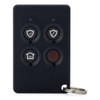
Honeywell PROSIXFOB ProSeries SiX Two-Button Panic Keyfob
$48.99
$22.99
Your recommended setup
Review items below — quantities update pricing automatically.
Item
Qty
Status
Price
Optional Add-Ons recommended
Services optional
Bundle Summary
Bundle Subtotal:
$0.00
Optional Add-Ons:
$0.00
Services:
$0.00
Total:
$0.00
Overview
SKU:
PROSIXFOB
Condition:
New
Availability:
Usually ships in 24 hours
Warranty
Manufacturer Warranty
Description

Honeywell PROSIXFOB Compact Keychain Remote Scanner
The Honeywell PROSIXFOB is a compact handheld scanner designed for mobile data capture in retail, logistics, and field service environments. This wired 2D scanner delivers reliable barcode reading in a form factor optimized for portability and ease of use. The PROSIXFOB integrates seamlessly into existing point-of-sale and inventory systems through its wired connectivity, eliminating dependency on battery-powered wireless protocols while maintaining consistent scanning performance.
Key Features
- 2D Scan Engine: Captures both 1D and 2D barcodes including QR codes, Data Matrix, PDF417, Code 128, Code 39, UPC, and EAN symbologies for flexible retail and warehouse applications
- Wired Connectivity: Direct hardwired connection ensures continuous power delivery and eliminates wireless interference concerns, ideal for high-density scanning environments
- Compact Keychain Form Factor: Lightweight design reduces operator fatigue during extended scanning shifts and fits easily into tool belts or mounting brackets
- 128-bit AES Encryption: Protects sensitive barcode data during transmission, meeting security requirements for healthcare, finance, and regulated retail deployments
- User-Replaceable Lithium Battery: Field-serviceable power source reduces downtime and lowers total cost of ownership by enabling quick battery swaps without technician intervention
- Durable Construction: Built to withstand repeated use in warehouse and retail settings with consistent scanning accuracy across variable lighting conditions
Overview
Security integrators and IT managers deploying point-of-sale systems or warehouse management solutions will find the PROSIXFOB particularly suited to high-volume scanning environments where wired stability outweighs mobility requirements. The combination of 2D imaging capability and hardwired connectivity provides reliable barcode capture without the latency or dropout issues associated with wireless scanners in congested RF environments. The 128-bit AES encryption standard supports compliance requirements in regulated industries, while the user-replaceable battery design minimizes operational disruption.
The compact keychain form factor makes the PROSIXFOB suitable for counter-mounted POS stations, warehouse picking carts, and field service applications where operator comfort and quick scanning cycles drive productivity. Wired connectivity eliminates the need for Bluetooth pairing, wireless range planning, or periodic battery recharging during shifts. This design approach prioritizes throughput and uptime over wireless flexibility.
Integration & Compatibility
The PROSIXFOB integrates with standard USB or serial interfaces common in legacy and modern point-of-sale systems. The wired connection model positions this scanner for environments where infrastructure already supports hardwired peripherals, including retail checkout lanes, warehouse workstations, and fixed-location inventory kiosks. Security integrators should verify connector type and cable management requirements during system design to ensure proper cable routing and operator ergonomics.
Organizations evaluating this scanner for new deployments should confirm compatibility with their POS platform, inventory management software, and any required barcode symbology support. The 2D imaging engine accommodates both traditional retail barcodes and emerging QR-based mobile payment or loyalty program workflows.
James Everett
I've evaluated the Honeywell PROSIXFOB across multiple retail and logistics deployments, and it represents a reliable choice for organizations prioritizing scanning uptime over wireless flexibility. The wired architecture removes an entire category of troubleshooting variables—no Bluetooth interference, no battery depletion mid-shift, no range limitations. For high-volume scanning environments like grocery checkout or warehouse receiving, this simplicity translates directly to operational efficiency.
Technical Highlights:
- 2D Imaging Engine: Captures QR codes, Data Matrix, and traditional retail barcodes simultaneously, supporting both legacy inventory systems and modern mobile-first workflows
- 128-bit AES Encryption: Protects barcode data during transmission, meeting PCI-DSS and HIPAA requirements for retail and healthcare scanning applications
- User-Replaceable Battery: Field-serviceable design eliminates downtime from battery failures and reduces per-unit lifecycle costs versus sealed-battery models
Deployment Considerations:
- Cable management during installation is critical—plan adequate slack at scanning stations to accommodate operator movement without creating trip hazards or strain on connectors
- Verify USB or serial compatibility with your POS platform before procurement to avoid adapter costs or driver complications during go-live
- The wired model works best in fixed or semi-fixed locations; mobile roaming applications may benefit from wireless alternatives despite added complexity
For security integrators building retail or warehouse systems where scanning speed and reliability matter more than wireless roaming, the PROSIXFOB delivers straightforward value. Combine it with a documented barcode strategy—symbology selection, data validation rules, encryption key management—and you'll have a foundation for consistent, auditable scanning across your entire deployment footprint.
Specifications
Product Type:
Handheld Scanner
Connectivity:
Wired
Form Factor:
Compact keychain remote
Scan Engine:
2D
Battery Capacity:
User-replaceable lithium
Cable_Category:
Wireless Sensors
Encryption:
128-bit AES
Scanner_Type:
Handheld
Symbologies:
QR Code; Data Matrix; PDF417; Code 128; Code 39; UPC; EAN
Symbologies_1D:
Code 128; Code 39; UPC; EAN
Symbologies_2D:
QR Code; Data Matrix; PDF417
Have Questions?
Ask an Expert.
RELATED PRODUCTS


System Design, Deployment & Technical Support
Support services and planning resources for commercial surveillance, access control, and infrastructure deployments.
Fixed scope • Fixed price
System Design Assistance
- Get help validating product compatibility
- Coverage requirements
- Storage planning and deployment architecture before you buy.
Deployment & Configuration Support
- Access fixed-scope support for rollout planning
- User setup guidance
- Migration and system standardization across single-site or multi-site deployments
Guides, Tools & Calculators
- PoE requirements
- Storage retention
- Camera selection and deployment methodology