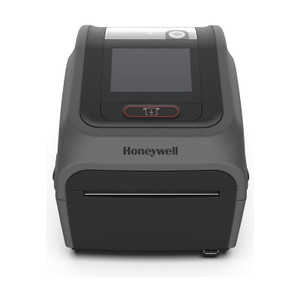
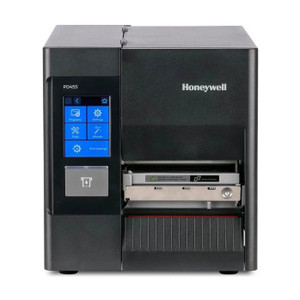
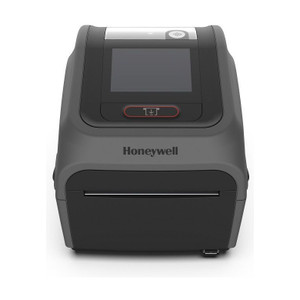
Honeywell PC45T000000301 Industrial Direct Thermal Label Printer
The Honeywell PC45T000000301 is a production-class label printer engineered for high-volume industrial labeling in warehouse, manufacturing, and distribution environments. Built on direct thermal printing technology, it eliminates the need for thermal ribbons—reducing consumable costs and simplifying maintenance in facilities running 24/7 shift cycles. With a maximum print width of 102 mm (4.0 inches), the PC45 handles diverse label formats without format constraints, from compact product tags to full-width shipping labels.
Key Features
- Direct Thermal printing without ribbons: No ribbon cartridges to replace or inventory. In high-volume environments where you're printing hundreds of labels daily, this translates directly to lower consumable spend and fewer maintenance interruptions. Direct thermal media costs less per label than thermal transfer alternatives, making it the right call for price-sensitive operations.
- Dual resolution: 203 DPI or 300 DPI: Run 203 DPI for speed and cost savings on simple barcodes and shipping labels; switch to 300 DPI when barcode density or print clarity demands higher fidelity. This flexibility lets you optimize between throughput and barcode reliability without swapping printers.
- 102 mm (4.0 inch) maximum print width: Handles standard 4-inch shipping labels, product tags, and warehouse compliance labels without format limitations. Wider than many compact industrial printers, narrower than full roll-width formats—a practical middle ground for most supply chain operations.
- Multi-protocol emulation (ZPL II, ZSim2, Direct Protocol): Speaks the language of legacy systems. If your WMS or ERP was built around Zebra command syntax, the PC45 accepts those print jobs directly. No software rewrites, no middleware translation layers—plug it in and start printing.
- WiFi 5 (802.11 a/b/g/n/ac), Bluetooth 5.1, Ethernet, USB 2.0: Deploy wirelessly at receiving docks or mobile sorting stations without running cables. Bluetooth pairs with Android mobile computers and handhelds for on-demand label printing at point of scan. Ethernet keeps it hardwired to your WMS in fixed locations. Multiple connectivity paths mean you're not locked into a single deployment model.
- HTTPS encryption and LPR analytics support: Print jobs encrypt in transit, reducing exposure in regulated environments. LPR analytics track job completion and error rates, useful for auditing label output in compliance-heavy industries like healthcare or pharmaceuticals.
- Compact desktop form factor at 10.7 kg (23.6 lbs): Light enough to relocate between workstations or install on overhead shelves without reinforcement. Takes up minimal counter space on busy warehouse floors.
Integration & Deployment Context
The PC45 integrates seamlessly with warehouse management systems (WMS), ERP platforms, and cloud-based print management solutions through standard protocols. Network administrators benefit from flexible connectivity—hardwired Ethernet for high-availability fixed locations, WiFi 5 for mobile operations across warehouse floors, or Bluetooth for local Android-based mobile computers. Multi-protocol emulation ensures compatibility with systems standardized on Zebra command syntax, eliminating costly software migration when upgrading or expanding printer capacity.
This printer is built for sustained high-volume output in fulfillment centers, manufacturing floors, and logistics hubs where label throughput and reliability directly impact operational efficiency. Shipping label production, compliance labeling, product identification, and asset tracking are its primary use cases—operations where a printer failure creates immediate bottlenecks.
When to Choose a Different Model
If you require 6-inch (152 mm) or wider label formats, consider a larger-format variant in the Honeywell industrial printer family. If your environment demands thermal transfer printing for durability on extreme-temperature labels or specialty media, thermal transfer models offer longer label lifespan. If you need integrated barcode scanning or RFID encoding on the same device, look to dedicated scan-and-print systems instead.
Frequently Asked Questions
Q: Does the PC45T000000301 support cloud-based print management?
A: Yes. HTTPS encryption and standard network connectivity (Ethernet, WiFi 5) enable integration with cloud print queues and SaaS label management platforms. LPR analytics support allows remote monitoring of print jobs and error states.
Q: What's the power requirement?
A: Power specifications are not listed in available documentation. Consult the product datasheet or contact the manufacturer for AC/DC voltage and wattage requirements before site planning.
Q: Can I print from mobile devices?
A: Yes. Bluetooth 5.1 connectivity allows pairing with Android mobile computers and handhelds. WiFi 5 enables printing from networked mobile applications. Integration method depends on your print driver and WMS implementation.
Q: Is direct thermal suitable for labels that need long shelf life?
A: Direct thermal labels fade over time if exposed to light or heat. For labels requiring archival durability (18+ months) or harsh environmental exposure, thermal transfer printing with premium media is more appropriate. Direct thermal excels in high-volume, short-lifecycle label applications (shipping, compliance, temporary product tags).
Q: What media types does the PC45 accept?
A: Direct thermal media specifications (roll width, thickness, core size, maximum label length) are not detailed in available documentation. Refer to the manufacturer's media compatibility guide or contact technical support for approved media lists and maximum roll dimensions.
Q: Does it work with Milestone XProtect or other VMS platforms?
A: This is a label printer, not an IP camera or video surveillance device. It does not integrate with video management systems. It connects to WMS, ERP, and print management platforms via standard protocols (Ethernet, WiFi, USB).
Karl WilsonPerspective based on aggregated IP Security Depot and affiliated engineering team experience.
The Honeywell PC45T000000301 represents a pragmatic entry point for mid-to-high-volume label operations that prioritize throughput and consumable cost over label durability or advanced finishing. Direct thermal printing eliminates ribbon management entirely—a genuine operational win in facilities running three shifts where maintenance windows are tight and spare parts inventory adds overhead.
Technical Highlights:
- Dual 203/300 DPI capability: Most warehouse environments stick to 203 DPI for barcode labels and shipping docs—it's fast and cost-effective. The option to bump to 300 DPI matters when you're printing density codes (2D matrix) or need barcode scanning at distance. No hardware swap required; it's a firmware toggle or print-job parameter.
- WiFi 5 and Bluetooth 5.1 alongside Ethernet: The wireless combo is the real value here. Bluetooth pairs with Android mobile computers at receiving stations; WiFi reaches printers mounted on overhead racks or carts without cable runs. For fixed locations, hardwired Ethernet remains the reliability standard. This flexibility means one printer model scales across multiple deployment scenarios.
- Multi-protocol emulation (ZPL II, ZSim2, Direct Protocol): If your WMS is built on Zebra command syntax, the PC45 accepts those jobs natively. No middleware translation, no print-driver headaches. A time-saver during system migrations or fleet consolidations.
Deployment Considerations:
- Direct thermal media fades under UV exposure and high temperature—not suitable for outdoor shipping labels or labels exposed to direct sunlight for weeks. If durability beyond 30 days matters, thermal transfer is the correct choice.
- Power and media specifications are not documented in available sources. Before committing to a deployment, obtain the detailed datasheet from the manufacturer to confirm AC/DC requirements, roll capacity, and approved media compatibility.
The PC45T000000301 is the right pick for high-volume fulfillment centers, manufacturing label shops, and logistics hubs where labels are consumed within days and mobility at point-of-scan is a priority. It's not the choice for archival compliance labels or outdoor durability applications—but for warehouse throughput, the direct thermal approach cuts consumable costs significantly compared to thermal transfer alternatives.