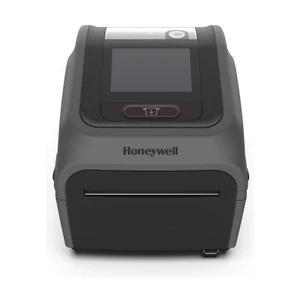
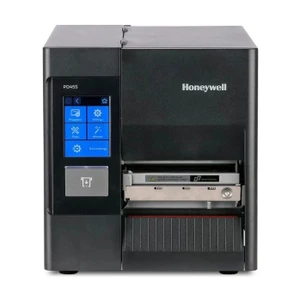
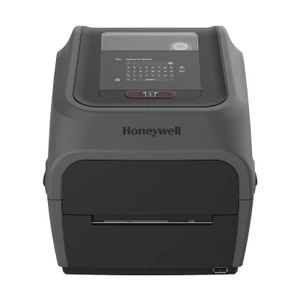
Honeywell PC45D000000201 Industrial Direct Thermal Label Printer
Overview
The Honeywell PC45D000000201 is a compact desktop label printer engineered for high-volume warehouse, manufacturing, and distribution operations. Built on direct thermal technology, this device eliminates the cost and complexity of thermal transfer ribbons—meaning lower consumables spend and less maintenance overhead across your facility. The 102 mm (4.0 in) maximum print width accommodates standard shipping labels, inventory tags, compliance stickers, and serialization codes, making it adaptable across fulfillment, sortation, and plant-floor workflows.
What sets the PC45D000000201 apart in its class is the connectivity architecture. This printer supports simultaneous Ethernet (10/100 Mbps), USB 2.0, Wi-Fi 5 (802.11 a/b/g/n/ac), and Bluetooth 5.1—removing the need to choose between wired stability and mobile flexibility. For warehouse environments transitioning to mobile-first operations, this redundancy matters: if your primary network drops, the device remains accessible over a secondary protocol without reconfiguration.
Key Features
- Direct Thermal printing at 203 or 300 DPI — No ribbons, no smudging. 203 DPI handles standard barcodes and compliance labels with acceptable clarity; 300 DPI pushes into higher-density QR codes and small-font serialization where barcode misreads are costly. Choose based on label density requirements, not aspirations.
- 102 mm (4.0 in) print width — Covers most shipping label standards (4x6, 4x8) and mid-range inventory tags. If you regularly print wider labels (thermal transfer at 6+ inches), this model is a mismatch; step up to a larger-format printer in the Honeywell portfolio.
- Wi-Fi 5 and Bluetooth 5.1 connectivity — Eliminates USB tethering for handheld scanners and mobile carts. Modern mobile warehouse apps can push label jobs directly to the PC45D000000201 over Wi-Fi without Ethernet drops, critical for dynamic staging areas and cross-dock operations where fixed cables aren't practical.
- Ethernet (10/100 Mbps) and USB 2.0 fallback — For legacy WMS systems or sites with intermittent wireless coverage, wired interfaces remain available. This dual-mode design prevents stranded printers when wireless performance degrades.
- HTTPS encryption and LPR analytics — Data in motion is encrypted; LPR (Line Printer Remote) support means network-wide print jobs without device-specific drivers. In regulated environments (pharmaceuticals, food safety), this reduces compliance burden and simplifies auditing label production.
- Android OS integration — Enables remote management, firmware updates, and API-based integration with modern warehouse and ERP platforms. Contrast this with legacy Windows-locked printers: Android allows flexible app deployment and cloud-connected workflows without tethering to a single workstation.
- Compact 10.7 kg (23.6 lbs) desktop form factor — Light enough to relocate between staging areas, shipping docks, or assembly lines without overhead lifting equipment. Stable enough for consistent label feed and output quality during continuous shifts.
Integration & Compatibility
The PC45D000000201 integrates with most WMS and ERP systems via LPR printing protocol or direct ZPL (Zebra Programming Language) emulation. Wi-Fi and Bluetooth enable pairing with mobile data-capture devices—barcode scanners, tablets, and handheld terminals—without dedicated infrastructure. HTTPS encryption and 802.1X authentication (if supported by your network) satisfy baseline security policies in healthcare, pharmaceutical distribution, and regulated manufacturing.
Android OS means modern API integration is possible, but legacy environments relying purely on host-based printing (Windows print server, local driver) should verify your WMS supports LPR or TCP socket printing before deployment. Honeywell's ZPL compatibility is strong, but if your labels use proprietary formatting or device-specific commands, test a sample batch before full rollout.
When to Choose a Different Model
If your labels exceed 4 inches in width (e.g., 6-inch industrial shipping tags or wide compliance stickers), explore larger-format direct thermal or thermal transfer printers in the Honeywell industrial line. If you need on-device display and local button-based configuration, the absence of a screen on the PC45D000000201 may frustrate technicians accustomed to printer-side diagnostics—though network-managed environments benefit from its streamlined design. If print speeds exceed 8 inches per second at high volume, verify throughput specs against your SLA before committing.
Frequently Asked Questions
Q: Does the PC45D000000201 require a ribbon or thermal transfer consumables?
A: No. Direct thermal printing means the thermal head reacts directly with label media—no ribbon needed. Your only ongoing consumable is the label stock itself, reducing total cost of ownership compared to thermal transfer competitors.
Q: Can I use the PC45D000000201 on a mobile cart or in a warehouse without fixed Ethernet?
A: Yes. Wi-Fi 5 and Bluetooth 5.1 enable wireless label job submission from mobile scanners, tablets, or carts. For roaming operations, this eliminates USB-cable dependencies and cable-reel complexity.
Q: Is the PC45D000000201 compatible with existing Windows-based WMS systems?
A: The printer supports LPR (network printing protocol) and ZPL emulation, which are compatible with most WMS platforms. However, if your system relies on legacy proprietary drivers or formats, test integration with a sample unit before site-wide deployment.
Q: What's the maximum label size the PC45D000000201 can print?
A: Maximum print width is 102 mm (4.0 inches). Standard 4x6 and 4x8 shipping labels are well within range. Wider labels (6+ inches) require a larger-format printer.
Q: Does the PC45D000000201 support 300 DPI printing for high-density barcodes?
A: Yes, dual resolution operation at 203 DPI or 300 DPI allows you to switch between standard and high-density barcodes on the same printer. 300 DPI is useful for dense QR codes and small serialization fonts where misreads are costly.
Q: Can the PC45D000000201 be remotely managed or updated?
A: Android OS enables remote management, and HTTPS encryption supports secure network configuration. Firmware updates and policy changes can be pushed over Wi-Fi or Ethernet without physical access to the device.
Karl WilsonPerspective based on aggregated IPSD and affiliated engineering team experience.
The PC45D000000201 is a practical fit for facilities transitioning from ribbon-based thermal transfer or seeking wireless flexibility without sacrificing reliability. Its multi-protocol connectivity (Wi-Fi 5, Bluetooth 5.1, Ethernet, USB) eliminates the false choice between mobility and wired stability—a real advantage in dynamic warehouse environments where coverage is uneven or network topology shifts seasonally. Direct thermal design cuts consumables overhead and complexity; no ribbon jam calls at 2 a.m.
Technical Highlights:
- 203/300 DPI dual resolution: Flexibility to print standard 1D barcodes at 203 DPI (faster throughput, lower media cost) and step up to 300 DPI for dense QR codes or serialization without printer swaps. Real advantage for mixed label workflows.
- Wi-Fi 5 (802.11ac) + Bluetooth 5.1: Range and bandwidth mean mobile scanners and carts can maintain reliable label submission 100+ meters from the printer in open warehouse spaces. Bluetooth fallback ensures backup connectivity if Wi-Fi capacity saturates during peak picking shifts.
- 102 mm (4.0 in) print width: Tight fit for ultra-compact operations, but adequate for 99% of standard shipping and inventory labels. Know your maximum label width before deployment—oversizing is cheaper than retrofit.
- Android OS with remote management: HTTPS encryption and LPR support mean you can push firmware updates, monitor print queues, and audit label output without touching the device. Critical for compliance-heavy environments and geographically dispersed sites.
Deployment Considerations:
- No on-device display: Configuration happens exclusively over network. Technicians accustomed to button-press diagnostics may find this limiting initially, but network-managed environments will find the streamlined design saves time and eliminates local configuration drift.
- ZPL emulation, not native Zebra: Most WMS systems support ZPL printing, but if your environment relies on proprietary printer commands or legacy Windows print server infrastructure, validate compatibility with your systems integrator before purchase.
- Direct thermal media cost: Consumables are cheaper than thermal transfer ribbon, but label stock quality matters more—poor-quality thermal media will smudge or fade. Budget for certified thermal media from your media supplier.
Position the PC45D000000201 for warehouse fulfillment, cross-dock operations, and plant-floor asset tracking where mobility and low consumables cost outweigh the need for massive label width or on-device diagnostics. Avoid this model if your labels exceed 4 inches or if your WMS lacks LPR/ZPL support—test integration first.