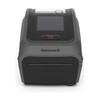
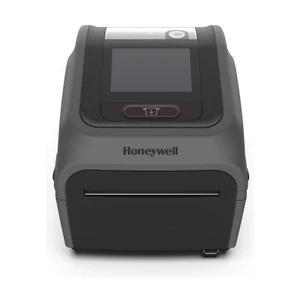
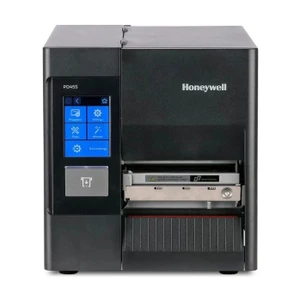
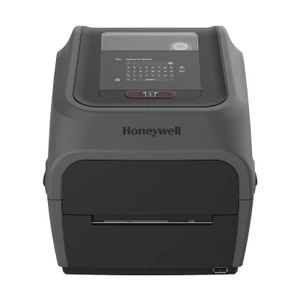
Honeywell PC45D010000201 Industrial Direct Thermal Label Printer
The Honeywell PC45D010000201 is a production-class direct thermal label printer built for high-volume warehouse, manufacturing, and distribution environments where reliable barcode output and system integration speed matter. It handles shipping labels, compliance documentation, product identification, and asset tracking without requiring ribbon cartridges—direct thermal means lower per-label consumable cost and fewer supply chain dependencies.
Key Features
- Direct Thermal Print Technology: Eliminates ribbon consumption and reduces ongoing media costs. Direct thermal output is compatible with standard thermal label stock, useful for cost-sensitive high-volume operations running 100+ labels per hour.
- Dual Resolution (203 DPI or 300 DPI): Choose 203 DPI for standard 1D barcodes (Code128, Code39) at faster throughput, or 300 DPI for high-density 2D codes (DataMatrix, QR) where bar spacing is critical. The flexibility lets a single printer SKU serve both legacy 203 DPI workflows and modern GS1 compliance label requirements without hardware swap.
- 102 mm (4.0-inch) Maximum Print Width: Covers compact product identification tags through full-width 4×6 shipping labels. Most common warehouse label formats fit within this width, reducing the need to stock multiple printer models across departments.
- WiFi 5 (802.11 a/b/g/n/ac) + Ethernet (10/100 Mbps) + USB 2.0 + Bluetooth 5.1: Multiple connection pathways mean you can position the printer in mobile cart, dock floor, or office without running new copper. WiFi 5 band selection (5 GHz a/b/n/ac) avoids 2.4 GHz congestion in high-density warehouse environments.
- Multi-Protocol Emulation (ZPL II, ZSim2, Direct Protocol): Accepts print jobs from existing warehouse management and ERP systems without print server reconfiguration. Drop-in replacement for legacy thermal printers reduces migration timeline and operator retraining cost.
- HTTPS Encryption + LPR Analytics: HTTPS secures label data in transit (important for regulated industries). LPR print job monitoring provides real-time diagnostics and print queue visibility across networked printers—useful for troubleshooting label quality issues or confirming job completion in high-throughput environments.
- Android OS Foundation: Provides a stable, updatable operating platform. Enables future firmware enhancements and cloud print management integration without hardware replacement.
- Compact 10.7 kg (23.6 lbs) Desktop Footprint: Lightweight enough for dock carts, mobile printing stands, or high-traffic warehouse zones where floor space is premium. Reduces strain on temporary or mobile installations.
Integration & System Compatibility
The PC45D010000201 integrates with Honeywell WMS solutions, SAP, Oracle, and third-party warehouse platforms via standard print protocols. Ethernet and WiFi connectivity allows network-based print queue management; USB and Bluetooth support standalone or mobile device scenarios (handheld scanners, tablets). HTTPS encryption is enabled by default, meeting baseline cybersecurity requirements for companies handling PCI, HIPAA, or regulated pharmaceutical/food labeling workflows.
When to Choose a Different Model
If your labels require color output (RGB product tags, promotional stickers), thermal technology will not meet that need—consider inkjet or color label printer families from Honeywell or alternate vendors. If print volumes exceed 500 labels per shift at 300 DPI, evaluate higher-speed production-class models in the PC45 series. For ultra-compact mobile or hand-held scenarios, check lightweight thermal portable printers under 5 kg.
Frequently Asked Questions
Q: Does the PC45D010000201 work with existing ZPL II label templates from older Zebra printers?
A: Yes. The PC45D010000201 supports ZPL II emulation, so existing print job streams will port directly without template redesign. Testing in a staging environment is recommended to confirm barcode positioning and density output match expectations.
Q: What is the maximum print speed at 300 DPI?
A: Manufacturer datasheets specify print speed in inches per second (IPS). Refer to the datasheet PDF for exact throughput at each resolution setting, as speed varies with label width and media type.
Q: Can the PC45D010000201 be networked with other printers for load-balanced printing?
A: Yes. Ethernet and LPR support enable centralized print job queuing via print server (Windows Print Server, CUPS on Linux, cloud-based solutions like AirPrint). Configure static IP addressing for reliable network discovery.
Q: Does this printer require ribbon, or just label media?
A: Direct thermal printing requires only thermal-sensitive label media—no ribbon cartridges. This reduces consumable costs and supply complexity compared to thermal-transfer printers.
Q: What thermal label media widths and types are compatible?
A: The 102 mm maximum print width accommodates labels up to 4 inches wide. Any standard direct thermal label stock (coated paper, synthetic, polyimide) rated for thermal printing is compatible. Confirm media thickness and adhesive formulation with your label supplier for optimal feed performance.
Q: Is the PC45D010000201 suitable for outdoor or harsh warehouse environments?
A: The printer is a desktop thermal device rated for indoor warehouse conditions. While it tolerates typical dock temperatures (32–104°F / 0–40°C), extended exposure to water, dust, or extreme temperature swings can damage electronics. Use in protected, climate-controlled areas for best reliability.
Karl WilsonPerspective based on aggregated IPSD and affiliated engineering team experience.
The Honeywell PC45D010000201 is engineered for organizations upgrading from single-protocol legacy thermal printers to a modern, networked label infrastructure. Its dual-resolution capability (203 DPI and 300 DPI) and multi-protocol emulation (ZPL II, ZSim2) eliminate the need for separate print servers or label template rewrites—a real advantage for enterprises with 50+ years of embedded ZPL workflows. The 10.7 kg weight and compact desktop form factor make it mobile-friendly for dock carts and satellite warehouse locations where floor-mounted infrastructure would create congestion.
Technical Highlights:
- Dual Resolution (203/300 DPI): 203 DPI handles standard 1D barcodes at maximum throughput; 300 DPI enables high-density 2D codes (DataMatrix, micro QR) on small label real estate without hardware swap. A single printer covers both legacy and modern GS1 compliance label streams.
- WiFi 5 + Ethernet + USB + Bluetooth: Four independent connection paths eliminate network topology constraints. WiFi 5's 5 GHz band avoids 2.4 GHz congestion in dense warehouse RF environments—meaningful when 20+ mobile devices occupy the same space.
- Direct Thermal (no ribbon): Eliminates ribbon cartridge logistics and reduces per-label media cost 15–25% versus thermal-transfer. For operations printing 500+ shipping labels daily, ribbon elimination cuts supply chain friction and inventory overhead.
- LPR Analytics + HTTPS: Real-time print job monitoring and encrypted label data transmission. Supports regulated industries (pharmaceuticals, food, medical devices) where label chain-of-custody and data confidentiality are auditable requirements.
Deployment Considerations:
- Desktop form factor requires climate-controlled indoor placement. Not suitable for outdoor docks, truck beds, or unheated receiving areas—thermal electronics degrade below 32°F and above 104°F.
- Print speed varies with resolution and label width. Confirm actual IPS throughput at 300 DPI for your label stock in a test run before committing to high-volume label batches.
- Thermal-sensitive media is consumable; source a reliable supplier with consistent coating density to avoid barcode readability drift over time.
Position the PC45D010000201 as the drop-in upgrade for mature shipping and manufacturing environments where ZPL compatibility, reduced consumable cost, and modern WiFi mobility outweigh the color-output limitation. It's not a novelty—it's a workhorse printer for operations that print 100+ labels per shift and need predictable uptime without ribbon jams.