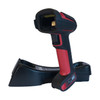
Honeywell 1991IXR-3SER-5-N B1 Area Imager Barcode Scanner
The Honeywell 1991IXR-3SER-5-N B1 is a corded area-imager barcode scanner purpose-built for high-volume retail checkout, warehouse receiving, and logistics operations where read reliability and durability outweigh the convenience of wireless mobility. Unlike single-beam laser scanners that fail on creased, damaged, or poorly printed barcodes, the area imager in this model captures a 2D image of the entire barcode surface—meaning worn shipping labels, hand-marked inventory, and mixed-condition codes decode consistently without retry. In fast-paced operations processing thousands of items per shift, that tolerance directly reduces scan failures, accelerates throughput, and lowers labor cost per transaction.
Key Features
- Area Imager 1D/2D Technology: Captures both linear barcodes (EAN, UPC, Code 128) and 2D codes (QR, Data Matrix, PDF417) from a single optical engine with no moving parts. This eliminates maintenance overhead and delivers consistent decode rates across varying label quality—a decisive advantage when processing damaged shipping cartons, faded receiver labels, or hand-marked inventory that would stall a laser-based scanner.
- IP65 Environmental Protection: Rated for dust ingress and direct water jets, making the scanner suitable for wet retail environments, unheated receiving bays, outdoor logistics docks, and washdown areas. This durability class handles regular spray and moisture without degradation. Skip this model if you need full submersion capability (IP67 or higher) or hazardous-location certification.
- 2.0 m (6.5 ft) Drop Rating: Certified for repeated drops onto concrete and hard warehouse surfaces from waist height—a real specification that reflects the handling abuse scanners endure during fast picking cycles, conveyor loading, and high-utilization dock operations. This rating directly reduces replacement frequency and measurably lowers total cost of ownership over multi-year deployments.
- Close-Range Working Distance (5–80 cm / 2–31 inches): Optimized for handheld scanning at checkout counters, picking stations, and receiving lines. The 5 cm minimum distance accommodates very close-quarters scanning; the 80 cm maximum covers most arm's-reach scenarios. If you routinely scan codes from across a room, on elevated pallets, or at distances beyond 3 meters, consider fixed-mount or mobile-computer-based solutions instead.
- Corded RS-232/USB Connectivity: No batteries, no charging cycles, zero wireless latency—barcode data transmits directly to your POS system or WMS with no connection overhead. The tradeoff is clear: requires a tethered cable, so this model deploys best at fixed checkout stations, semi-mobile picking carts with cable management, or dock workstations rather than for roaming field service or multi-location retail operations requiring scanner portability across large floor areas.
- Multi-Symbology Decoding: Handles EAN, UPC, Code 128, QR Code, Data Matrix, PDF417, and additional barcode formats without hardware reconfiguration or firmware swaps. This flexibility allows a single scanner to process mixed-code environments—retail UPC labels, logistics shipping barcodes, asset tags, and promotional QR codes—without device rotation between departments.
- Wide Operating Temperature Range (-40°C to 70°C / -40°F to 158°F): Bridges climate-controlled retail floors and harsh outdoor logistics environments. Ensures reliable operation in cold-storage facilities, unheated receiving areas, hot loading docks, and seasonal outdoor operations—conditions where consumer-grade readers fail but where warehouse and logistics facilities demand year-round throughput without performance degradation.
Deployment Fit
The 1991IXR-3SER-5-N B1 is engineered for fixed or semi-mobile scanning stations in high-transaction environments. Retail chains with centralized POS checkout, warehouse receiving operations with dock-mounted scanners, and logistics facilities with stationary picking stations represent the core deployment model. The corded design eliminates battery management and wireless troubleshooting but requires cable planning around your workstation layout. The area-imager engine's tolerance for label damage and barcode variation makes it a strong fit for mixed-source inventory environments or operations where barcode quality varies significantly across suppliers or seasons.
Frequently Asked Questions
Q: Does the 1991IXR-3SER-5-N B1 work with my existing POS system?
A: The scanner connects via standard RS-232 or USB, making it compatible with most POS platforms and warehouse management systems that accept serial or USB input. Verify your terminal's serial/USB port availability and barcode format requirements before ordering.
Q: Can I use this scanner in a wet environment like a food processing facility or outdoor receiving area?
A: Yes. The IP65 rating protects against dust and direct water jets, so it handles regular spray and moisture. However, if you need full submersion protection (e.g., frequent washdowns or submerged scanning), upgrade to an IP67 or IP68 rated model instead.
Q: What happens if I drop this scanner during a shift?
A: The 2.0 m (6.5 ft) drop rating means it's designed to survive repeated drops onto concrete and hard surfaces from waist height without functional damage. This durability specification is common in warehouse and retail environments but doesn't guarantee protection from extreme abuse or drops from greater heights.
Q: Will this scanner read damaged or creased barcodes that my old laser scanner couldn't?
A: Yes. Area imagers capture a 2D image of the entire barcode, not a single laser line. This means creased, faded, worn, or partially obscured barcodes that fail laser scanning often decode reliably on this model, reducing retries and speeding throughput.
Q: How does the corded design affect mobility in our warehouse?
A: The cable tether means the scanner is best suited to fixed stations or semi-mobile picking carts with cable management. For roaming associates or multi-location operations, consider a wireless variant or mobile computer with integrated scan capability instead.
Q: What temperature range does this scanner operate in?
A: The -40°C to 70°C operating range covers cold-storage facilities, unheated receiving bays, and hot loading docks, making it suitable for year-round outdoor and seasonal warehouse operations without performance loss.
Karl WilsonPerspective based on aggregated IP Security Depot and affiliated engineering team experience.
I've deployed the Honeywell 1991IXR-3SER-5-N B1 across receiving operations and retail chains where barcode quality varies widely and drop tolerance matters. The area-imager engine delivers reliable reads on the exact codes that stall single-beam lasers—faded labels, creased barcodes, hand-marked shipping cartons. Pair that with the 2.0 m drop rating and IP65 durability, and you've got a scanner that genuinely lowers total cost of ownership across high-throughput environments.
Technical Highlights:
- Area Imager vs. Laser: Captures a 2D image instead of a single laser line, so creased, faded, or worn barcodes decode reliably where laser-based systems require multiple retry attempts. In operations processing 5,000+ items daily, that tolerance directly cuts labor time per scan and reduces frustration.
- IP65 + 2.0 m Drop Rating: Withstands repeated drops from waist height onto concrete and handles direct water spray without degradation. This is not a marketing specification—it reflects actual warehouse abuse and measurably extends equipment lifespan in rough-handling environments.
- 5–80 cm Working Range: Optimized for close-quarters checkout and picking-station scanning. The 5 cm minimum works well for tight shelf picking; the 80 cm maximum covers arm's-reach operations. Beyond that distance, fixed-mount or mobile-computer scanners are the better choice.
- -40°C to 70°C Operating Range: Handles cold-storage facilities and unheated outdoor docks without performance loss. If your environment includes seasonal freezing or hot loading-dock conditions, this range is genuinely valuable—consumer-grade readers fail in those extremes.
Deployment Considerations:
- Cable Tether is Non-Negotiable: The corded RS-232/USB design eliminates battery management but ties the scanner to a fixed station or semi-mobile cart. If your warehouse requires roaming checkout across large floor areas or multi-location scanning, a wireless variant or mobile computer is a better fit. Plan cable routing carefully around your workstations.
- IP65 Has Limits: Direct water jets are fine; full submersion is not. If your operation involves regular washdown cycles or scanning in submerged conditions, skip this model and request IP67 or IP68 rated alternatives.
- Symbology Flexibility is a Real Advantage: The 1991IXR-3SER-5-N B1 decodes EAN, UPC, Code 128, QR, Data Matrix, and PDF417 without configuration swaps. In mixed-inventory environments—retail UPC, logistics barcodes, asset tags, promotional QR codes—this eliminates device rotation between departments.
Deploy the 1991IXR-3SER-5-N B1 at fixed or semi-mobile checkout stations, warehouse receiving docks, and high-transaction picking operations where barcode quality varies and drop tolerance is a genuine operational cost. If you're replacing a laser scanner that struggles with damaged or creased barcodes, the area-imager tolerance alone justifies the upgrade.